
Jiu-Jitsu After 50: Training at Tatame 50+
Esta página ainda não foi traduzida; mostrando a versão em inglês.
Jiu-jitsu after 50 is realistic and rewarding when you train sensibly. Classes can be adapted for experience and fitness, techniques rely on leverage rather than force, and you control the intensity. Our Tatame 50+ program is made for students in this stage of life, so you can learn in good company and at a pace that respects your body.
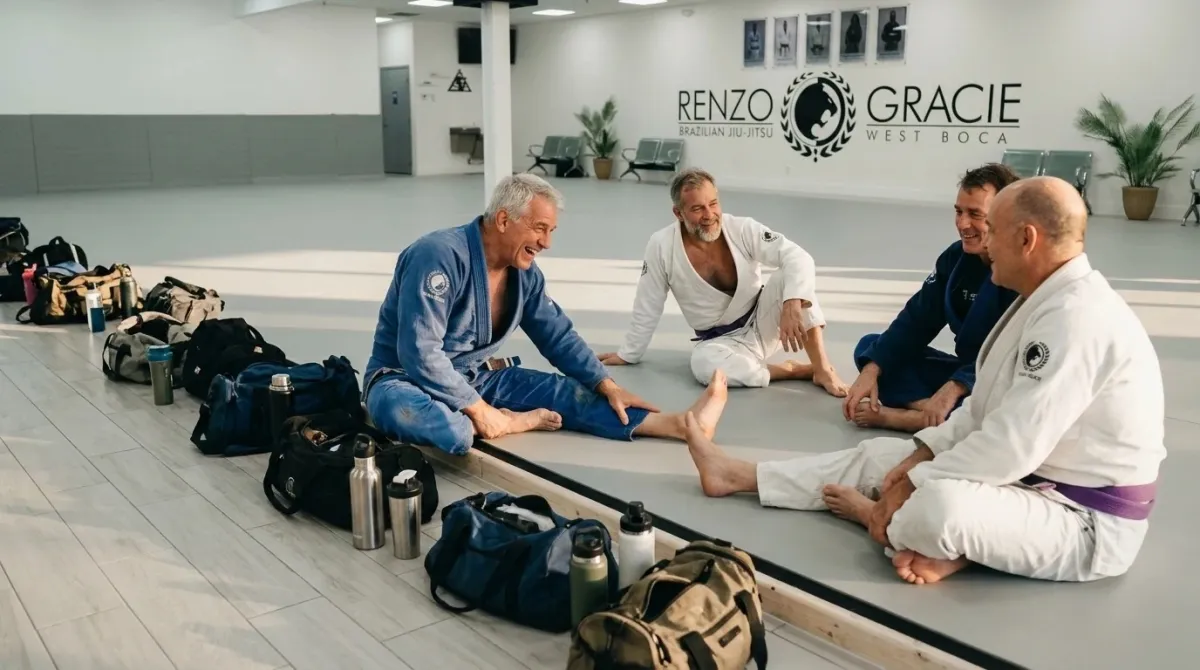
There is a quiet revolution in many academies: people in their fifties, sixties and beyond are stepping onto the mat for the first time. Some come to stay active, some to learn something new, and some to rediscover a sense of play. If you are wondering whether it could be for you, this guide offers a practical and honest answer.
Can you really start jiu-jitsu after 50?
Yes, you can start jiu-jitsu after 50, and many people do. The art is built on leverage, timing and problem-solving, so success does not depend on speed or strength. You will not be asked to do anything beyond your comfort, and you can build skills gradually.
What matters is a sensible start. See your doctor if you have any health concerns, tell the instructor about injuries and choose a class that matches your pace. A patient beginner who trains regularly will make clear progress, often more than someone who rushes.
If you want to read about a younger starting point, our guide on starting jiu-jitsu after 40 covers many shared questions.
What is Tatame 50+?
Tatame 50+ is our program designed for students in their fifties and beyond. The word tatame means mat, and the idea is simple: a mat where people at a similar stage of life can train together, with an atmosphere and pace suited to them.
In this kind of class, instructors pay attention to mobility, joint health and gradual progress. Partners are chosen with care, and the intensity is something you can adjust. You can read the program details on the Tatame 50+ page, and check the schedule for class times.
If you are younger than 50 but past 40, you may want to look at the Tatame 40+ program, which serves a similar purpose for that age group.
What are the benefits of training later in life?
The benefits include better balance, a stronger core, more flexible hips and shoulders, and a mind that stays engaged. Jiu-jitsu asks you to solve physical puzzles, which can feel refreshing if your day is full of desk work or routine.
Social benefits matter just as much. Many students in their fifties and sixties tell us that the friendships they build at the academy are a highlight of their week. Training partners cheer each other on, laugh at mistakes and celebrate new belts.
We do not promise medical results. Instead, we offer a safe, welcoming place to move, learn and belong, which many people find valuable at any age.
How do you protect your body on the mat?
Protecting your body starts with a good warm-up, an honest conversation with your partner and the discipline to tap early. Joints, necks and lower backs deserve respect, and a smart student leaves ego at the door.
Here are habits that help:
- Warm up fully, especially hips, shoulders and neck.
- Tell your partner about old injuries before rolling.
- Tap early and often; it is a sign of intelligence.
- Rest when you are tired or sore, and take days off.
- Ask the instructor to modify movements that bother you.
Our guide on how to avoid injuries in jiu-jitsu offers more detail for every age.
What does a typical class feel like?
A typical class begins with a gentle warm-up, followed by a technique lesson that is demonstrated slowly. Students drill with partners, and many classes include light, optional live practice. Nobody is pushed to go beyond their comfort, and the room has a relaxed energy.
You will hear instructors repeat important details and invite questions. Experienced students are asked to help newer ones, so you will rarely feel lost. Beginners are often surprised by how much laughter fills the room.
If you would like to see the flow of a first session, read our guide to the first BJJ class.
How often should you train?
Most students over 50 do well with two classes a week, adding a third if their body and schedule allow. Recovery matters more as we age, and a steady rhythm tends to beat bursts of intensity followed by long breaks. Listen to your body and take rest days seriously.
If you feel sore for several days, reduce the pace or ask the instructor for a lighter plan. Consistency over months and years is what brings progress and lasting enjoyment.
For a fuller discussion of rhythm, see our guide on how often beginners should train.
What should you wear and bring to the first class?
Wear comfortable athletic clothes, remove jewelry and watches, and bring a water bottle and a small towel. If you have knee or elbow sleeves that you normally use, bring them and tell the instructor. Wear sandals to walk off the mat.
You do not need to buy a uniform before trying a class. The team can tell you what is available. If you do decide to continue, our gi buying guide will help you choose.
Arrive a few minutes early so you can meet the instructor and ask any questions in a relaxed way.
Is there a belt system for older students?
Yes, the belt system applies to all adults, and you progress at your own pace. Many students over 50 find that the belts are a lovely way to mark milestones, while others simply enjoy training without worrying about rank. Both approaches are welcome.
Promotions are based on skill, understanding and attitude over time, not on age. Our belt system guide explains how the ranks work.
Remember that the most valuable reward is the habit of showing up. A student who trains for years, belt or not, becomes a pillar of the community.
What do students over 50 often worry about?
The worries are predictable and fair: getting injured, being slower than everyone else, not remembering the techniques and feeling self-conscious in a tight uniform. Almost every adult beginner carries some version of these thoughts, whatever their age.
The best response is to name them to the instructor before the first class. A good coach hears these concerns every week and knows how to adjust the plan, from choosing a gentle partner to showing you how to protect a sore shoulder. Naming a worry usually shrinks it by half.
Memory is another common fear. Do not expect to remember everything. Repetition over weeks and months builds the patterns, and taking short notes after class helps. Many students keep a small training journal on their phone, and by the third month they are surprised by how much they know.
How can you build strength and mobility alongside training?
A little preparation outside the academy can make training more comfortable. Gentle mobility work for the hips, shoulders and spine, a short walk on non-training days and basic strength exercises such as squats and rows can all support your time on the mat. Keep it simple and sustainable.
Before adding new exercise, speak with your doctor or physical therapist, especially if you have joint concerns. They can tell you what is appropriate. Our conditioning guide explains how jiu-jitsu itself builds fitness, so you do not need an elaborate plan.
Sleep, hydration and nutrition also matter more as we age. Treat recovery as part of training, not a reward for it.
What does progress look like in the first year?
In the first year, progress looks quiet but steady. You will learn the main positions, your movement will become smoother and you will start to anticipate what your partner might do. Early on, success means arriving, trying and going home without injury.
Around the middle of the year, many students notice the first real moments of understanding. A technique that felt random suddenly makes sense, or a hold that scared you becomes manageable. These moments are the reward, and they are deeply satisfying at any age.
By the end of the year, the academy often feels like a second home. You know the routines, you have friends in the room and you can help the next beginner. That sense of belonging is the best sign that you are on the right path.
How can you try Tatame 50+ in Boca Raton?
The simplest way is a free trial class. Visit the academy, meet the instructors and see how the class feels. Tell us about your health, goals and any worries so we can help you feel at ease.
Book your spot on the free trial page, or send us a message through the contact page if you have questions first. We would be glad to welcome you to the mat.
Perguntas frequentes
Am I too old to start jiu-jitsu?
Many people start in their fifties, sixties and beyond. Classes can be adapted to your fitness and experience. Check with your doctor if you have health concerns and train at your own pace.
Do I need to be flexible or fit?
No. Flexibility and fitness improve with practice. Warm-ups and drills are scaled, and you can rest whenever you need to.
Will I roll with younger people?
Tatame 50+ is designed for students in this stage of life. Ask the team about the current class format and how partners are chosen.
What if I have an old injury?
Tell the instructor before class so techniques can be modified and partners can adjust. Your doctor can also advise you on what is appropriate.

 Portuguese