
Jiu-Jitsu Conditioning: Building Stamina for the Mat
Jiu-jitsu conditioning is the stamina, strength and mobility that keep you moving smoothly through class. Most of it develops by training itself, and simple extras like walking, core work, mobility and breathing practice help. Build gradually, rest well and ask your doctor before starting new exercise.
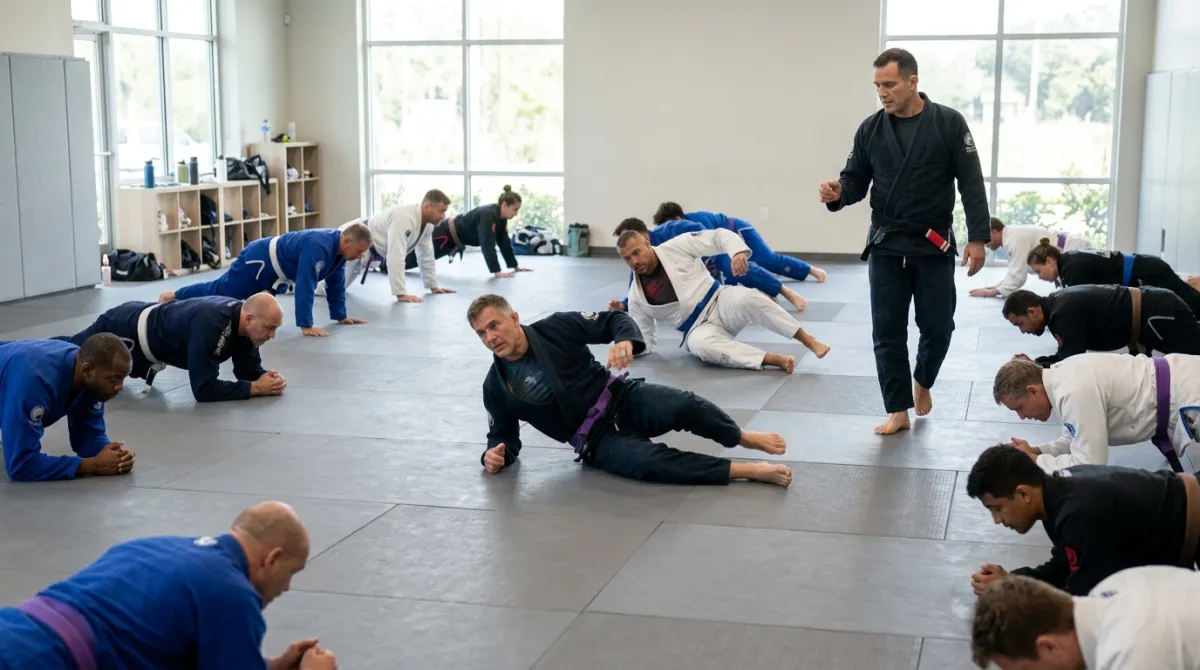
Every beginner has the same experience: three minutes into the first live round, the lungs burn and the arms feel like noodles. That is normal. Jiu-jitsu conditioning is its own kind of fitness, and the good news is that it develops with time and smart habits.
What is jiu-jitsu conditioning?
Jiu-jitsu conditioning is the combination of stamina, strength, mobility and breathing control that lets you train comfortably for a full class. It involves repeated bursts of effort, long holds of tension and constant movement of the hips, shoulders and spine. Skill and relaxation matter as much as raw fitness.
Unlike many sports, jiu-jitsu fitness is not about speed alone. A student who uses efficient technique can last longer than a stronger student who relies on force. In our classes we often see experienced white belts outlast newcomers who are much fitter, simply because they waste less energy.
This is encouraging news. You do not need elite fitness to start, and the mat itself will teach you how to build what you need.
How much conditioning comes from training itself?
Most jiu-jitsu conditioning comes from the training itself. Warm-ups, drilling and live rounds challenge your heart, muscles and balance in ways that match the sport. For many students, two or three classes per week provide a solid base without extra workouts.
Drilling builds repeated movement patterns and endurance. Positional practice builds isometric strength. Light rolling builds the ability to stay calm and keep moving. Together they form a full workout.
The key is gradual progression. If you add too much too soon, you risk fatigue and injury. Start with the classes, see how you feel and add extras only if you have energy to spare.
Which simple extras help the most?
Simple extras that help jiu-jitsu conditioning include walking or light cardio, core exercises, mobility work and breathing practice. They support the demands of class without taking much time. Choose a couple that fit your schedule and add them slowly.
- Cardio: Walking, cycling or swimming a few times a week for endurance.
- Core work: Planks and controlled rotation exercises for trunk stability.
- Grip and pulling: Gentle hangs or rows if your instructor or trainer recommends them.
- Mobility: Hip, shoulder and spine movements for comfort on the mat.
Keep each session short, around 15 to 20 minutes, and stop if anything hurts. Consistency beats intensity, particularly for beginners who are still adapting.
How does breathing improve stamina?
Steady breathing improves stamina because it keeps your body supplied with oxygen and your mind calm. Beginners often hold their breath during hard moments, which causes quick fatigue. Practicing slow nasal or relaxed breaths during drills teaches your body to stay efficient when the pressure rises.
Try this simple routine in class: inhale as you prepare, exhale as you move or escape. Make sure you do not lock your jaw or freeze your chest. If you feel your heart racing, slow the exhale and relax your shoulders.
Breathing is a skill, and it improves with practice. Instructors can show you how to breathe in specific positions, which often brings immediate relief.
Why is mobility part of conditioning?
Mobility is part of conditioning because jiu-jitsu asks your hips, shoulders, spine and ankles to move in unusual ways. Good mobility lets you adjust positions with less effort and feel more comfortable on the mat. It also helps you recover between classes by keeping your body moving.
The warm-up is a great time to practice mobility. Movements like hip circles, bridges and shrimping are both warm-ups and skills. Doing them with attention helps them become smooth and natural.
At home, a few minutes of gentle stretching or joint circles can feel good after a long day. Avoid forcing positions, and if you have pain or medical conditions, consult your doctor.
How should you pace yourself in class?
To pace yourself in class, aim for steady effort instead of all-out bursts. Move deliberately, breathe, and rest during drills when you need to. Save your hardest effort for moments that matter. Pacing keeps you in the game longer and teaches better technique.
- Warm up fully so your body is ready.
- Use only the strength you need for each move.
- Take short breaks to drink water or catch your breath.
- Tell your partner if you need a slower round.
It is perfectly fine to step off the mat when you feel overwhelmed. Rest is part of training, and good partners understand.
What about rest and recovery?
Rest and recovery are essential to jiu-jitsu conditioning because your body adapts between sessions. Enough sleep, hydration, balanced meals and rest days help you stay fresh and avoid overuse problems. A hard training week should be followed by lighter days when you need them.
South Florida's warm climate makes hydration especially important. Drink water through the day, not just during class, and replace fluids after training. Pay attention to signs of overheating, such as dizziness or headache, and stop if they appear.
Ask your instructor how to structure your week. Adults who prefer a gentler pace may enjoy the Tatame 40+ program, while those who want to push further can look at the competition team.
What conditioning mistakes should you avoid?
The most common conditioning mistakes are doing too much too soon, skipping warm-ups, ignoring rest days and pushing through pain. Each can lead to fatigue or injury. A patient plan that builds slowly and respects recovery will take you much further than a burst of enthusiasm.
- Adding several extra workouts in the first week.
- Training hard on days when you are sick or very tired.
- Ignoring hydration in hot weather.
- Copying an elite athlete's routine without the same background.
When in doubt, scale back and ask your instructor. We would rather see you training happily for years than burning out in a month.
Is conditioning different for kids and teens?
Conditioning for kids and teens is mostly about fun movement and balanced activity. Children build fitness through games, rolling and play, while teens can add more structured drills. Young athletes should avoid heavy specialized training and focus on enjoying the sport and developing good habits.
Parents can look at the Teens program to see how classes introduce technique and stamina. Questions about a child's health should go to the pediatrician.
How can you start improving your conditioning?
You can start improving your conditioning by attending class regularly, warming up well and adding one or two simple habits. Renzo Gracie West Boca Raton offers a free trial class so you can feel what a lesson is like and ask the instructors for advice tailored to you.
See the adult program for an overview, check the class schedule and book your free trial class. Whether you live in Boca Raton or nearby, you can begin at your current level.
Frequently asked questions
Do I need to be in shape before starting jiu-jitsu?
No. Jiu-jitsu classes are designed so beginners can start at their current level and build stamina over time. Pace yourself, rest when needed and tell your instructor how you feel. Fitness grows through consistent training, and nobody expects you to arrive in peak condition.
What is the best exercise for jiu-jitsu stamina?
Training on the mat itself is the most specific way to build jiu-jitsu stamina. Light extras like walking, jogging, cycling or swimming can support your endurance. Choose activities you enjoy, add them gradually and check with your doctor if you have health concerns.
How do I stop getting tired so fast when I roll?
Beginners tire quickly because they use too much muscle and hold their breath. Relax your grip, breathe steadily and move with purpose. Efficiency improves with practice, and your stamina will grow as your technique becomes smoother.
Should I lift weights for jiu-jitsu?
Strength training can complement jiu-jitsu for some students, but it is optional. If you add it, keep sessions moderate so you stay fresh for class. A qualified trainer can design a plan around your goals, schedule and any injuries.

 English