
How Often Should Beginners Train Jiu-Jitsu?
Knowing how often to train jiu-jitsu helps beginners improve without burning out. Most new students do well with two classes per week, adding a third as their body and schedule allow. Consistency beats intensity, rest days are part of training, and the best plan is one you can keep for years.
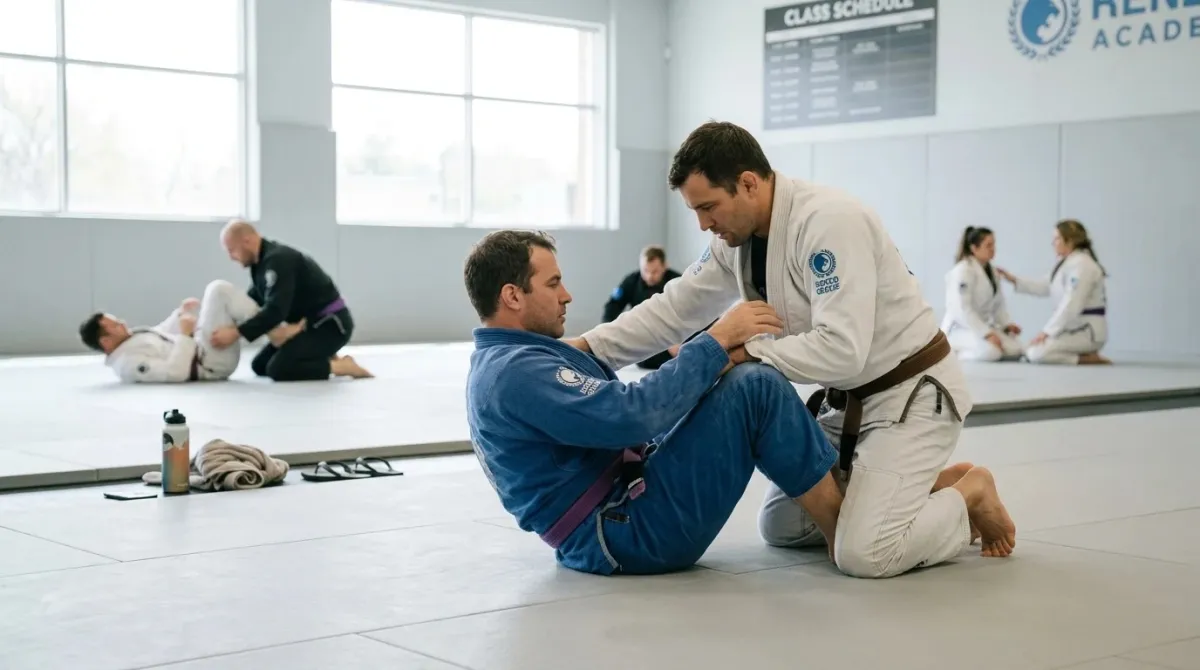
Almost every new student asks the same thing after the first class: how often should I come? The answer depends on your goals, your body and your schedule. This guide explains how often to train jiu-jitsu as a beginner, and how to build a rhythm you can keep.
How often should a beginner train jiu-jitsu?
Most beginners should train jiu-jitsu two times per week, then add a third class as their body and schedule allow. Two weekly sessions give you enough repetition to remember techniques while leaving time to recover. The best schedule is one you can follow week after week, for months and years.
Frequency matters because jiu-jitsu is learned through repetition. If you train once a month, you spend most of each class trying to remember the last one. If you train twice a week, techniques stay fresh, and your body begins to adapt.
In our classes we often see that students who attend regularly progress faster than those who attend in bursts. A steady rhythm builds confidence, friendships and habits that last.
Is one class per week enough?
One class per week is enough to start learning and to stay connected with the academy, particularly for people with busy schedules. Progress is slower than with two or three weekly sessions, but it is still real. The goal is to keep showing up and to enjoy the process.
If you can only attend once a week, choose the same day and time. A fixed routine makes it easier to remember, and your training partners will come to expect you. Review your notes between classes, and mentally walk through techniques while you commute or exercise.
You can also add a bit of home practice, like hip escapes or gentle mobility. Your instructor can suggest simple drills that fit into a small space and take only a few minutes.
Why are two or three classes per week ideal?
Two or three classes per week is ideal for most beginners because it balances learning and recovery. You get regular repetition, your body adapts gradually and you still have time for work, family and rest. This schedule also supports steady progress without burning you out.
| Classes per week | What to expect |
|---|---|
| One | Slow but steady learning; great for busy schedules |
| Two | A solid base; techniques stay fresh |
| Three | Faster progress; needs planned recovery |
| Four or more | Best added gradually once your body has adapted |
These are general ideas, not rules. Everyone has a different body, job and stress level, so use the table as a starting point and adjust with your instructor.
Should you train more as you improve?
As you improve, you can gradually add more classes, but only if your body, schedule and enthusiasm support it. Increase one session at a time and watch how you feel for a few weeks. Adding too much too soon is a common cause of injury and burnout.
Many students settle into three or four sessions per week after the first year, mixing technique classes with open mats. An open mat is a flexible session where students practice and roll without a formal lesson. It offers extra time to repeat techniques and test ideas.
If you are curious about competition, you may train more often. Even then, make sure you schedule rest. The competition team page explains how our competitors balance training and recovery.
How important are rest days?
Rest days are essential in jiu-jitsu because your body adapts and improves between sessions, not during them. Without enough rest, soreness lingers, focus drops and injury risk rises. A good plan includes at least one or two days off from hard training each week.
- Sleep seven or more hours when possible.
- Drink water and eat balanced meals.
- Walk or stretch gently on rest days.
- Skip rolling when you feel very tired or sore.
Rest is not laziness. It is part of the training plan, and the most successful students treat it that way. If you are unsure whether to rest or train, talk to your instructor.
What about soreness and fatigue?
Muscle soreness and fatigue are common for beginners, especially in the first few weeks. The hips, forearms, neck and shoulders often feel tired because jiu-jitsu uses the body in new ways. Mild soreness usually fades in a day or two, but sharp or lasting pain needs attention.
Plan your first month with care. Avoid scheduling hard workouts the day before or after class, and give yourself extra sleep. Gentle movement, hydration and a balanced meal often help you feel better.
If pain lasts more than a few days or gets worse, tell your instructor and see a doctor. We are not medical professionals, and it is always better to check than to guess. Training should challenge you, not hurt you.
How should you plan a weekly schedule?
To plan a weekly jiu-jitsu schedule, pick fixed days and times, spread them out and avoid back-to-back hard sessions. For example, a beginner might train on Tuesday and Thursday, with Saturday as an optional third class. Treat these appointments like any other commitment.
Here is a simple method:
- Look at your week and list the days with the most flexibility.
- Choose two class times that you can realistically attend.
- Leave at least one rest day between hard sessions when possible.
- Review your plan after a month and adjust.
Check the class schedule to find options that fit. Keep in mind that traffic, work and family events can change your week, so build in some flexibility.
How can you stay consistent when life gets busy?
To stay consistent when life gets busy, lower your goal instead of quitting. If you cannot make two classes, attend one. Pack your bag the night before, put classes on your calendar and find a training partner who helps keep you accountable. Small habits keep you moving forward.
Many students find that jiu-jitsu becomes a stress reliever rather than a burden. The hour on the mat is a break from emails and phones. Remembering that benefit makes it easier to show up on tough days.
If you must take a break because of travel, work or illness, return gently. Tell your instructor, ease into the first class back and enjoy seeing how quickly your skills return. The mat will be there.
Does age change how often you should train?
Age can change how often you should train jiu-jitsu, mostly because recovery needs differ. Adult beginners over forty may prefer one or two weekly classes at first, while teenagers may handle more. Everyone should listen to their body and discuss concerns with a doctor.
Adults starting later in life can find programs designed for them, such as the Tatame 40+ program. Younger students can find classes suited to their stage in the Juniors program. Class length and frequency are explained on each page.
No matter your age, a patient approach works best. A steady rhythm protects your body and keeps the sport enjoyable for years.
How do you know when to add another class?
You know it is time to add another jiu-jitsu class when your current schedule feels comfortable, you recover well between sessions and you want more practice. Add one extra session at a time, and keep it for several weeks before adding more. Your instructor can help you judge the right moment.
Signs you are ready include waking up with only mild soreness, having steady energy during class and feeling eager rather than dreading the next session. Signs you should wait include poor sleep, lingering pain and a constant feeling of tiredness.
Think of your training load as a dial, not a switch. Turn it up slowly, check how you feel and be ready to turn it back down if life gets hectic. That flexibility keeps you training for the long run.
What is an open mat, and should beginners attend?
An open mat is a flexible session where students practice techniques and roll without a structured lesson. Beginners can benefit from open mats once they know basic safety rules, since extra repetition helps skills stick. Ask your instructor whether an open mat is a good fit for your level.
At an open mat, you choose your partners and your pace. It is a good place to repeat drills from class, ask a senior student for advice or simply practice movements slowly. Be polite, follow etiquette and remember that new students are welcome to watch first.
What should you do between classes?
Between classes, review what you learned, rest well and do light supportive habits. Write down two or three techniques after each session, practice simple movements at home and stay hydrated. These small actions help your memory and prepare your body for the next lesson.
You can also watch the senior students, ask questions during the next class and think about one thing to improve. A single goal per week, such as better posture or calmer breathing, gives your training focus.
Avoid the temptation to rush ahead with advanced techniques from videos. Build a solid foundation first, and let your instructor guide your learning path.
Ready to find your rhythm?
The best way to learn how often to train jiu-jitsu is to start and see how your body responds. Renzo Gracie West Boca Raton offers a free trial class so you can try a lesson, meet the instructors and ask for advice about your weekly plan.
Look at the class schedule, choose a day that works and book your free trial class. Adults can also read about the adult program to see how classes are organized. We look forward to helping you build a rhythm that lasts.
Frequently asked questions
Is one class per week enough for a beginner?
One class per week is enough to learn and stay connected, although progress will be slower than with two or three. Many people with busy lives start this way and increase later. The key is to attend regularly, so each lesson builds on the one before it.
Can I train jiu-jitsu every day as a beginner?
Most beginners should not train every day. Your body needs time to adapt, and new students often get sore or tired quickly. Build up gradually, take rest days and ask your instructor how to structure your week. Daily training can come later if your body handles it well.
What should I do if I miss a week?
Missing a week is normal, and it is not a setback. Life gets busy, people travel and bodies need rest. Return to class when you can, ease back in and let your partners know. Your skills will come back faster than you expect.
How do I know if I am training too much?
Warning signs include lingering soreness, poor sleep, low energy, irritability and nagging pain. If you notice these, cut back a class or two and rest. Talk with your instructor and, for any ongoing pain, with your doctor before you continue.

 English