
Starting Jiu-Jitsu After 40: A Practical Guide
Esta página ainda não foi traduzida; mostrando a versão em inglês.
Starting jiu-jitsu after 40 is realistic and rewarding when you begin sensibly. Choose a beginner-friendly class, warm up well, tap early and let your pace match your body. Technique and patience matter more than speed or strength, and many adult beginners find the mat a welcoming place to learn something new.
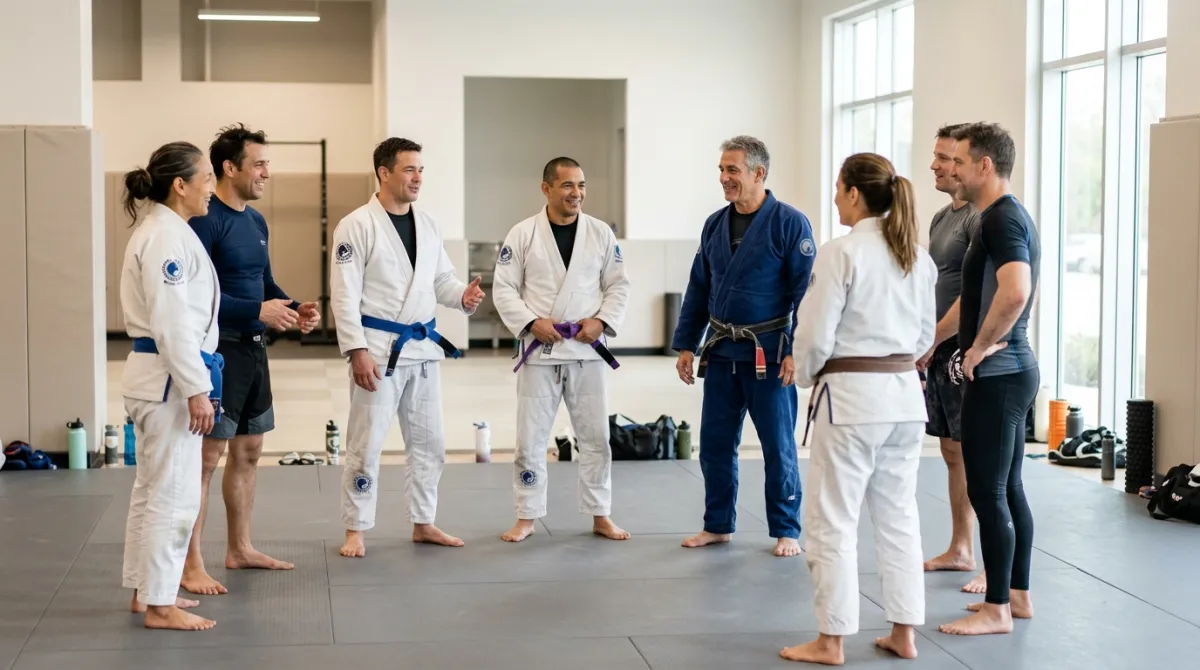
Maybe you played sports in your twenties, maybe you never did. Either way, you are thinking about starting jiu-jitsu after 40 and wondering whether it is realistic. It is. Plenty of adults begin later in life, and with a thoughtful approach the mat can be one of the most rewarding places to learn.
Is it realistic to start jiu-jitsu after 40?
Yes, it is realistic to start jiu-jitsu after 40. Adults of many ages begin training, often with no athletic background. The sport rewards patience and technique, which suits mature learners well. A good academy will guide you through fundamentals, adjust drills to your body and welcome you as a beginner.
The main difference for adult beginners is pacing. Younger students may recover faster, but mature students often bring focus, discipline and a clear sense of why they are there. In our classes we see that attitude counts for a lot.
It also helps to remember that jiu-jitsu is a lifelong art. You are not competing against twenty-year-olds. You are building skill at your own speed, and the journey itself is the reward.
What are the best reasons to begin later in life?
Common reasons to start jiu-jitsu after 40 include learning a new skill, finding an enjoyable way to stay active, making friends and building confidence. Many adults also like the mental challenge and the break from screens. The mat is a place where you are fully present.
- A fresh challenge: Learning something new keeps the mind engaged.
- Community: Training partners often become close friends.
- Activity you enjoy: Many adults prefer a class to a solo workout.
- Personal growth: Small wins build confidence over time.
Whatever your reason, make it your own. A clear purpose helps you stay motivated when the learning curve feels steep, and every instructor has seen students with the same goals.
Should you talk to a doctor first?
Yes. Before starting jiu-jitsu after 40, talk to your doctor, especially if you have joint pain, heart or blood pressure concerns, past injuries or take medications. A physician can explain what is safe for your body. Share that advice with your instructor so training can be adjusted.
We are not medical professionals, and we do not give medical advice. What we can do is listen, adapt drills and keep you informed about what happens in class. If something feels wrong, stop and tell the instructor right away.
Being honest about your limits is a strength. Students who communicate clearly tend to train longer and enjoy it more. It is far better to adjust early than to push through discomfort.
How do you choose the right class?
To choose the right class after 40, look for a beginner-friendly program with qualified instructors, clear structure and a respectful culture. A class where experienced students slow down for newer ones is ideal. Watching a session or trying a free class can show you quickly whether the environment fits.
Renzo Gracie West Boca Raton has programs shaped around mature students. You can read about the Tatame 40+ program and the Tatame 50+ program to see the details. The adult program is also open to beginners of all ages.
Questions worth asking any academy:
- Is there a beginner-friendly class or fundamentals session?
- How do instructors handle students with injuries?
- Are experienced students encouraged to roll lightly with newcomers?
- Can I watch or try a class before committing?
How should you warm up and prepare?
Warming up before jiu-jitsu prepares the neck, shoulders, hips, knees and ankles for movement. Spend a few minutes on gentle cardio and mobility before class, and join the full group warm-up. Arriving early to loosen up is a smart habit for any adult beginner.
Many adult students also add a short routine at home. A few minutes of hip and shoulder mobility, light core work and gentle stretching can make a noticeable difference in how you feel. Keep it simple and consistent.
Do not skip hydration. South Florida's climate can make you sweat quickly, so drink water before and after class. If you feel dizzy or unwell, stop and rest. Your instructor will always support that choice.
How can you avoid injuries as an older beginner?
To avoid injuries as an older beginner, tap early, train with controlled partners, warm up thoroughly and take recovery days. Avoid ego, since rushing or resisting every technique is the fastest way to get hurt. Tell your instructor about sore areas and any past injuries.
The habits that keep you safe are simple:
- Tap before it hurts, not after.
- Choose partners who are calm and controlled.
- Skip rolling on days when you are very tired or sore.
- Keep nails trimmed and gear clean.
- Speak up if a technique feels risky for a specific joint.
No contact sport is free of risk, and injuries can happen. The best protection is awareness, communication and patience. See a doctor for any pain that does not improve.
What does a good training pace look like?
A good training pace for a new adult student is one or two classes per week at first, increasing gradually as your body adapts. Space your sessions so that you have recovery time between them. It is better to train steadily for years than to burn out in a month.
In our classes we often see enthusiastic beginners overdo it in the first weeks. They arrive sore, tired and discouraged. A calmer start leads to better long-term results, and you will still improve quickly because the early lessons are so new.
Use class rhythm to your advantage. Drills and technique practice are an excellent way to learn without heavy contact, and rolling can be added at a pace that suits you.
How does recovery work for adult students?
Recovery for adult jiu-jitsu students involves sleep, hydration, balanced meals and rest days. Your body adapts to the new demands of training between classes, not during them. Gentle movement such as walking or stretching can feel good on off days, while pain should be discussed with a doctor.
Pay attention to how you feel the day after class. Mild muscle tiredness is common for beginners, but sharp or lingering pain is a signal to slow down. Share what you notice with your instructor so that drills can be adjusted.
Avoid comparing your recovery to younger classmates. Everyone is different, and a calm schedule with enough rest helps you stay on the mat for the long run.
What should you eat and drink around class?
Around jiu-jitsu class, eat a light meal or snack about two hours before training, drink water through the day and avoid heavy food right before you step on the mat. After class, a balanced meal and fluids help you feel ready for the next session. Everyone responds differently, so notice what works for you.
Many adult students find that a big meal just before class makes rolling uncomfortable. Others feel low on energy if they train hungry. A small snack, like fruit or a handful of nuts, often does the trick. Experiment gently and keep notes.
For personal nutrition questions, especially if you have health conditions, speak with your doctor or a registered dietitian. We focus on teaching jiu-jitsu, and we leave diet advice to the professionals.
What will your first month feel like?
In the first month of jiu-jitsu, expect to feel new, tired and curious. You will learn basic movements, terms and positions, and you will probably forget half of them by the next class. That is normal. Repetition is the teacher, and the second month feels much calmer than the first.
You may also feel sore in surprising places, such as the forearms, hips and neck. Keep your sessions moderate, get enough sleep and tell the instructor about anything that feels sharp or unusual. Mild tiredness is common, but pain deserves attention.
Socially, the first month is when you start to recognize faces and learn names. Take the chance to introduce yourself. Friendships on the mat often begin with a simple question like "Can I drill with you?"
How do you deal with the ego and the learning curve?
Dealing with ego is a big part of starting jiu-jitsu after 40. You may be used to being competent at work, and on the mat you will be a beginner again. Embrace that feeling. Ask questions, laugh at mistakes and remember that every black belt once had no idea what a guard was.
Training partners of all ages will help you. Younger students often respect mature beginners because of their commitment. Older students understand the journey and are glad to share what they know.
Set small goals: learn one escape this month, stay calm during a hard round, or arrive on time twice a week. Small goals make the learning curve feel smaller.
What about private lessons?
Private lessons are a good option for adult beginners who want personal attention, a slower pace or help with specific concerns. A one-on-one session lets the instructor focus on your body, your questions and your goals. Many students use private lessons alongside group classes.
If you are nervous about joining a group right away, a private lesson can build confidence quickly. You can learn the basics, the vocabulary and the movement patterns before stepping into a larger class. Learn more on the private lessons page.
How can you take your first step?
The easiest way to begin jiu-jitsu after 40 is to try a class. Renzo Gracie West Boca Raton offers a free trial class so you can meet the instructors, see the room and try a lesson with no commitment. Tell the team about your concerns, and they will guide you.
Look at the class schedule, choose a time that works for your week and book your free trial class. Whether you live in Boca Raton or nearby, you are welcome on our mats. Your first day as a white belt is waiting.
Perguntas frequentes
Am I too old to start jiu-jitsu at 40?
No. Many people begin jiu-jitsu in their forties, fifties and beyond. The key is choosing a beginner-friendly class, training at a pace that suits your body and listening to your instructor. Age is only one factor, and consistency and patience matter more than the number.
Do I need to see a doctor before I start?
It is wise to check with your doctor before beginning any new physical activity, especially if you have joint issues, heart concerns, past injuries or take medication. Share your doctor's advice with your instructor so classes can be adjusted to suit your needs.
Will I be the oldest person in the room?
Possibly not. Adult classes often include students of many ages and backgrounds, and some academies offer classes designed for mature beginners. Our 40+ program page explains what is available. You will find that people on the mat care more about your attitude than your age.
How often should I train when I start?
Most adult beginners do well with one or two classes a week at first, then add a third as their body adapts. Give yourself recovery days, and listen to your body. Quality sessions and steady consistency matter more than doing too much too soon.

 Portuguese