
A Family That Trains Together: Parents and Kids at the Same Academy
Esta página ainda não foi traduzida; mostrando a versão em inglês.
A family can train together at the same academy even when each person takes a different class. Parents join adult sessions, children join programs made for their age, and everyone shares a routine, a community and stories to swap on the drive home. The family grows together without sitting in the same class.
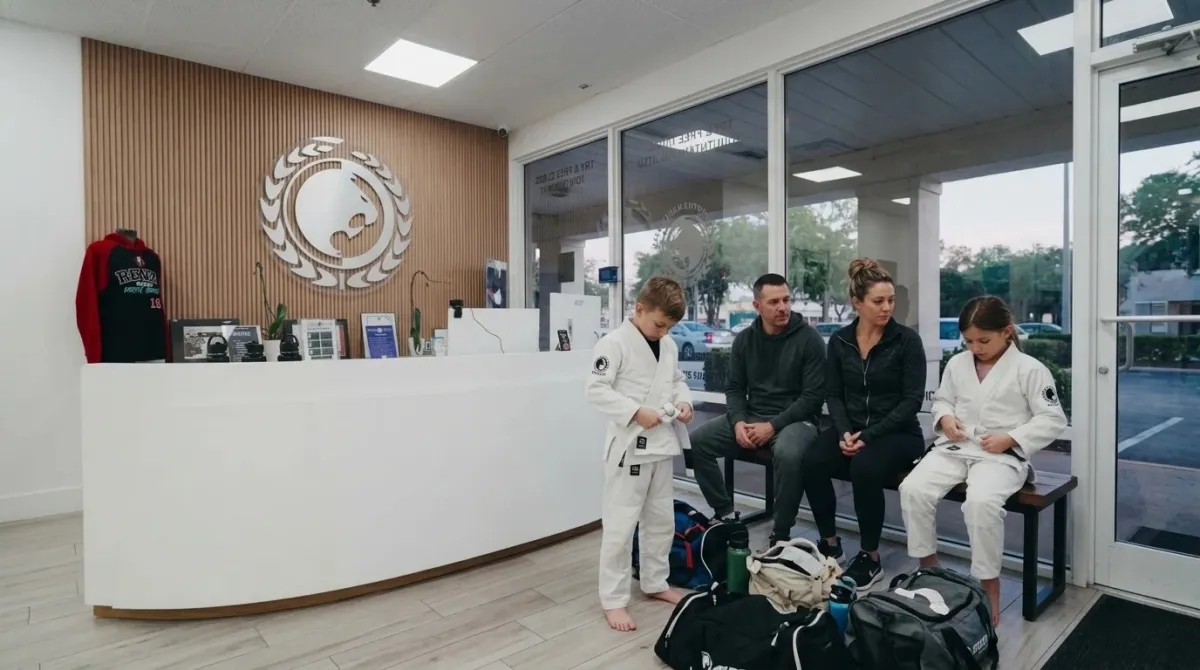
Picture a Tuesday evening. One parent is warming up in the adult class, a child is bowing in the kids class and a sibling is waiting to start. The family shares the same building, the same values and the same dinner conversation afterward. That is the idea behind a family that trains together, and this article explains how it works.
What does it mean to train together as a family?
Training together means being part of the same academy and the same weekly rhythm, not necessarily training side by side. Each person attends a class suited to their age and level. The family shares the experience in the car, at the table and in the hallway after class.
At our academy, adults train with adults and children train in programs designed for them. Men train with men, women with women and children with children their own age. That structure keeps everyone safe and comfortable while still giving the family a common world.
Our parents page explains how families can take part and what support is available.
Why do families enjoy a shared academy?
Families enjoy it because it simplifies life and deepens connection. When a parent and child both attend, there is a common language, a shared calendar and a mutual interest. Conversations become richer, because parents know what a stripe or a drill really means.
Children often feel proud to see a parent as a student. Watching a mother or father struggle, laugh and keep going teaches a child that learning is lifelong. Parents, in turn, see their children's courage and effort from a new perspective.
We also see practical benefits: one trip instead of two, fewer evenings lost to separate activities and a calmer schedule overall.
How can parents and kids each train in their own class?
The easiest approach is to look at the class schedule and find times when your child's class and your own class sit close together. Many families arrange their week so that one parent trains while the child is in class, or so that both parents train on alternating days.
Every person gets a program that fits. Younger children may join Baby Jitsu or Little Champions, older children Juniors or Teens, and adults the Adults, Women or Tatame programs.
If one parent prefers to watch, that is fine too. Many parents begin as spectators and become students after a few months.
What happens when a parent is a beginner and the child is more advanced?
This situation is common and can be charming. A child with a year of experience may know more than a parent starting out. It is a healthy reversal, and it teaches humility to everyone. Parents learn what it is like to be the beginner, and children learn to be patient teachers at home.
Resist the urge to compete. Each person is on their own path, with their own instructors and classes. Celebrate each other's wins and keep the conversation kind.
If one family member is nervous, a few private lessons can help them feel ready for a group class.
How do you build family habits around training?
Start by choosing a weekly routine that everyone can keep. Pack bags the night before, set a standard dinner time and agree on who drives. When training becomes part of the family calendar, it stops feeling like an extra and becomes a natural part of life.
Some simple ideas:
- Prepare uniforms together on the weekend.
- Share one thing you learned in the car ride home.
- Celebrate stripes and promotions with a family dinner.
- Take turns choosing the post-class snack.
If laundry becomes a challenge, ask about our wash and dry service, which can make life easier for busy households.
Is it safe to have family members in different classes?
Yes. Programs are designed for specific ages and levels, with instructors who know how to manage each group. Safety rules are the same across the academy: tap early, respect partners and listen to the coach.
Parents sometimes worry that kids will be distracted by seeing them. In practice, children focus once class begins. They enjoy the comfort of knowing a parent is in the building, but they also appreciate the independence of their own class.
If anyone has a health concern, talk to the instructors before starting. Open communication helps everyone feel secure.
What are the benefits for the whole family?
Benefits include improved fitness, new friendships, shared goals and a stronger sense of belonging. Children see healthy habits modeled by their parents, and parents get a break from daily stress. The academy becomes an extended community.
Over time, families often tell us that they feel closer and more patient with each other. We do not claim that jiu-jitsu solves family challenges, but we have seen how a shared activity can open doors for conversation and respect.
For ideas on how children benefit by age, read our guide to kids jiu-jitsu benefits by age.
What do children gain from seeing their parents train?
Children gain a powerful example. When a child sees a parent tie a belt, fall, laugh and try again, they learn that adults are also learners. This models resilience far better than any lecture. A parent who admits that something was hard and keeps going teaches more than one who only gives advice.
Children also feel valued when a parent shares their world. The academy becomes a place where both generations have stories. A child might proudly show a parent how to bow or what the new word means, flipping the usual roles in a sweet way.
We do not suggest that parents must train for children to thrive. Many wonderful parents watch and support from the side. But for those who are curious, training can be a gift to the whole family.
How can siblings train at the same academy?
Siblings often enjoy having the same academy, even in different classes. They share rides, bag checks and post-class snacks, and they learn to cheer for each other. An older sibling can model good behavior, and a younger one can inspire with enthusiasm.
Avoid comparisons. Each child progresses at their own pace, and a younger sibling may earn a stripe before an older one. Celebrate each win without ranking. If rivalry appears, talk to the instructor, who has seen it many times and can help channel it into healthy motivation.
If your children are at different ages, they will most likely train in different programs. Our guide on benefits by age can help you understand what each stage looks like.
How do you keep it fun and avoid burnout?
Keep the focus on enjoyment. Avoid turning training into a source of pressure or a way to settle arguments. If a child is tired, let them rest. If a parent is overworked, skip a class without guilt. A family that trains for years does so because it feels good, not because it feels like an obligation.
Mix in lighter moments: a smoothie after class, a weekend walk or a movie night after a promotion. These small rituals link training with happiness. They also help children associate the academy with warmth.
If anyone loses interest for a while, that is normal. Take a break, talk about what changed and return when it feels right. The mat will still be there.
How can your family get started in Boca Raton?
Book a free trial class for each person who wants to try. You can reserve through the free trial page and mention that you are coming as a family, so we can help with timing. Take a look at the pricing page if you would like to understand the options.
Come with questions. We love meeting families and helping each person find the right place on the mat.
Perguntas frequentes
Can parents and children train in the same class?
At our academy, parents and children each take a class suited to their age and level. They share the academy and the routine, but not the same session.
What if I only want my child to train?
That is perfectly fine. Many parents begin by watching and later decide to join. There is no obligation.
Do you offer family schedules?
Check the schedule to find class times that fit together, and ask the team for suggestions. We are happy to help families plan.
Is there a discount for families?
Please see the pricing page or ask the team for current information about membership options. We do not list rates in this article.

 Portuguese