
Preparing for Your First BJJ Tournament
Esta página ainda não foi traduzida; mostrando a versão em inglês.
Preparing for your first BJJ tournament is about readiness, not perfection. Choose a division that fits you, learn the basic rules, train with purpose, pack your gear early and plan your day. Nerves are normal, and the goal is to learn, enjoy the experience and compete respectfully.
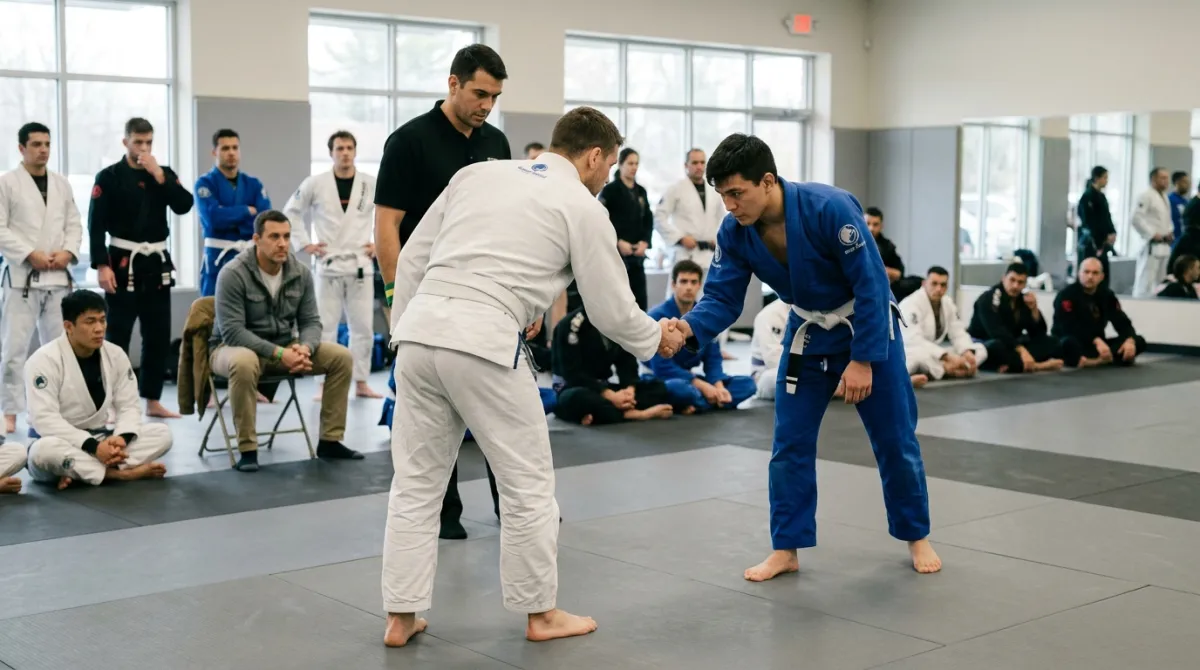
Your first tournament can feel like a leap. It is also one of the most memorable steps in your jiu-jitsu journey. A first BJJ tournament is not a test of your worth. It is a chance to try your skills against someone you have never met, in a structured and respectful setting.
Should you compete in a first BJJ tournament?
Competing in a first BJJ tournament is a personal choice. It can be a rewarding experience that sharpens your skills and builds confidence, but it is never required. If you feel curious and reasonably prepared, a tournament can be a positive step. If not, waiting is perfectly fine.
Think about your reasons. Do you want to test yourself, spend a day with teammates or simply see what it is like? Good reasons are about learning and enjoyment. Be cautious if you feel pressured by others or by comparison.
In our classes we tell students that a tournament should never feel like an obligation. Talk to your instructor, who can help you decide when the timing is right.
How do you choose the right division?
Tournament divisions are usually organized by age, belt rank, weight class and gender. Choose the division that matches your details exactly, as listed by the organizer. Your instructor can help you read the categories, check the rules and pick the event that suits your level.
- Age division: Based on your age at the time of the event.
- Belt rank: Competitors are matched with similar belts.
- Weight class: Based on your weight with the uniform on, in many events.
- Gender: Separate brackets are common.
Rules differ between organizations, so read the official guidelines carefully. Pay attention to uniform requirements, registration deadlines and weigh-in procedures. Never assume that rules from one event apply to another.
What are the basic rules to understand?
The basic rules of a BJJ tournament cover how points are scored, which techniques are legal and how a match is won. Matches are won by submission or by points, with advantages sometimes used to break ties. A referee controls the match and enforces safety rules.
Points are given for achieving certain dominant positions, such as mount or back control, and for takedowns and sweeps. Each organization publishes its point values and its list of prohibited techniques, which often vary by belt and age.
Ask your instructor to explain the rules before your first event. Watch a few matches online or in person so the pace and format feel familiar. Knowing what the referee is looking for removes a lot of confusion on the day.
How should you train before the tournament?
To train for your first BJJ tournament, practice your core techniques, add live rounds under match conditions and focus on a few reliable positions. Avoid learning many new moves in the final weeks. Simple, well-practiced skills hold up better under pressure than complicated ones.
A simple preparation plan might include:
- Choose two or three positions you feel comfortable in.
- Drill entries and finishes for those positions.
- Do timed rounds, with a partner who matches the match length.
- Practice starting from standing and from your knees.
- Review your game plan with your coach.
Build up gradually and keep rest days. Overtraining before an event is a common mistake. The competition team page explains how competitors structure their preparation.
What is a game plan, and why do you need one?
A game plan is a simple strategy for how you want the match to unfold. It includes how you will start, what position you will try to reach and how you will respond if things go differently. A clear plan reduces panic and gives you something to focus on when adrenaline rises.
For a first tournament, keep your plan basic. For example, you might aim to take the match to the ground, hold a stable top position and look for one or two reliable finishes. Defense matters too, so know how you will recover your guard or escape from the bottom.
Talk through your plan with your coach and practice it in class. Be ready to adjust, since opponents rarely behave exactly as you expect.
How should you handle nerves?
Nerves before a first tournament are normal, and they mean you care. Manage them with deep breathing, a familiar warm-up, positive self-talk and the support of teammates. Focus on what you can control: your preparation, your attitude and your effort.
Many competitors feel their heart racing and their hands shaking in the warm-up area. That is just adrenaline. Slow your breathing, take a sip of water and remind yourself of your game plan. Look around, and you will see that almost everyone else is nervous too.
Ask your coach to be near the mat. A calm voice and a familiar face can make a big difference. Remember that the goal is to learn, not to prove anything.
What should you pack and prepare?
Pack your tournament bag a few days early with an approved gi, belt, rash guard, sandals, water, snacks, a towel, identification and your registration confirmation. Check the uniform rules, since some events inspect gis for fit and patches. Prepare your travel plan and arrive with time to spare.
- Clean, pressed gi and belt that meet the event's rules.
- Sandals or slides for walking off the mat.
- Water bottle and light, familiar snacks.
- Towel, spare shirt and hygiene items.
- Printed or digital registration and a photo ID.
Trim your nails and check your gi for loose threads or tears. Little details can cause delays at the check-in table, and you want to walk into the event calm and ready.
What happens on tournament day?
On tournament day, you arrive early, check in, confirm your bracket, warm up and wait for your match to be called. Events often run behind or ahead of schedule, so stay close to your area. After your match, cool down, thank your opponent and review it with your coach.
Expect a busy venue with many mats, referees and spectators. Find your teammates, stay hydrated and avoid wandering too far. Eat something light and familiar, and avoid trying new foods on the day.
Keep a positive attitude. Support teammates, respect officials and thank every opponent after the match. Good sportsmanship is a core value of jiu-jitsu, and people remember how you carry yourself.
How should you think about weight and food?
For a first tournament, aim to compete near your natural weight and avoid extreme methods of changing it. Eat balanced meals, stay hydrated and talk to a doctor or registered dietitian if you have questions. Your safety and long-term health matter far more than any single match.
Many beginners worry about weigh-ins. Read the organizer's rules, plan your arrival and check whether the weigh-in includes the uniform. If you are close to a limit, ask your coach for guidance well before the event.
Do not make big changes to your diet in the final days. Stick with familiar meals and healthy habits. Consistency in training and routine will serve you better than any last-minute adjustment.
How do you pick the right tournament?
To pick the right first tournament, choose a well-organized local event with clear rules, divisions for your belt and age and a schedule that works for you. Ask your coach for recommendations, read the organizer's guidelines and consider events that welcome beginners. A friendly first experience matters more than a famous name.
Think about practical details too: travel time, cost of entry and how many teammates will attend. Having familiar faces nearby makes everything easier. Check registration deadlines early, since many events close signups well before the date.
Smaller local tournaments are an excellent place to start. Matches are shorter, the atmosphere is relaxed and you can build experience before entering bigger competitions.
How can parents support a young competitor?
Parents can support young competitors by staying calm, encouraging effort and letting the coach lead. Praise bravery and sportsmanship rather than only wins, keep snacks and water handy and manage your own nerves so that your child feels secure. Remember that youth tournaments should be fun and educational.
Avoid shouting instructions from the sidelines, which can confuse a child. Instead, smile, cheer and give a hug afterward. Ask what your child learned and what they enjoyed. Those conversations matter far more than the result.
Families can learn more about youth training in the Juniors program and the parents page.
What should you do after your match?
After your match, shake hands, thank your opponent and the referee, then find your coach. Take time to cool down, hydrate and eat. Later, write down what went well and what to improve. Whether you won or lost, you gained experience that will help your training.
It is normal to feel a mix of excitement, disappointment or relief. Give yourself a day or two before deciding what to work on. Many competitors find that a first tournament shows them gaps they never noticed in class.
Use the lessons to guide your next months of training. If you enjoyed it, consider another event. If you did not, that is also useful information. Teens and kids can learn more in the Teens program and the Juniors program.
How can you start working toward your first event?
You can start working toward your first tournament by training regularly, talking with your coach and choosing an event that fits your level. Renzo Gracie West Boca Raton offers a free trial class for newcomers, and experienced students can learn about the competition team from the instructors.
If you are new to jiu-jitsu, begin with a free trial class and see how training feels. Adults can explore the adult program, and every student can check the class schedule to plan their week. We are happy to support your goals in Boca Raton and beyond.
Perguntas frequentes
How do I know if I am ready for my first BJJ tournament?
You are ready when you understand the basic rules, have trained consistently for a few months and feel curious rather than pressured. Your instructor can help you judge readiness. Competing is optional, and there is no shame in waiting until you feel prepared.
What division and weight class will I compete in?
Divisions are usually based on age, belt rank, gender and weight. The tournament organizer publishes the categories in advance, and your instructor can help you choose the right one. Check the event rules carefully, and confirm your weight and uniform requirements before registering.
What should I pack for a BJJ tournament?
Pack your approved gi and belt, a spare gi if allowed, a rash guard, sandals, a water bottle, snacks, a towel, ID and any registration confirmation. Check the organizer's rules for uniform details, and bring a bag that keeps everything organized and dry.
What if I lose my first match?
Losing a first match is very common and a valuable lesson. Thank your opponent, listen to your coach and note what to work on. Many competitors say they learn more from a first loss than from any class, and they return stronger.

 Portuguese