
Your First BJJ Class: What to Expect
Esta página ainda não foi traduzida; mostrando a versão em inglês.
Your first BJJ class at Renzo Gracie West Boca Raton follows a simple rhythm: a short warm-up, one or two techniques taught step by step, drilling with a partner, and optional light rolling. You do not need experience or fitness. Wear comfortable clothes, bring water, and tell the instructor it is your first day.
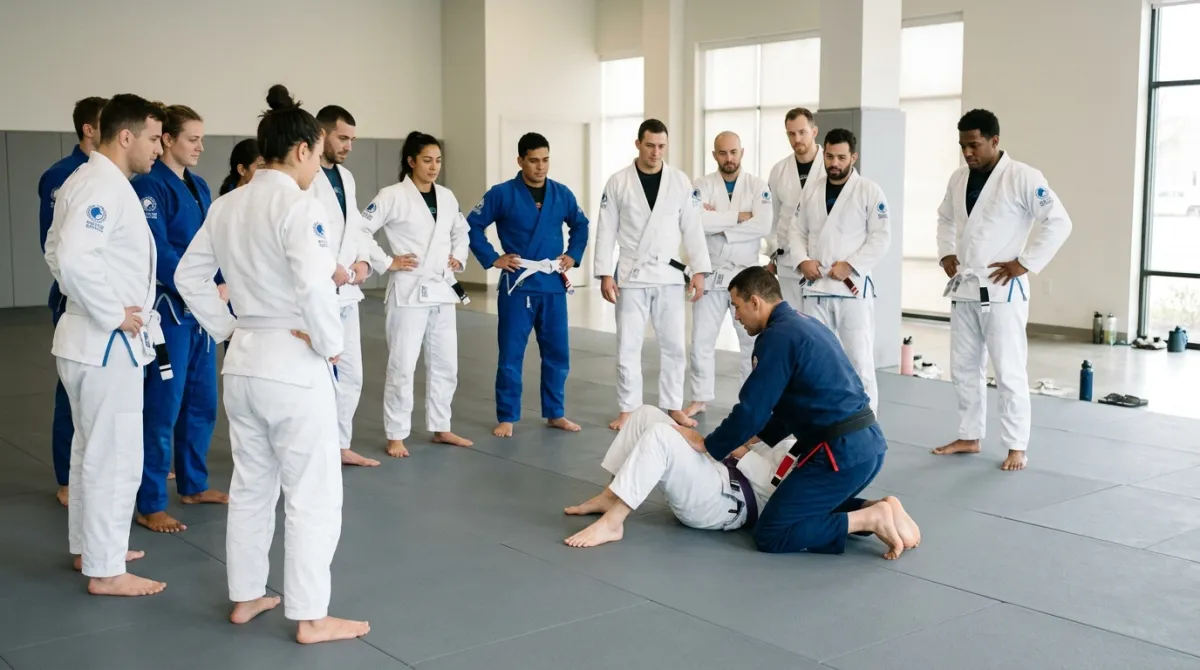
Walking into a new academy can feel like a big step, so let us make it smaller. Your first BJJ class is built for people who have never touched a gi, and it is simpler than most beginners expect. Here is what happens, step by step, and how to feel ready before you arrive.
What happens in a first BJJ class?
A first BJJ class at Renzo Gracie West Boca Raton follows a steady pattern: a warm-up, a technique lesson, partner drilling, and sometimes a short round of live practice called rolling. The whole session usually lasts about an hour, and the instructor guides every step so that you always know what comes next.
In our classes we like to say that the first day is about getting comfortable, not about being good. You will meet the instructor, learn where to stand and where to put your shoes, and find out how the mat works. Most of the learning in the first hour is simply seeing how a class flows.
If you want the details of timing, check the class schedule and pick a session that suits your week. Beginners are welcome in our adult classes, and you will see other new faces more often than you think.
What should you wear to your first BJJ class?
For your first BJJ class, wear comfortable athletic clothes without zippers or hard buckles: a fitted t-shirt or rash guard, and stretchy shorts or leggings. Most academies lend or sell a gi (the traditional jiu-jitsu uniform) when you need one. You do not have to buy anything before you try a class.
A few simple rules make the day easier:
- Remove jewelry, watches and piercings that could snag or scratch.
- Keep fingernails and toenails short and clean.
- Bring a water bottle and a small towel.
- Wear sandals or slides to walk off the mat, never street shoes on the mat.
Clean clothes and good hygiene matter a great deal in a sport with close contact. Showering before class and wearing fresh clothes is a courtesy that every training partner will notice and appreciate.
How does the warm-up work?
The warm-up in a BJJ class prepares your joints and muscles for training with light cardio and movement drills. It usually includes jogging or skipping, hip and shoulder mobility, and a few jiu-jitsu-specific movements such as shrimping, rolling forward and bridging. Each one is shown first, so beginners can follow along calmly.
These movements may look strange on day one. Shrimping, for example, is a hip escape that you do on your back, and it is the basis of many defensive skills. Do not worry if your first attempts feel clumsy. Everyone in the room started exactly where you are.
Warm-ups are also a good time to meet people. We often see new students relax as soon as they realize that nobody is judging how they move. Go at your own speed, listen to your body, and ask the instructor if you are unsure about a movement.
What will you learn in the technique portion?
In the technique portion of a first BJJ class, the instructor demonstrates one or two moves slowly, explains the key details, and answers questions. Beginner lessons usually cover a safe position, an escape or a simple control. The goal is clear understanding, not speed or strength.
Because jiu-jitsu is a game of positions, you will hear words like guard, mount and side control. Do not try to memorize them all. Your instructor will explain each term the first time it appears, and the vocabulary comes naturally with repetition. If a word is new, just ask.
When the instructor shows a technique, watch for three things: where the hips are, where the hands are, and which direction the body moves. Those three details unlock most beginner skills. You can also ask to see a move a second time. Good instructors are happy to repeat it.
What is drilling, and why does it matter?
Drilling means repeating a technique with a cooperative partner so your body learns the pattern. One person plays the attacker, the other plays the defender, and they swap roles after a set number of repetitions. Drilling is where most beginners notice real progress in the first weeks.
During drilling, the instructor walks around the room, corrects details and helps pairs who feel stuck. This is a great moment to ask questions. Many students find that a tiny adjustment, such as turning a knee or lowering an elbow, makes a move suddenly click.
Partners at this stage should work smoothly, never with sudden force. If your partner moves too fast or too hard, say so politely. Clear, kind communication is part of the culture, and it is one reason people feel safe in a good academy.
What is live rolling, and do beginners have to do it?
Live rolling is the free-practice part of jiu-jitsu, where two students try to apply what they have learned while the partner resists. Beginners do not have to roll on day one. You can watch, drill again, or take a short, light round with an experienced partner once you feel ready.
Rolling is not a fight. It is a conversation with your body and your partner's body, and the goal is to learn. Experienced students are asked to adjust their pace to the newer person, using control and care. Strong, patient partners are a sign of a healthy academy.
The most important rule of rolling is the tap. When you tap your partner or the mat, the action stops right away. Tapping is not weakness. It is how everyone stays safe and keeps training for years, and it will be the first habit you build.
How does tapping out work?
To tap out, you firmly tap your partner's body, your own leg or the mat two or three times with your hand or foot, or say "tap" out loud. Your partner must release immediately. Learning to tap early is the best safety skill a new student can have.
How will you feel after your first class?
After a first BJJ class, most people feel tired, happy and curious. Your muscles may feel used in unfamiliar ways the next day, particularly in the grip, hips and shoulders. That is normal for any new activity. Drink water, eat a balanced meal and give yourself time to rest.
It is also normal to feel a bit overwhelmed. There is a lot of new vocabulary and movement in one hour. We often see students leave unsure that they understood anything, then return for a second class and find that things already feel familiar. Jiu-jitsu rewards patience.
If something hurt during class, mention it to the instructor right away. For any physical concern, speak with your own doctor before continuing to train. Our job is to teach you carefully, and your job is to listen to your body.
How should you prepare before you arrive?
To prepare for your first BJJ class, eat a light meal a couple of hours earlier, drink water throughout the day, and arrive about ten to fifteen minutes early. Arriving early lets you meet the instructor, ask questions, sign any forms and walk through the academy without rushing.
Here is a short checklist you can follow:
- Pick a class from the schedule and confirm your spot.
- Pack a water bottle, a towel, sandals and a change of clothes.
- Trim your nails and remove all jewelry.
- Tell the instructor that it is your first class and mention any injuries.
- Leave your phone in your bag and focus on the lesson.
Parents who want to bring a child can start with the parents page to learn how our kids programs work. Women who prefer to start in a women-focused environment can read about the women's program.
Is jiu-jitsu safe for a complete beginner?
Jiu-jitsu can be a safe activity for beginners when it is taught by a qualified instructor in a well-run academy. Safety comes from clear rules, a culture of tapping early, supervised drilling and partners who control their strength. No contact sport is free of risk, so take the instructor's guidance seriously.
In our classes, new students are paired with partners who are patient and aware of their level. We teach beginners to protect their necks, knees and fingers, and to speak up when something feels wrong. Healthy habits formed in the first month last for years.
If you have a medical condition or a past injury, ask your doctor whether training is a good fit. Share that information with your instructor as well, so that techniques can be adjusted to fit your body.
Where does your jiu-jitsu journey go from here?
After your first BJJ class, most students settle into a rhythm of two or three sessions each week. Over time you will start to link techniques, understand positions and earn your first stripe. The adult program gives you a structured path from white belt onward.
Progress in jiu-jitsu is gradual, and that is part of its charm. A skill you struggled with in week two will feel natural by month three. Setting small goals, like learning one escape per week, keeps motivation high and builds confidence.
When you are ready to talk about options, visit the pricing page or ask the team during your visit. There is no pressure on your first day. The goal is to let you try the art and see whether the mat feels like a place you belong.
Ready to try your first class?
Booking a free trial class at Renzo Gracie West Boca Raton is the easiest way to experience jiu-jitsu for yourself. You can see the academy, meet the instructors and join a real class without any commitment. Bring water, bring curiosity, and let us handle the rest.
Whether you live in Boca Raton or elsewhere in South Florida, the first step is the same: show up and give it one honest hour. Most students who try it are glad they did. We look forward to meeting you on the mat.
Perguntas frequentes
Do I need to be in shape before my first BJJ class?
No. Jiu-jitsu is how many people get in shape, not something you must do first. The warm-up and drills are scaled, and you can rest whenever you need to. Tell the instructor about any injuries or concerns, and move at a pace that feels comfortable on day one.
Will I have to spar in my first class?
No one is forced to roll on day one. Many beginners watch, drill the technique with a partner, and add a short, light round once they feel ready. Your instructor will pair you with a patient, experienced partner and will never push you past what you are comfortable doing.
What happens if I get tired or overwhelmed during class?
Step off the mat, drink some water and catch your breath. Every student does this, including experienced ones. Instructors expect it from new students and will welcome you back when you are ready. Tiredness on day one is normal and says nothing about your future in the sport.
Can I bring a friend or family member to try a class with me?
Many people feel more relaxed with a friend beside them. Ask when you book your free trial class so the team can plan for both of you. Adults and parents can also look at the program pages first to find the class that fits each person best.

 Portuguese