
Portuguese Words You Will Hear in a BJJ Class
Esta página ainda não foi traduzida; mostrando a versão em inglês.
Brazilian jiu-jitsu comes from Brazil, so many class terms are Portuguese. Common words include faixa (belt), tatame (mat), guarda (guard), montada (mount), raspagem (sweep) and finalização (submission). Learning them helps you follow instructions and feel at home, and nobody expects perfect pronunciation.
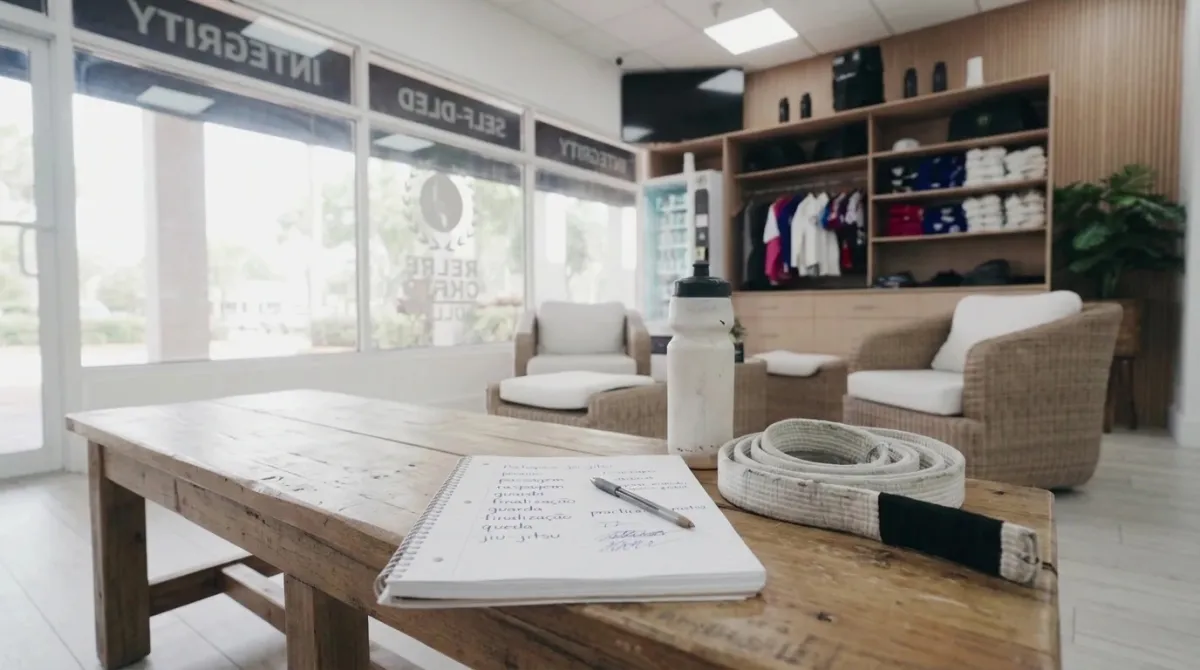
Step into a jiu-jitsu academy and you will quickly notice that some words sound unfamiliar. Brazilian jiu-jitsu grew in Brazil, and many of its terms are Portuguese. Do not worry: you do not need to speak the language. This guide lists the words you are most likely to hear, what they mean and how they are used, so class feels friendly from day one.
Why does BJJ use Portuguese words?
Many jiu-jitsu words are Portuguese because the art developed in Brazil, where the Gracie family and others refined and taught it. As the sport spread worldwide, the vocabulary spread with it. Instructors in the United States often mix English and Portuguese, using whichever word the students understand best.
If you would like the story behind it, read our article on the Gracie family history. At Renzo Gracie West Boca Raton, our coaches teach in English and explain any term that is new to you, so you never need to feel behind.
What are the most common words around the mat?
The most common words describe places, people and objects in the academy. Learning these first helps you feel comfortable before you even start training. Here are the basics, with simple English meanings.
- Tatame: the mat or training area. It is also used for the floor itself.
- Kimono: the uniform, also called the gi. The word is Japanese in origin and is used in Brazil too.
- Faixa: belt. You will hear faixa branca (white belt) or faixa azul (blue belt).
- Professor: teacher or instructor. Students often address the instructor this way.
- Mestre: master, a title of high respect for senior teachers.
- Aluno / aluna: student (male / female).
- Academia: the academy or gym.
For more about belts, see the belt system entry and our BJJ belt system guide.
What does "oss" mean?
"Oss" is a word used as a greeting, a thank you or a sign that you understand. It is heard so often on jiu-jitsu mats that it has become part of the culture, although its exact origin is debated. You can say it to acknowledge an instruction, to greet a partner or to show respect.
You can read more in our short entry on oss in jiu-jitsu. If you feel shy about saying it, a smile and a nod work just as well at first.
Which position words will you hear?
Position names describe where bodies are in relation to each other. Many coaches use English names now, but the Portuguese terms still appear in videos, books and seminars, so they are good to know.
- Guarda: guard, the position where you control your opponent with your legs. See guard.
- Montada: mount, sitting on the chest of an opponent. See mount.
- Cem quilos: literally "one hundred kilos," a nickname for side control. See side control.
- Costas: back, as in back control.
- Meia-guarda: half guard.
- Joelho na barriga: knee on belly.
When an instructor says "back" or "mount" in English, the idea is the same. The Portuguese words simply add a little more flavor to what you see in the wider jiu-jitsu world.
Which movement and technique words are useful?
Movement words describe what you do on the mat. Some are used in everyday class talk, and others appear mostly in videos and books.
- Passagem: a pass, as in passing the guard.
- Raspagem: a sweep, reversing the position from bottom to top. See sweep.
- Finalização: a submission, the technique that ends a match. See submission.
- Queda: a takedown.
- Ponte: bridge, the movement you use to escape.
- Quadril: hip, a body part you will hear about constantly.
- Chave de braço: armlock or armbar.
- Estrangulamento: a choke.
Because pronunciation is different from English, do not stress about getting it perfect. Instructors are happy to hear an honest attempt. If you want to see some of these ideas in action, try the armbar from closed guard or the mount escape.
What do "bater" and "tap" have to do with each other?
To "bater" in Portuguese means to hit, and in jiu-jitsu it is used for tapping to give up a hold. In English-speaking classes, students just say "tap" or "tap out." The idea is the same: if you are caught in a submission, you tap your partner or the mat to signal them to release. Learn more in our entry on tap out.
Tapping is not a failure. It is the safety system that makes training possible, and it is respected in every class. Tap early, and release immediately when your partner taps you.
What other class words might you hear?
Instructors use short words to manage the class, and several of them are Portuguese. They are easy to pick up with a few repetitions.
- Rola: from rolar, to roll. Used for live sparring, so "let's roll" is the English version.
- Troca: switch, as in change partners or change roles.
- Devagar: slowly. A useful reminder in drilling.
- Vamos: let's go.
- Bora: a casual "let's go" used among friends.
- Pare: stop. Always stop when you hear it.
- Obrigado / obrigada: thank you (said by a man / a woman).
- Parabéns: congratulations, often heard on promotion days.
Hearing "devagar" can be a friendly nudge to slow down with a new partner, which is a great habit for safe training. For more on mat manners, see jiu-jitsu etiquette.
How can you learn the words faster?
Use them in class and write down a few at a time. Short notes after training help the words stick. You can keep a notebook or a note on your phone, add a couple of new terms after each session and read them before your next class.
Some simple tips:
- Start with ten words that you hear often.
- Link each Portuguese word to a position or movement you practiced that day.
- Ask your instructor if you are unsure; coaches enjoy sharing the culture.
- Watch technique videos with Portuguese commentary at low speed.
- Do not worry about accents. Clear effort is welcome.
If you also enjoy learning how the sport is organized, check our overview of BJJ myths debunked for answers to common questions.
Do you need to speak Portuguese to train?
No. You can train happily for years without speaking a word of Portuguese. Class instructions are given in English, and the Portuguese terms simply add context and tradition. Many students like learning them as a small bonus.
At the same time, using a few words can strengthen the sense of community on the mat. When classmates share a vocabulary, the academy feels like a team. Our coaches are always happy to translate and explain.
Are there words that are easy to mix up?
A few terms cause confusion at first. "Guarda" in Portuguese is the same word for guard, while "kimono" and "gi" mean the same uniform. "Rolar" simply means to roll, so when a coach says "rola" they are inviting you to begin a round. If a word is unclear, look at what the partner is doing and ask the instructor after the drill. Context almost always makes the meaning obvious.
How do you try a class with us?
Come and hear the language in context. You will pick up the first few words naturally, and nobody will quiz you. Our instructors will explain what you need to know before the warm-up, and you can ask about any word that confuses you.
Look at the adults program or the women's program to see which class fits you, and check the class schedule. Then book your free trial class at Renzo Gracie West Boca Raton and enjoy your first steps into the language of jiu-jitsu.
Perguntas frequentes
Do I need to learn Portuguese to train jiu-jitsu?
No. Classes are taught in English, and the Portuguese terms are a cultural bonus. Your instructors will explain any term you do not know.
What does oss mean?
Oss is a word used as a greeting, a sign of respect or a way to say you understand. Its exact origin is debated, but it is common on jiu-jitsu mats around the world.
Is it okay to mispronounce the words?
Yes. Instructors and classmates appreciate the effort, and no one expects perfect pronunciation. Listen, repeat and ask if you are unsure.
Which three words should I learn first?
Start with tatame (mat), faixa (belt) and guarda (guard). They appear in almost every class and give you a foundation for the others.

 Portuguese