
BJJ Competition Rules: A Beginner-Friendly Overview
Esta página ainda não foi traduzida; mostrando a versão em inglês.
In jiu-jitsu competition you win by submitting your opponent or by finishing with more points when time ends. Points reward takedowns, sweeps, guard passes and dominant positions, while penalties punish stalling and illegal moves. Rules differ by federation, age and belt, so always read the current rulebook of your event.
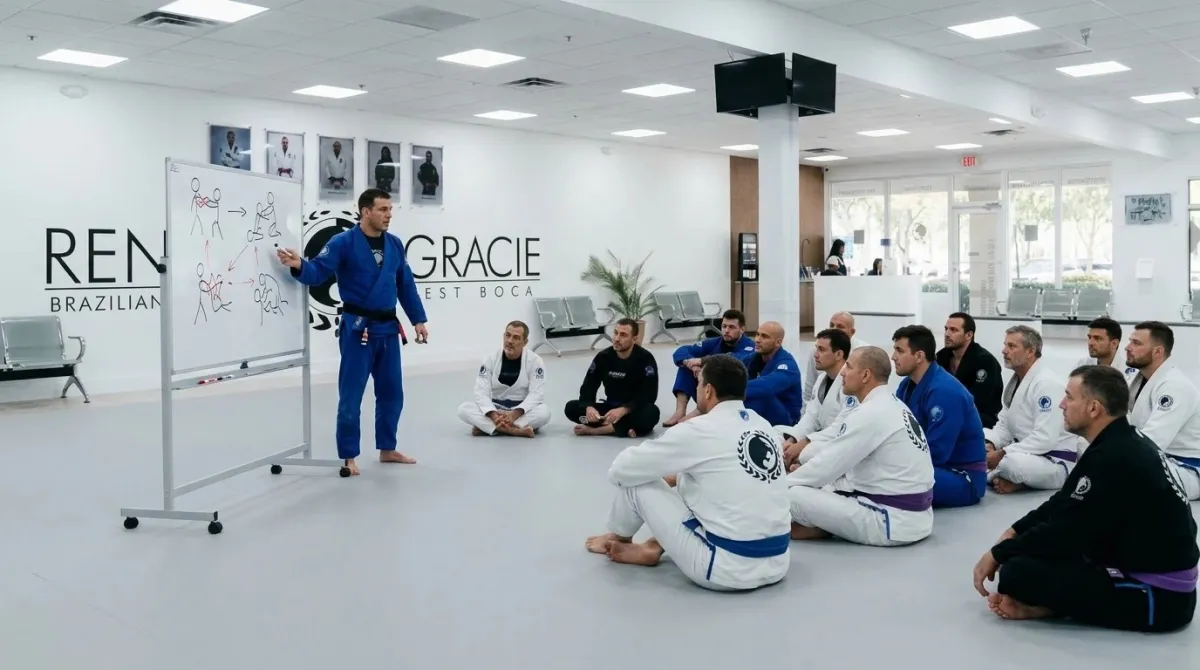
Competing in jiu-jitsu can be exciting, but the rules can look confusing from the outside. Points, advantages, penalties and divisions all have names that new competitors have never heard. This overview explains the general ideas that most events share, so you can follow a match and prepare with confidence. It is not an official rulebook, and details change.
Why can't this article give you the official point table?
Rules and point values depend on the federation, the event, the age group, the belt and the year. Organizations update their rulebooks, and local tournaments sometimes use their own versions. For that reason, this guide describes the general logic of scoring and leaves the exact numbers to the official source.
Before you enter any event, download the current rulebook from the organizer or federation running it, read the section for your age and belt, and ask your coach to go over it with you. That is the only way to be certain about legal techniques, match time and scoring for your division.
How do you win a jiu-jitsu match?
You win a match by forcing your opponent to submit, or by having more points than them when time ends. A submission is a hold, such as a choke or joint lock, that makes your opponent tap or that the referee stops for safety. If nobody submits, the winner is usually decided by points, then advantages, and then by the referee's decision depending on the event.
A submission usually ends the match immediately, no matter how the score stands. That is one reason jiu-jitsu is exciting: a competitor who is behind on points can still win with one successful submission. To understand the finish itself, read what a submission means and what a tap out is.
How does scoring work in general?
Points are given for moving from one position to a more dominant one and holding it briefly. Most rule sets give points for takedowns, sweeps, guard passes and dominant control such as mount and back control. Positions that are harder to reach or more controlling are generally worth more points than simpler ones.
Common scoring ideas include:
- Takedown. Bringing an opponent from standing to the ground and landing in a controlling position.
- Sweep. Reversing from bottom to top, as in a scissor sweep or hip bump sweep.
- Guard pass. Getting past the legs to a stable control, for example with a knee slice pass.
- Dominant positions. Holding mount, side control or back control for the required time.
The referee usually asks for a short period of control, often a few seconds, before awarding points. Check the exact time requirement in your rulebook.
What are advantages?
Advantages are tie-breakers that reward near-scores or strong attempts that did not quite earn points. If the score is equal at the end, the competitor with more advantages may win. They encourage active, attacking jiu-jitsu instead of waiting for the clock to run out.
Advantages can come from a nearly completed submission, a near sweep or a near takedown, depending on the rule set. Because the definition varies, ask your coach how it is applied in your event.
What are penalties?
Penalties punish stalling, unsafe behavior and rule violations. Typical reasons include avoiding engagement, grabbing prohibited areas of the uniform, leaving the mat on purpose or acting disrespectfully. Repeated penalties can give points to the opponent or lead to disqualification, depending on the event.
Safety rules are especially important. Many rule sets prohibit slams, striking, eye or hair pulling and techniques that attack the spine or neck. Some leg locks and other advanced attacks are restricted or allowed only at certain belts or ages. This is why you must read the rulebook for your own division and not assume that the techniques you saw online are legal for you.
How are divisions organized?
Divisions are usually set by age, belt color, gender and weight. Competitors are matched with others of similar level so matches are fairer. Women compete with women, and men compete with men. Some events also offer an absolute or open class, where weight limits do not apply.
Weigh-in rules differ, too. Some events weigh competitors with the uniform on, while others use different systems. Make sure you know the weight class, the weigh-in time and whether you need to bring identification. Your coach can help you plan this early rather than the night before.
How long do matches last?
Match time depends on the event, the belt and the age group. Higher belts and adults often have longer matches than beginners and children. Because those times change between organizations, always check the schedule and rules for your own division.
It is a good idea to practice with the time you expect. Positional rounds and timed sparring help you learn how to use the clock. For ideas on how to build up to your first event, read preparing for your first BJJ tournament.
What does the referee do?
The referee controls the match, awards points, calls penalties and makes sure the competitors stay safe. Listen to the referee at all times and accept the decisions with respect, even if you disagree. Coaches can ask for clarification at proper moments, but arguing on the mat never helps.
Before the match begins, the referee usually checks the uniform and may ask competitors to shake hands. Follow instructions, and remember that etiquette is part of the sport, as we discuss in our guide on jiu-jitsu etiquette.
What should you check about your uniform?
Uniform rules can be strict. Many events require specific colors, patch sizes, fit and sleeve length, and referees may check them before you step on the mat. If you plan to compete in the gi, read the uniform section of the rulebook and compare it with your gi well before the event.
A clean uniform in good condition also reflects respect for your opponent. Our guide on how to wash and care for your gi can help you avoid shrinking it before a tournament. If you are still choosing a uniform, see how to choose a BJJ gi.
How can a beginner prepare for the rules?
Study the rulebook, ask your coach questions and practice rounds with the same scoring ideas. Many academies run competition-style rounds so students can feel the pace and the referee's calls. Watching matches with a coach and discussing why a score was given is another useful way to learn.
Helpful steps:
- Read the official rulebook for your division.
- Write down the points and penalty ideas in your own words.
- Practice timed rounds with someone calling points.
- Rehearse the day: check-in, warm-up area, bullpen and mat call.
- Talk with your coach about game plans that fit the rules.
Remember that the goal of a first tournament is experience. Win or lose, you will learn more in a few minutes of competition than in weeks of thinking about it.
Can children and teens compete under the same rules?
Rules for children and teens are usually different, with additional safety limits on techniques and often shorter matches. Parents should read the youth rules carefully and talk to coaches about whether a child is ready. Competition should be positive, and no child should feel pressure.
For young athletes, our teens program and juniors program emphasize fundamentals and good sportsmanship. Families can also learn more on the parents page.
How do you get started with competition in Boca Raton?
Start by training regularly and speaking with your instructor about your interest. Our competition team page explains how students who want to compete prepare. You do not need to compete to enjoy jiu-jitsu, but you are welcome to try when you feel ready.
If you are new to the sport, begin with a free trial class at Renzo Gracie West Boca Raton, where our coaches will explain how classes are organized. You can also view the schedule to find a session that fits your week.
Perguntas frequentes
Do all tournaments use the same rules?
No. Rules, point values, match times and legal techniques differ between federations, events, ages and belts. Always read the official rulebook for the specific event and division you plan to enter.
Can I win without scoring points?
Yes. A submission usually ends the match immediately, even if you were behind on points. Matches without a submission are usually decided by points, then advantages, then the referee, depending on the event.
Do I need to know every rule before my first tournament?
You do not need to memorize everything, but you should understand scoring, legal techniques, uniform rules and weigh-in. Your coach can help you review the rulebook before you register.
Do men and women compete against each other?
Under standard divisions, women compete with women and men with men. Always confirm the divisions of your specific event.

 Portuguese