
Jiu-Jitsu as a Healthy Alternative to Screen Time
Esta página aún no está traducida; mostrando la versión en inglés.
Jiu-jitsu can be a healthy alternative to screen time because it offers movement, face-to-face friendships and focused effort in a phone-free setting. It will not replace every screen hour, and screens are not evil, but a regular class gives children a satisfying, active contrast to the glow of a device.
Most parents we meet are not trying to ban screens. They are trying to find balance. Children who love a game or a video can still need movement, friends and challenge that screens cannot provide. In this article we explore how jiu-jitsu can fill part of that space, and how families can build a healthier rhythm at home.
Why is balance harder for kids today?
Screens are designed to hold attention, and they are always available. Games, videos and messages offer constant stimulation, which makes real-world activities feel slower by comparison. Children are not weak for wanting them. The tools are simply powerful.
Parents also face pressure. Schoolwork often involves devices, friends talk online and adults use phones constantly, so children copy the habit. Setting limits can feel like swimming upstream.
The practical answer is not to ban screens but to offer appealing alternatives. When a child has something they truly enjoy away from the screen, balance becomes easier.
What does a phone-free hour on the mat look like?
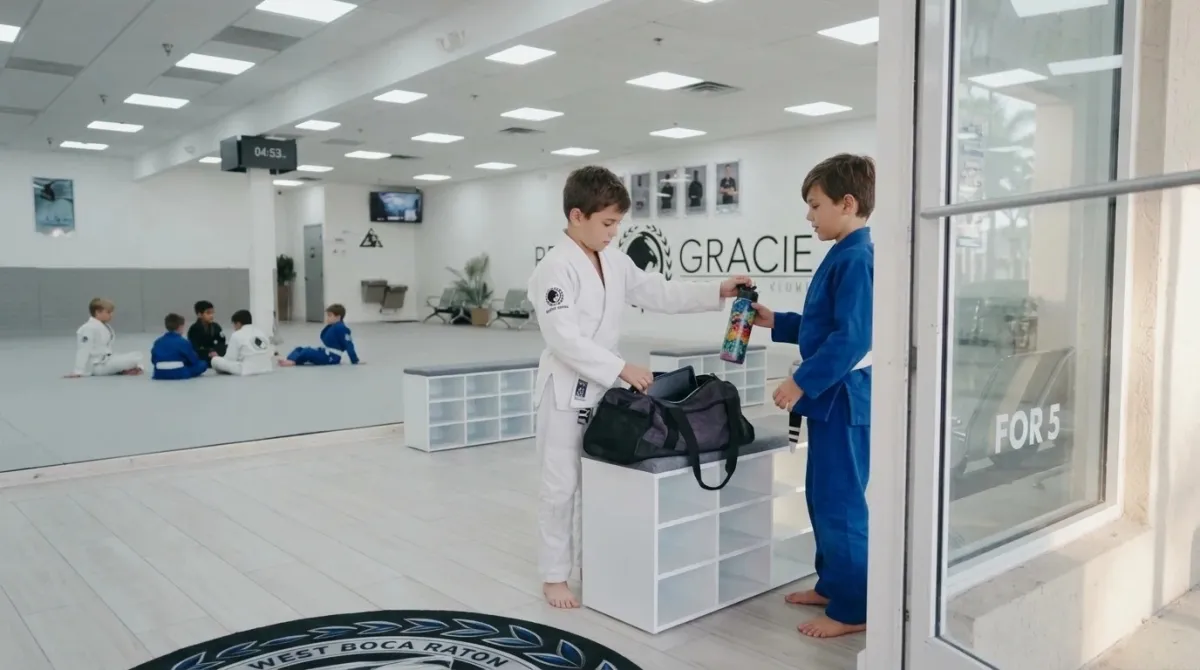
On the mat there are no screens, no notifications and no scrolling. Children bow in, move, listen, laugh and work with partners for the length of the class. Their attention shifts from a device to the people and the task in front of them.
Many children find this a relief. They are tired in a good way, they have stories to tell and they sleep well afterward. Parents often notice that the ride home is filled with chatter rather than silence.
We ask students to leave phones and tablets in their bags. This simple rule is one of the quiet gifts of the academy.
How does physical activity help kids?
Regular physical activity supports healthy growth, strength, coordination and mood. Health organizations recommend that children get daily movement, and jiu-jitsu is one enjoyable way to contribute to that. It uses the whole body in varied ways.
We are not offering medical advice, and every child is different. If you have concerns about your child's activity level or health, speak with your pediatrician. They can recommend what is appropriate.
What we can say from the mat is that children who move regularly often seem happier and more focused in class. Our post on kids jiu-jitsu in Boca Raton explains the broader picture.
What about the social side?
Screens can connect children, but they cannot replace face-to-face contact. On the mat, children learn to read body language, take turns, ask for help and resolve small conflicts in person. These skills grow only through practice with real people.
Friendships formed in class tend to be built on shared effort. Children meet others who also like to move, and they bond over drills, stripes and silly mistakes. It is a different kind of friendship from one that lives in a chat window.
For children who are shy, a structured setting can be easier than open-ended play. See our article on jiu-jitsu for shy kids for more.
How can parents set healthy screen habits at home?
Habits at home matter as much as activities outside. Set clear, consistent rules and explain the reasons. Involve your child in making the plan, because children follow rules they helped design.
Some ideas that work for many families:
- Keep screens out of bedrooms at night.
- Create phone-free times, such as meals and the hour before bed.
- Make a simple schedule that includes movement and homework first.
- Model the behavior you want by putting your own phone away.
- Replace, do not just remove: offer a fun activity in place of screen time.
Do not expect perfection. Aim for progress and kindness.
Can jiu-jitsu replace screen time entirely?
No, and it does not need to. Screens have value for learning, creativity and connection. The goal is a healthy mix, with enough movement, sleep, friends and downtime. Jiu-jitsu can be one anchor in that mix, particularly in the after-school hours.
If your child resists leaving a game for class, start small. Choose a time that does not clash with their favorite activity, and let them see a class first. Many children change their minds when they meet the instructors and try a movement.
Remember that you are building a habit. Give it a few weeks and then review how it feels.
What if your child resists?
Resistance is common, especially at first. Listen to your child's reasons: they may feel nervous, bored or worried about missing something. Acknowledge their feelings, and offer a trial class with no pressure.
If your child is energetic or restless, you may find that movement is exactly what they need. If they are quiet and prefer solitary activities, a gentle start in a small class may help. Our inclusive program page explains how we welcome different learners.
Whatever you choose, keep communication open. The aim is a child who feels supported, not forced.
Which programs can help?
Different ages fit different programs. Younger children may enjoy Baby Jitsu or Little Champions, school-age children Juniors and After-School, and older children Teens.
Check the schedule for times that fit your routine. Afternoon classes can be a natural replacement for the screen time that often fills the hours after school.
What happens to energy and sleep?
Many parents tell us that children who train sleep more soundly. We cannot promise that for every child, but it makes sense: an hour of active movement, followed by a calm evening, is a recipe for restful nights. Screens in the hour before bed, on the other hand, can make it harder to wind down.
If you want to build a better evening routine, try pairing class with a simple sequence: shower, snack, quiet reading and lights out. The academy becomes the active part of the day, and home becomes the peaceful part. Talk to your pediatrician if sleep problems persist.
How can you make the transition from screen to mat easier?
Transitions are hard for children who are deep in a game. Give a five-minute warning, let them save their progress and make the trip to the academy part of the fun, with a favorite song or a short chat. Avoid arguing at the door, which sets a sour tone.
Once at the academy, the environment helps. The bow, the warm-up and the greetings guide children into a new frame of mind. Within minutes, most are fully engaged. Afterward, let them tell you what they did before you ask about the next screen session.
What can parents do while the child trains?
The hour of class is a chance for parents to model balance too. Rather than scrolling through a phone on the sideline, try reading, chatting with other parents or simply watching your child. Children notice when a parent is present, and it shows them that real moments deserve attention.
If you must work during class, that is understandable. Just let your child know you are proud of them afterward and ask for a story about the best moment. A small ritual of listening can matter more than watching every minute.
How can you try a class in Boca Raton?
Book a free trial class and let your child decide. Bring water, comfortable clothes and a curious attitude. Reserve through the free trial page, and we will take care of the rest. Your child may surprise you.
Preguntas frecuentes
How much screen time is too much?
Guidance varies by age and situation. Ask your pediatrician for advice that fits your child, and focus on balance with sleep, movement and family time.
Will my child miss screens during class?
Most children forget about screens within minutes once class starts. The activity and the people keep their attention.
Can I use jiu-jitsu as a reward or punishment for screen habits?
We recommend against it. Training works best when it feels like a positive choice, not a trade.
What if my child is addicted to a game?
If you are concerned about your child's use of screens, speak with your pediatrician or a qualified professional. Activities like jiu-jitsu can be a healthy complement but are not treatment.

 Spanish