
Helping Kids Build Focus and Discipline on the Mat
Esta página aún no está traducida; mostrando la versión en inglés.
Jiu-jitsu helps kids build focus and discipline through routines, clear rules and tasks that need full attention. Children learn to listen, wait, try again and finish what they start, one class at a time. These are habits practiced on the mat, not instant changes, and they grow with consistent attendance.
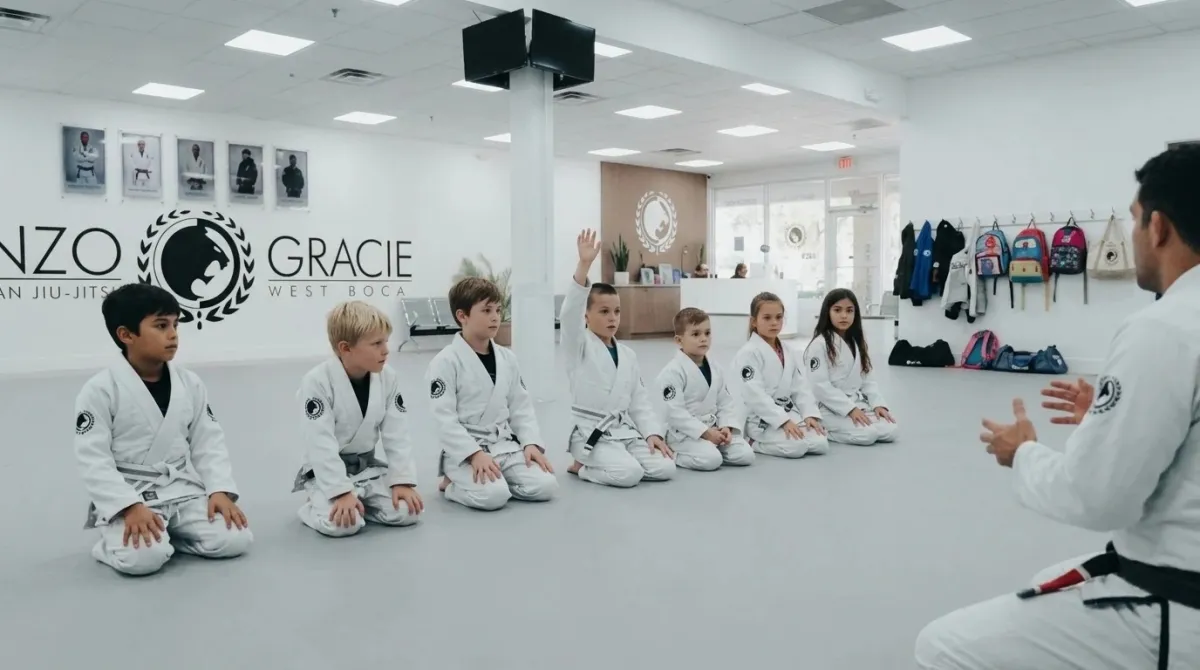
Parents often tell us they want more focus and discipline for their children. We understand the wish, and we also try to be honest: no class is a magic switch. What a well-run academy can offer is a place where those habits are practiced in a natural way, every week, in front of a coach who cares.
What does discipline mean for a child on the mat?
For a child, discipline means doing the right thing even when it is not the easiest thing. On the mat that looks like waiting for the instructor to finish, lining up neatly, tying a belt properly and working with a partner when you would rather chat.
We do not define discipline as obedience through fear. We see it as self-control practiced with kindness. A child who learns to stop when a partner taps, or to pause when the coach raises a hand, is building a skill they can use in school and at home.
These small acts add up. Over months they become habits.
How do class routines train attention?
Class routines train attention because they repeat the same pattern each session. Children bow in, warm up, watch a demonstration, practice with a partner and bow out. Knowing the pattern frees the child's mind to focus on the new details inside it.
The demonstration is a practice in listening. Children must watch the instructor, notice where the hands and hips go, and then try to copy it. Few activities require this kind of careful observation from a young student.
We also keep explanations short. Children focus best in small bites, so a lesson is broken into steps with a chance to try after each one.
How does jiu-jitsu teach patience and persistence?
Jiu-jitsu teaches patience because techniques rarely work on the first try. A child may need to repeat a movement many times before it feels natural, and a partner will often resist. Staying calm through that process is the lesson.
Persistence shows up when a child gets stuck. Instead of giving up, they learn to breathe, adjust and try another way. Instructors praise this behavior loudly, sometimes more than a successful result.
Our etiquette guide explains many of the habits that support this, such as respect for training partners and listening to the coach.
What can parents do at home to support it?
Parents support these habits by keeping a steady routine and mirroring the same values at home. Prepare the gym bag together, arrive on time and let your child carry their own water bottle. Small responsibilities strengthen the lessons from class.
Here are simple ideas:
- Set a regular class schedule and treat it as a commitment.
- Let your child pack and wash their own uniform with your help.
- Praise effort and attention, not only success.
- Ask what they learned and invite them to show you.
Avoid turning class into a reward or a punishment. If jiu-jitsu becomes a weapon in a power struggle, your child will lose the sense of play that makes the habits stick.
Is jiu-jitsu a treatment for attention challenges?
No, and we want to be clear about that. Jiu-jitsu is a physical activity and a skills-based class, not a medical or therapeutic treatment. We do not make promises about any condition, and we encourage families to follow the advice of their pediatrician or specialist.
What we can say is that many children enjoy structure, movement and clear expectations, and those features can make the mat a positive part of a child's week. If your child learns differently, tell the team, and visit our inclusive program page to see how we welcome different learners.
Open communication is the best tool. Let the instructors know what works for your child at home so they can help in class.
How long does it take to see changes?
Parents usually notice small shifts after several weeks of regular attendance: a child who listens a little better, packs the bag without reminders or talks proudly about a new belt stripe. Bigger changes take months, and some children change faster than others.
Consistency matters more than intensity. Two classes a week over a season will do more than a burst of daily classes followed by a long break. Check our guide on training frequency for ideas on setting a realistic rhythm.
Keep expectations kind. A child who is trying is already learning discipline.
How do belts and stripes support discipline?
Belts and stripes give children visible goals that are small enough to reach. Earning a stripe takes time and consistent effort, so it teaches that good things come to those who keep showing up. It is also a gentle way to practice delayed rewards in a world of instant clicks.
Instructors decide when a child is ready, which means the reward cannot be bought or rushed. Children learn that progress is based on effort, attitude and understanding. Our belt system guide explains how the ranks work in jiu-jitsu.
Keep the focus on the journey. A child who cares only about the next belt may feel disappointed, while a child who enjoys the learning will feel proud at every step.
What does a disciplined classroom look like?
A disciplined classroom is calm but not silent. Children move, laugh and ask questions, yet they stop when the instructor signals and they treat their partners with care. The room feels safe because everyone knows the rules and sees them applied fairly.
We use simple cues to keep the room in order, such as a raised hand, a clap or a short word that means freeze. Children enjoy mastering these cues and take pride in responding quickly.
Over time the structure becomes part of the child's identity. They begin to say things like 'I am a person who listens,' and that sense of self is the real source of discipline.
How does screen-free time on the mat help attention?
A mat has no screens, no notifications and no quick scrolling. For an hour, a child's world shrinks to the people in front of them and the movement they are learning. That break from constant stimulation is valuable by itself, even before any technique is learned.
Children also practice sustained effort in a way that is hard to find elsewhere. They cannot skip ahead or swipe away a difficult moment. They have to stay with the problem, ask for help and try again, and that practice builds the muscle of attention.
If you want more ideas about balancing screens and movement, take a look at our other family articles on the academy blog.
What should you do when focus slips?
Every child loses focus sometimes, and so does every adult. When it happens in class, good instructors stay calm and redirect: they lower their voice, give a short task or invite the child to help demonstrate. Punishment is rarely useful, because it turns attention into anxiety.
At home, the same approach works. Notice the dip, name it gently and offer a small reset, such as a drink of water, three breaths or a quick stretch. If your child often struggles to focus in many settings, speak with their pediatrician or teacher about what support makes sense. The mat is a positive place to practice, but it is one tool among many.
Which programs are a good starting point?
The right starting point depends on your child's age. Younger children can begin in Baby Jitsu or Little Champions, while older children may fit Juniors. Each page lists what to expect and who the class is for.
The best way to decide is to watch your child in a real class. Book your free trial class, bring water and let the instructors show you how their routines work in practice.
Preguntas frecuentes
Can jiu-jitsu help my child pay attention in school?
Many parents see better listening habits over time, since the mat practices watching, waiting and following instructions. Results vary by child, and jiu-jitsu is not a substitute for school support or professional advice.
What if my child is very energetic?
Energetic children are welcome. Movement-based classes give them a place to use energy, while rules and routines show them when to pause. Tell the instructor about your child's style so they can help.
Is discipline in jiu-jitsu strict or harsh?
Discipline here means routine, respect and self-control. A good academy teaches these with encouragement and clear boundaries, never with humiliation or fear.
How often should my child attend to build habits?
Regular attendance matters most. Many families choose a steady weekly rhythm they can maintain. The academy team can suggest a pace based on your child's age and schedule.

 Spanish