
Jiu-Jitsu vs Karate for Kids: Which Is Better for Your Child?
Esta página aún no está traducida; mostrando la versión en inglés.
Jiu-jitsu and karate can both be wonderful for children, but they feel different. Karate is built around striking and forms, while jiu-jitsu is built around grappling, positions and controlling a partner without hitting. The better choice depends on your child's temperament, your family's goals and the quality of the school.
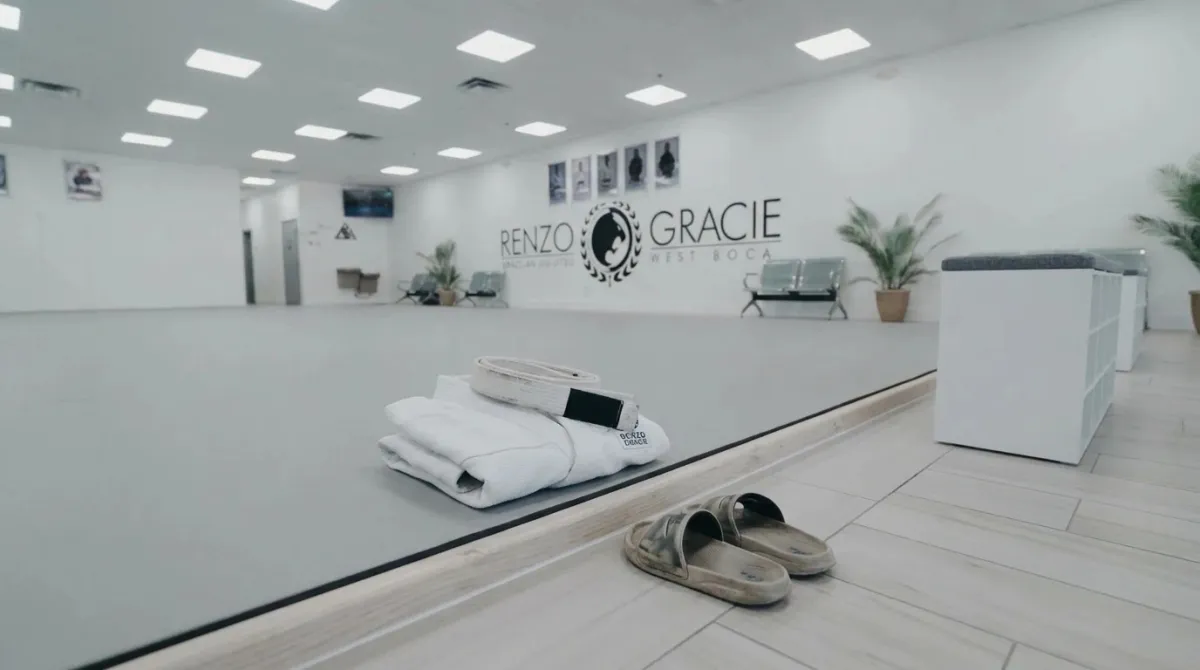
Parents who call our academy in Boca Raton often say they are choosing between a karate dojo and a jiu-jitsu school down the road. It is a fair question, and we do not think one art is secretly better than the other. Here is an honest comparison from the jiu-jitsu side of the fence.
What is the main difference between jiu-jitsu and karate?
The main difference is how the two arts handle contact. Karate emphasizes striking with hands and feet, practiced through drills, forms and controlled sparring. Jiu-jitsu emphasizes grappling, where students use leverage, balance and positioning to control a partner, with no striking in children's classes.
For a child, that difference shapes everyday class life. In a karate class you may see rows of students repeating a pattern together. In a jiu-jitsu class you will see pairs of children working through a movement, then swapping roles, then trying it with a little resistance as they grow.
Neither approach is automatically gentler. What matters is that the coach controls the room and the rules protect every child.
How do the classes feel different day to day?
Karate classes tend to feel structured and group-oriented, with the whole class moving together. Jiu-jitsu classes tend to feel interactive, with children constantly working with partners, solving small puzzles and adapting to someone else's body.
Some parents like the clarity of the first style. Others like that jiu-jitsu teaches kids to communicate and cooperate with a partner in real time. A child who loves routine may enjoy one, while a child who loves problem-solving may prefer the other.
You can read more about the kid-friendly side of our mat in our post on kids jiu-jitsu in Boca Raton.
Which one is better for self-defense?
Both arts can teach useful self-protection, and the honest answer depends on the school and the situation. Jiu-jitsu teaches children how to control a bigger or stronger person, escape from a hold and stay calm on the ground, where many childhood scuffles end up.
We also want to be careful. A good academy teaches children that the best self-defense is avoiding trouble, speaking up and telling an adult. Technique is a last resort. Our article on jiu-jitsu and bullying explains how we frame that for kids.
Be wary of any school, in any art, that promises a child will be able to beat up anyone. That is marketing, not teaching.
Which is safer for children?
Safety depends more on the instructor and the class rules than on the art. In well-run classes of either style, children are matched by size and age, taught to stop when a partner signals and supervised closely. Ask any school how it handles those basics.
In jiu-jitsu, the central safety habit is the tap. When a child taps, the action stops immediately, and children learn this in their first lessons. There are no strikes in children's classes, which some parents prefer.
Bumps and bruises can happen in any physical activity. If you have a health concern about your child, talk to your pediatrician before signing up.
What life skills does each art build?
Both arts can build discipline, respect, focus and fitness. Karate often highlights precision and memory through forms. Jiu-jitsu often highlights patience, humility and resilience, because children spend time being stuck, working out of it and learning that losing a round is part of learning.
At our academy we watch children learn to say 'I do not know yet' and keep trying. We have also seen students who were afraid of contact become comfortable with it, step by step, in a friendly setting.
Our post on how jiu-jitsu builds confidence goes deeper into this side of the mat.
How does the belt system compare?
Both arts use belts to mark progress, but jiu-jitsu tends to move more slowly. In children's jiu-jitsu, students often earn stripes on a belt before moving to the next color, which gives small milestones along the way. The pace and requirements vary by school, so ask for details.
The slower pace teaches an important lesson: progress is real even when it is not fast. If your child likes quick rewards, mention it to the instructor, who can find ways to recognize effort in between belts.
For a parent-friendly breakdown, see our BJJ belt system guide.
What do parents often get wrong about this choice?
A frequent assumption is that one art is simply stronger or more real than the other. In truth, the gap between a great school and an average school inside the same art is far larger than the gap between the arts. A thoughtful karate teacher can do more for a child than a careless jiu-jitsu instructor, and the reverse is just as true.
Another assumption is that grappling means rough play. Well-run children's jiu-jitsu classes are organized and calm, with clear rules and close supervision. Children learn to control their bodies and respect their partners, which is the opposite of roughhousing.
Finally, some parents think they must pick one art for life. Children change. Many start in one place, move to another and later come back. What you want is a positive first experience that keeps them moving.
How can you test both before deciding?
The best test is to visit each school and watch a class with your child. Look at the faces of the students, not just the teacher. Are they engaged and relaxed, or tense? Do the instructors know each child by name? Does the class feel orderly without being cold?
After each visit, ask your child three simple questions: What was the most fun part? What felt hard? Would you like to go back? Their answers will tell you more than any comparison chart.
If jiu-jitsu is on your list, you can try a free class here and compare the experience for yourself. Our guide to a child's first jiu-jitsu class shows what the visit looks like so you can compare notes.
Which questions should you ask before enrolling in any school?
Whatever art you choose, ask the same practical questions of every school. Who teaches the children's classes, and how long have they worked with kids? How many students are in a typical class, and how are they grouped? What happens if a child gets hurt or upset? How do you communicate with parents?
Ask about the culture, too. Do older students help younger ones? Are children praised for effort? Is there pressure to compete or to test for belts on a fixed schedule? A school with clear, calm answers usually has a healthy environment.
Finally, ask what a typical month costs and what the agreement looks like. For our own academy, the pricing page is the place to start, and the team is happy to answer questions in person.
Does your child's personality point to one art?
Personality can offer clues, though it is never a rule. A child who loves patterns, precision and performing in front of a group may enjoy the rhythm of forms. A child who loves wrestling-style play, puzzles and working with a friend may gravitate toward grappling. Some children enjoy both and ask to try each.
Watch how your child plays at home or in the park. Do they build, invent, tumble and negotiate with other children? Or do they line things up and repeat sequences until they are perfect? Neither is better. The point is to match the environment to the way your child naturally learns.
How should you choose the right school?
Choose the school whose coach your child connects with, whose classroom feels safe and whose schedule your family can actually keep. The art matters, but the people matter more. Visit, watch a class and see how the instructors talk to children.
Questions worth asking any school include: How are classes grouped by age? How is safety handled? How are new students welcomed? Do parents get to watch? A confident school will answer plainly.
At Renzo Gracie West Boca Raton you can try a class free. Look at the Juniors program or Little Champions, check the schedule and book through the free trial page.
Preguntas frecuentes
Is jiu-jitsu good for kids who do not like hitting?
Many parents choose jiu-jitsu for exactly this reason, since children's classes focus on grappling and controlled movement instead of strikes. Every child is different, so a free trial class is the best way to see how yours responds.
Can my child do both karate and jiu-jitsu?
Some children enjoy trying more than one art. Keep the schedule manageable, tell both coaches, and watch whether your child still feels excited rather than overloaded.
Which art is better for a shy child?
Neither is better in every case. Some shy children thrive in the partner work of jiu-jitsu, while others prefer the group rhythm of forms. Watch a class together and let your child tell you how it feels.
Do kids spar in jiu-jitsu?
Children usually move from drilling to light, supervised partner practice as they gain skill. The rules emphasize control and tapping, and instructors set the pace. Ask the academy how it handles this for each age group.

 Spanish