
Guard Retention Basics: Frames, Hip Escapes and Re-Guard
Guard retention is the set of movements you use to stop your partner from passing your legs. The basics are simple: sit up, frame, turn your hips, and use your legs to keep a barrier. Practice these small steps before learning complex guards, and you will lose fewer positions.
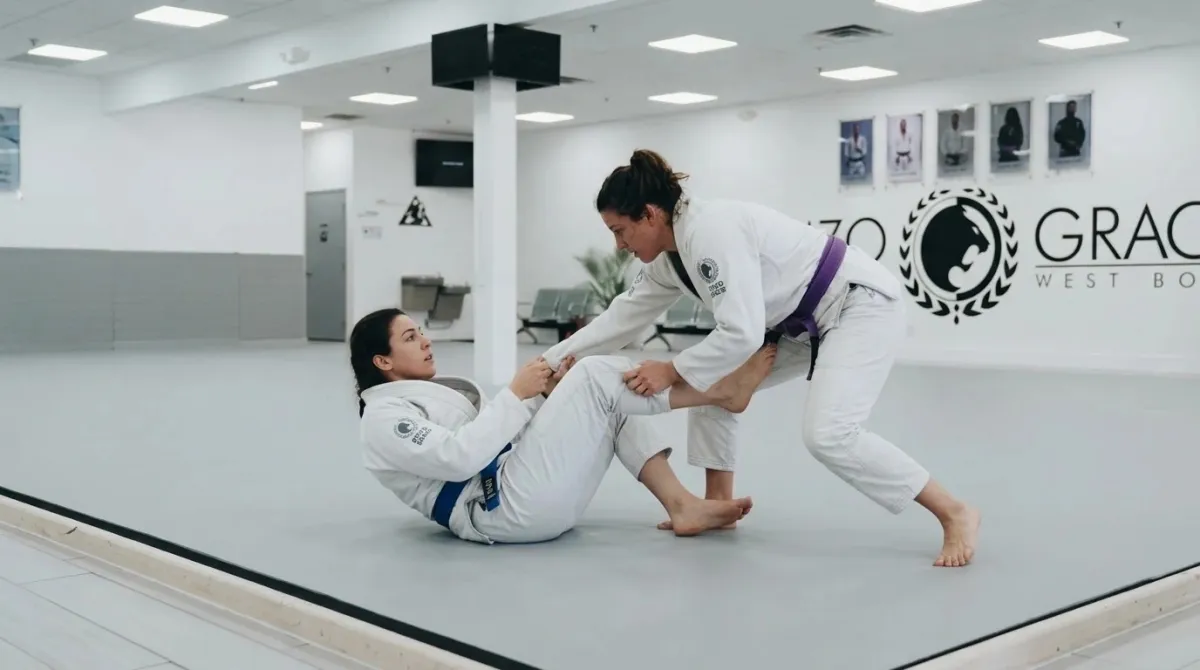
A great guard is not only about attacks. It also depends on how well you keep it when someone is trying to pass. Guard retention is the quiet skill that lets you stay in the game: framing, moving your hips and bringing your legs back between you and your partner. This guide explains the basic ideas so you can start building them in class.
What is guard retention?
Guard retention means preventing a partner from getting past your legs and into a dominant position like side control. It involves using your hands, feet and hips to keep a barrier and to recover when you lose it. Even experienced students spend a lot of time practicing retention because every guard depends on it.
Think of your legs as a fence between you and your partner. If your partner gets around the fence, you will need to rebuild it quickly. For a quick look at the position itself, read our entry on guard.
Step by step: the basic retention sequence
- Sit up on one hip so you can see your partner's knees and hips.
- Place your forearms and hands in frames on their hips, chest or knees, never on the face.
- Put your feet on their hips or thighs to create distance and block their steps.
- Shrimp your hips away from the side where they are passing so your knees come back between you.
- Bring your inside knee across as a shield and turn to face them.
- Rebuild a guard, such as closed guard or half guard, and keep your hands active.
Key details that make it work
- Keep your elbows tucked so your arms cannot be controlled easily.
- Move early. React when your partner steps, not after they have already passed.
- Use your hips as your main engine. Your arms should guide, not pull your body.
- Keep one foot or knee between you and your partner at all times.
- Stay on your side or on your hip rather than flat on your back.
- Breathe and keep your movements small and efficient.
How to drill it
Start by practicing hip escapes without a partner, moving across the room to both sides. Then work with a partner who walks slowly around your legs while you turn and reposition. Aim for smooth, repeated motions. Next, ask your partner to add light resistance, then pass at medium speed. Finally, use positional sparring where your partner starts with a grip on your pants or ankles and you work to recover guard.
You can combine this with the elbow-knee escape, because both rely on the same hip movement. Repeat on both sides, and rest often. Quality repetition beats rushed volume.
Why retention matters more than fancy guards
A beginner who can keep their guard will always have time to think, breathe and attack. A beginner who loses the guard quickly spends most of the round defending from bad positions. That is why many coaches ask students to practice retention before collecting new sweeps. It also builds confidence, because you learn that being passed is not the end of the exchange; there is almost always another frame, another hip movement and another chance to recover.
Keep your goals small in the beginning. Instead of never being passed, aim to make your partner work harder for every inch. Each extra second that you stay in the game gives your coach more to correct and gives you more experience.
Common mistakes and safety
The most common mistake is lying flat and waiting for the pass to happen. Another is pushing on the partner with straight arms, which makes you tired and exposes your arms to attacks. Many new students also forget to move their hips, relying only on their legs, so they get stuck.
For safety, never push on your partner's face or neck, and avoid extending your knees in a way that locks your joints. If your partner stacks your legs or twists your knees, tap and communicate. Do not let a partner crank your ankle or knee when you are pinned. Drill with a coach nearby, and let the instructor correct small details early.
Where to go from here
Once the basics feel natural, learn how to attack from guard with a scissor sweep or a triangle choke. Understand what your partner is trying to do by studying the knee slice pass. If you lose the guard completely, practice the side control escape.
Come and see how guard retention feels with a coach guiding you. Book a free trial class at Renzo Gracie West Boca Raton, or look at the adults program and women's program to pick a class that suits you.
Step by step
Sit up on a hip
Come up onto one hip so you can see your partner's knees and hips.
Make frames
Place forearms or hands on their hips, chest or knees, never on the face or neck.
Set your feet
Put your feet on their hips or thighs to build a barrier and block their steps.
Shrimp away
Move your hips away from the side where they are passing so your knees return between you.
Shield with a knee
Bring your inside knee across your body as a shield and turn to face your partner.
Rebuild the guard
Settle into closed guard or half guard and keep your hands active.

 English