
How to Choose a BJJ Gi: A Beginner's Guide
Esta página ainda não foi traduzida; mostrando a versão em inglês.
To choose a BJJ gi, focus on four things: a size that fits after the first wash, a fabric weave that matches your needs, a color allowed where you train, and sturdy stitching. A good beginner gi is comfortable, durable and plain. Ask your instructor before buying, since academies have different preferences.
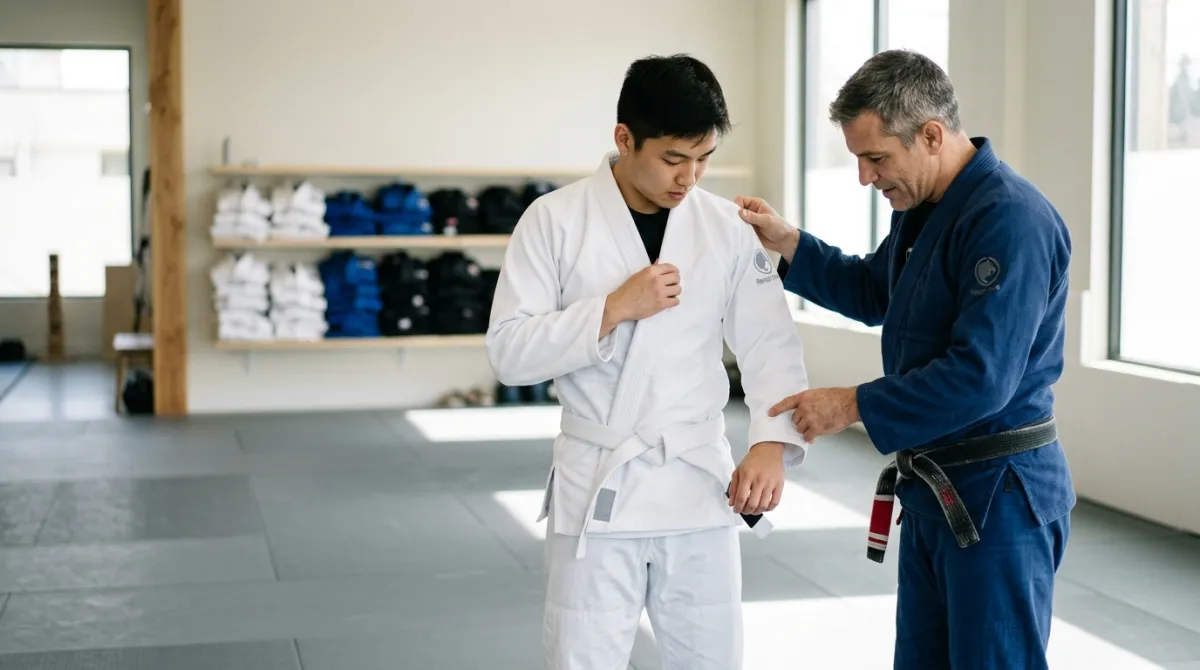
A gi, the traditional jiu-jitsu uniform, is the single most important piece of gear you will own. The good news is that you do not need a fancy one. If you want to choose a BJJ gi that works for years, understanding a few basics will save you time, frustration and wasted effort.
What is a BJJ gi made of?
A BJJ gi has three parts: a thick cotton jacket, drawstring pants and a belt that shows rank. The jacket is built to withstand pulling and gripping, so its collar and lapels are reinforced and its stitching is heavy. The pants are lighter, with strengthened knees for long training sessions.
Because jiu-jitsu is a grappling art, partners grip the gi to control movement. That means the uniform must be strong, flexible and comfortable. A flimsy jacket can tear in a few months, while a tough one may last for years.
Most beginners wear a plain white gi without large patches. In our classes we notice that the simplest uniforms are often the best, because they let the student focus on learning rather than appearance.
How do you choose the right gi size?
To choose the right gi size, start with the manufacturer's size chart, which uses a letter and number system such as A1, A2 or A3. Compare your height and weight to the chart, then check sleeve and pant length. Keep in mind that cotton can shrink after washing, so many students choose a bit of room.
Use this quick checklist when trying on a gi:
- The sleeves should reach close to your wrists when your arms are relaxed.
- The jacket should cover your hips and close without pulling across the chest.
- The pants should reach the ankle bone or slightly above it.
- You should be able to move your arms and legs freely.
If you are between two sizes, ask the seller about the specific fabric and its tendency to shrink. Many experienced students buy slightly larger and let the first wash do the final fitting. Ask your instructor for advice, since they have seen what works on many body types.
What is the difference between gi weaves?
A gi weave is the pattern in which the cotton threads are woven, and it determines weight, texture and durability. The most common weaves are single, double, gold and pearl. Pearl weave is light and breathable, while double weave is heavier and stiffer, and many beginners choose a single or pearl weave.
| Weave | Feel | Best for |
|---|---|---|
| Single weave | Light and soft | Hot weather and comfort |
| Pearl weave | Light but durable | All-around beginner use |
| Gold weave | Medium weight | Balance of comfort and strength |
| Double weave | Heavy and stiff | Students who want a tough, grip-resistant jacket |
Weight matters when you choose a BJJ gi. Since South Florida stays warm for much of the year, many students in Boca Raton prefer a lighter weave. A heavier gi feels hotter and can tire you out faster, which matters more when you are still learning to breathe and relax on the mat.
Which color of gi should you buy?
For a beginner, a white gi is the safest color choice. It is accepted in practically all classes and tournaments, and it keeps the look of the academy consistent. Blue and black gis are also permitted by many competition organizations, though your own school may prefer white for classes.
Before buying a colored gi, check with your instructor and read the rules of any tournament you hope to enter. Competition rules can change over time and may limit patches, colors and fabric. A plain uniform keeps you safe from surprises.
As you choose a BJJ gi color, consider how it shows sweat or stains. White shows dirt more easily, but it also makes it obvious when it is time to wash. Many students keep a white gi for class and add a second color later.
What fit is best: slim or relaxed?
A snug but not tight fit is best for most students. A slim fit gives partners fewer places to grab, while a relaxed fit is comfortable and easier for beginners to move in. Competition gis tend to be cut closer to the body, but a classroom gi can be more forgiving.
Think about your goals. If you plan to compete, a trimmer gi may be worth considering later. If you simply want to train, enjoy the classes and learn, comfort comes first. Our instructors can help you decide which cut matches your body and goals.
Whatever you choose, make sure you can move your hips, raise your arms and bend your knees. A gi that restricts movement slows learning and makes training less enjoyable.
How much should a beginner spend on a gi?
A beginner should buy a durable, plain gi at a reasonable price instead of the most expensive option. A mid-range gi often delivers excellent performance and lasts longer than the cheapest versions. Check reviews, look for strong stitching and compare return policies before you spend anything on a uniform.
We do not recommend specific brands or prices here, because options change often. What matters is quality stitching, a fair fit, and a supplier who lets you exchange sizes if it does not work. For anything you need to know about academy gear, speak to our team in person.
If you are not sure yet, remember that you can try a class first. Read more about membership options on our pricing page and ask us about uniforms during your visit.
What else do you need besides the gi?
Besides a gi, most beginners need a belt, a rash guard to wear under the jacket, a mouth guard if they plan to spar, and sandals for walking off the mat. A rash guard adds comfort and hygiene, and it is useful for no-gi classes where the uniform is not worn.
Here is a short starter kit:
- A white gi that fits.
- A white belt, usually included with the gi.
- A rash guard and fitted shorts for no-gi training.
- Flip-flops or slides for off-mat walking.
- A water bottle and a small towel.
- A mesh or gym bag to keep gear dry.
Ask the instructor before you buy anything extra. Some students enjoy collecting equipment, but a few well-chosen items are plenty. The mat teaches more than the shop does.
What mistakes do beginners make when buying a gi?
The most common mistakes when buying a BJJ gi are choosing a size that is too small, paying for decoration instead of durability, buying before trying a class, and ignoring the academy's rules about colors and patches. Avoiding these four errors will help you choose a BJJ gi wisely and save money.
- Ignoring shrinkage: A gi that fits perfectly in the store can feel tight after three washes.
- Chasing looks: Bright patches and special editions rarely improve performance.
- Skipping the size chart: Sizes differ between makers, so never assume your usual letter works.
- Buying too many: One good gi is enough at first, and a second one can wait.
We often see students return after a month and say they wish they had asked for advice first. A quick conversation with an instructor is free and can save a lot of trouble.
Do you need a separate outfit for no-gi training?
Yes. No-gi classes are done without the jacket and pants, so you wear a fitted rash guard and athletic shorts without pockets or zippers. A gi is not suited to no-gi training, and a rash guard is not suited to gi training. Many students eventually own both.
No-gi outfits should be snug, so they do not snag, and made from stretchy, quick-drying fabric. Shorts with strings or hard buckles can be dangerous for training partners, so choose simple designs. If you are unsure, ask your instructor what is allowed in class.
Can kids and teens follow the same buying rules?
Mostly yes, with one change: children grow quickly, so they usually buy a gi that leaves a little room and replace it as they grow. A durable, plain uniform in a size chart for youth works best. Fit still matters, since a very large gi can get in the way during drills.
Parents can also check the rules for youth competition, which may differ from adult rules. The Juniors program page explains how our kids classes work, and our team can advise on sizing at the academy.
How do you care for a gi?
Caring for a gi is simple: wash it after every class in cold water, use a mild detergent, and hang it up to dry instead of using a hot dryer. Cold water and air drying reduce shrinkage and protect the stitching. Wash it promptly so that sweat does not set into the fabric.
A few habits keep a gi fresh for a long time:
- Do not leave the gi in a closed bag after class.
- Turn it inside out before washing.
- Skip fabric softener, which can leave the cotton slick.
- Air it out between sessions, and own a spare if you train several days a week.
Good hygiene is more than politeness. In a contact sport, a clean uniform protects everyone from skin problems. If you notice any rash or irritation, tell your instructor and see a doctor before returning to class.
Where can you try a gi before buying one?
The best place to try a gi is at your academy. Ask the front desk or instructor whether a loaner is available for your first lesson, and let them guide you on sizing for a purchase. Trying a class first is the smartest way to choose a BJJ gi, because you learn what you like before you buy.
At Renzo Gracie West Boca Raton, you can come in comfortable clothes for your first visit and decide later. Adult beginners can read about the adult program, and parents can see how uniforms fit into the Juniors program. Women who want to ask about fit can visit the women's program page.
When you are ready, book a free trial class and bring your questions. We are happy to help you choose a gi that feels like yours.
Perguntas frequentes
Do I need to buy a gi before my first class?
No. You can usually try a first class in comfortable athletic clothes, and the academy can tell you whether a loaner is available. Wait until you have attended a few sessions and understand how the gi is used, then buy one that fits your size and preferences.
Will my gi shrink after washing?
Many cotton gis shrink, especially in the first few washes with warm water or a hot dryer. Shrinkage is why most manufacturers offer a size chart and why experienced students often buy a slightly larger size. Wash cold and hang dry to reduce the effect.
What color gi should a beginner buy?
A white gi is the simplest choice. It is accepted in nearly every class and competition, and it matches the academy tradition. Blue and black gis are also common in tournaments, but your school may have its own rules, so confirm with your instructor before purchasing.
How often should I wash my gi?
Wash your gi after every training session. Sweat and bacteria build up fast, and a dirty gi can cause odor and skin irritation. Hang it to dry promptly instead of leaving it in your bag, and keep a spare gi once you train several times a week.

 Portuguese