
BJJ for Women: A Complete Beginner's Guide
Esta página ainda não foi traduzida; mostrando a versão em inglês.
BJJ for women is a welcoming way to build skill, strength and confidence, and no experience is needed. Technique, leverage and timing matter more than size or strength, so women of every body type can thrive. Start with a beginner class, find supportive training partners and move at your own pace.
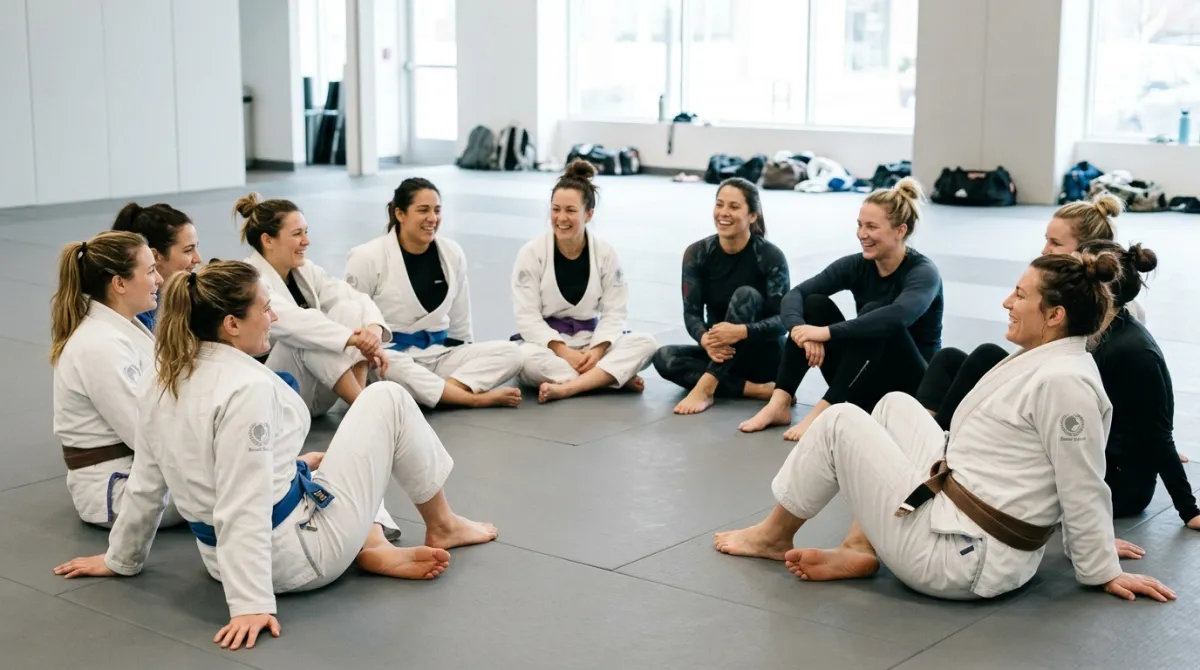
Women are among the fastest-growing groups on the mat, and for good reason. BJJ for women combines a thoughtful workout, a problem-solving challenge and a supportive community. If you have wondered whether it is for you, this guide answers the questions most women ask before their first class.
Why are more women choosing BJJ?
More women are choosing BJJ because it offers real skill, a rewarding workout and a strong sense of community in one activity. It rewards technique over brute force, so women can grow at their own pace. Many also like the mental challenge, which feels more like a puzzle than a routine gym session.
Jiu-jitsu is also unusual because it values patience and problem solving. Progress feels earned, and every small improvement is visible, whether it is a cleaner escape or a calmer response under pressure. Women often tell us that the sport gives them a new sense of control.
Finally, a good academy becomes a social circle. Training partners cheer each other on, share tips and celebrate promotions. For many women, that community is the reason they keep coming back.
Can smaller or less strong women succeed in BJJ?
Yes. Jiu-jitsu was designed so that technique and leverage can overcome size and strength. A smaller person who understands angles, balance and timing can control a larger partner. In our classes we often see beginners learn this on the first day, when a small movement of the hips changes everything.
This does not mean strength is useless. Strength helps, but the art rewards efficiency. Women often develop cleaner technique because they cannot rely on force, and that skill carries a long way.
You will also train with partners of different sizes. A good instructor pairs students thoughtfully and teaches everyone to use control. Over time, you will build strength and flexibility as a natural result of training.
What is a women's BJJ class like?
A women's BJJ class follows the same structure as other classes: a warm-up, technique instruction, partner drills and optional live practice. The difference is the atmosphere, which many women find relaxed and supportive. Partners are matched thoughtfully, and questions are encouraged from the first minute.
If you want a women-focused environment, read about our women's program and see what is offered. Mixed classes are also an excellent option, and many women train in both.
No matter the class, you control your comfort level. You can watch a drill, practice at half speed or sit out a round. Good instructors respect those choices and never pressure students to do more than they want.
How does BJJ help with self-defense?
BJJ helps with self-defense by teaching you to stay calm, manage distance, escape holds and control a situation on the ground. It focuses on practical skills like posture, balance and escapes. It is not a promise of safety, and awareness and avoiding danger always come first.
Many women are drawn to jiu-jitsu because it trains the body and mind to respond under pressure. By practicing with a resisting partner in a safe setting, you learn how it feels to be held, to breathe and to find an exit. That familiarity can reduce panic.
- Learn to keep your posture and protect your head.
- Practice escaping from common holds in a controlled way.
- Develop awareness of balance, space and timing.
- Build calm breathing habits under pressure.
Always remember that real-life safety depends on many factors. Training is a valuable tool, not a substitute for good judgment, and your instructor can explain realistic expectations.
What should women wear to BJJ class?
Women should wear a fitted t-shirt or rash guard and stretchy leggings or shorts without zippers or pockets. For gi classes, many students add a gi jacket and pants, often with a rash guard underneath for comfort. Tie hair back, remove jewelry and keep nails short.
A few practical tips make training more comfortable:
- Choose a supportive sports top that stays in place when you move.
- Wear leggings or fitted shorts so nothing catches during drills.
- Pack a spare top, a towel and a water bottle.
- Use soft hair ties instead of clips or hard accessories.
The right outfit helps you focus on the lesson instead of adjusting your clothes. If you are unsure about a gi, ask the team at the front desk. You do not need to buy anything for your first class.
How do you find the right training partners?
The right training partners are patient, communicative and respectful of your limits. You find them by being open about your experience, asking questions and noticing who trains with care. A good academy culture means most students, including advanced ones, adjust their intensity to match yours.
It is fine to say, "I am new, can we go light?" Good partners will respond kindly. If someone is too rough, tell the instructor. Safety and respect are not optional, and a healthy academy takes concerns seriously.
Over time, you will discover which partners help you grow most. Some are generous teachers, and some are great at pushing you to try new things. A mix of both makes your training richer.
What about strength, flexibility and fitness?
You do not need strength, flexibility or fitness to begin BJJ. Those qualities grow with training, and the class is scaled for beginners. Women often notice better coordination, stronger grip and greater body awareness within a few months, though every body responds differently.
If you want to support your training, simple habits help: regular sleep, balanced meals, hydration and gentle mobility work. Talk to your doctor if you have medical conditions, and tell your instructor about injuries or concerns.
Avoid comparing yourself with others. The person next to you may have different experience, a different body and a different schedule. Your journey is yours, and consistent practice is what counts.
What does progress look like in the first year?
In the first year of BJJ, most women move from feeling lost to feeling oriented. You learn the vocabulary, your first escapes and basic control positions, and you begin to relax during live practice. Progress is gradual, and every student advances at a different speed, so avoid measuring yourself against others.
In the first weeks, expect to feel awkward. Movements such as hip escapes and bridges feel strange, and the names of positions blur together. By the third or fourth month, many students notice that their body reacts before their mind does. That is the moment technique begins to take root.
Small milestones are worth celebrating. Surviving a hard round, finally hitting a move you drilled for weeks, or earning your first stripe all count. Keep a simple notebook of what you learned after each class, and you will see how far you have come.
Does BJJ fit into a busy schedule?
BJJ fits into a busy schedule more easily than many people expect. Even one or two classes per week bring steady progress for a beginner. Classes are scheduled at different times of day, so you can pick sessions that match your work, family and school commitments without feeling overwhelmed.
Start with a modest plan, such as two classes a week, and protect those hours like appointments. Consistency matters more than volume. Missing a week now and then is normal, and you can always return without judgment.
Look at the class schedule to see available times. If your week is unpredictable, tell the team. They can suggest which sessions suit beginners and how to build a routine you can sustain.
How can you handle nerves before your first class?
Nerves before a first BJJ class are normal. Handle them by visiting the academy first, talking with an instructor, bringing a friend and reminding yourself that every student was once a beginner. Preparing your gear and arriving early also helps you feel calm and in control.
Many women worry about being judged or not keeping up. In our classes we hear this all the time, and the answer is the same: nobody expects perfection. The room is full of people who remember their first day and are happy to help.
Take one step at a time. Your first class does not need to be your last. If you want a quieter introduction, a private lesson can help you learn the basics at your own pace.
Can mothers and daughters train together?
Many families train together, and a parent can join adult classes while a child trains in a youth class. Training side by side gives families shared goals and shared stories. Parents can read the parents page to see how kids classes are organized and how schedules can fit together.
Some mothers begin jiu-jitsu after watching their children, and many find that it becomes their own passion. Others simply enjoy the community of the academy and the chance to meet other parents.
Whichever route you take, it is a good reminder that jiu-jitsu is for every age and stage of life.
What makes a women-friendly academy?
A women-friendly academy has respectful instructors, clear rules about conduct, thoughtful partner pairing and a culture where questions are welcome. You can often sense it in the first ten minutes. Students greet newcomers, experienced partners adjust their pace, and the instructor sets a calm, professional tone.
Ask direct questions before you commit. How are partners assigned? How does the academy handle concerns? Are there women among the students and instructors? Honest answers show you how seriously the school treats everyone on the mat.
How do you take the first step?
The first step in BJJ for women is to try a class. Renzo Gracie West Boca Raton offers a free trial class so you can meet the instructors, see the mat and try a lesson without commitment. You can ask questions, watch before joining, and decide at your own speed.
Check the class schedule for a time that suits you, then book your free trial class. Whether you live in Boca Raton or elsewhere in South Florida, you are welcome here. We hope to see you on the mat soon.
Perguntas frequentes
Do I need to be strong or athletic to start BJJ?
No. Jiu-jitsu is built on leverage, timing and technique, which let smaller people control larger ones. Many women arrive with no athletic background. Strength and fitness develop gradually through training, and your instructor will scale each drill to your level.
Will I be training only with men?
It depends on the class. Many academies offer mixed classes and some women's classes. Our women's program page explains what is available, and you are welcome to ask the team about class options and partner pairing before you book your free trial class.
What if I feel uncomfortable with physical contact?
That is a common concern, and you set the pace. Tell your instructor how you feel, and they can adjust drills, partners and contact level. Respect and consent are basic rules of a good academy, and you can step out of any drill whenever you need to.
What should I wear to my first class?
Wear a fitted t-shirt or rash guard and stretchy leggings or shorts without zippers. Tie back long hair and remove jewelry. You do not need a gi on day one, and the academy can tell you whether a uniform is available for your first lesson.

 Portuguese