
What Is the Best Age to Start Kids Jiu-Jitsu?
Esta página ainda não foi traduzida; mostrando a versão em inglês.
The best age to start kids jiu-jitsu is the age at which your child can enjoy a group class, listen to a coach for short stretches and feel safe among other children. For many families that begins in the preschool years, but readiness matters more than the number on the birthday cake. Programs built for younger ages play and move differently from classes for older kids and teens.
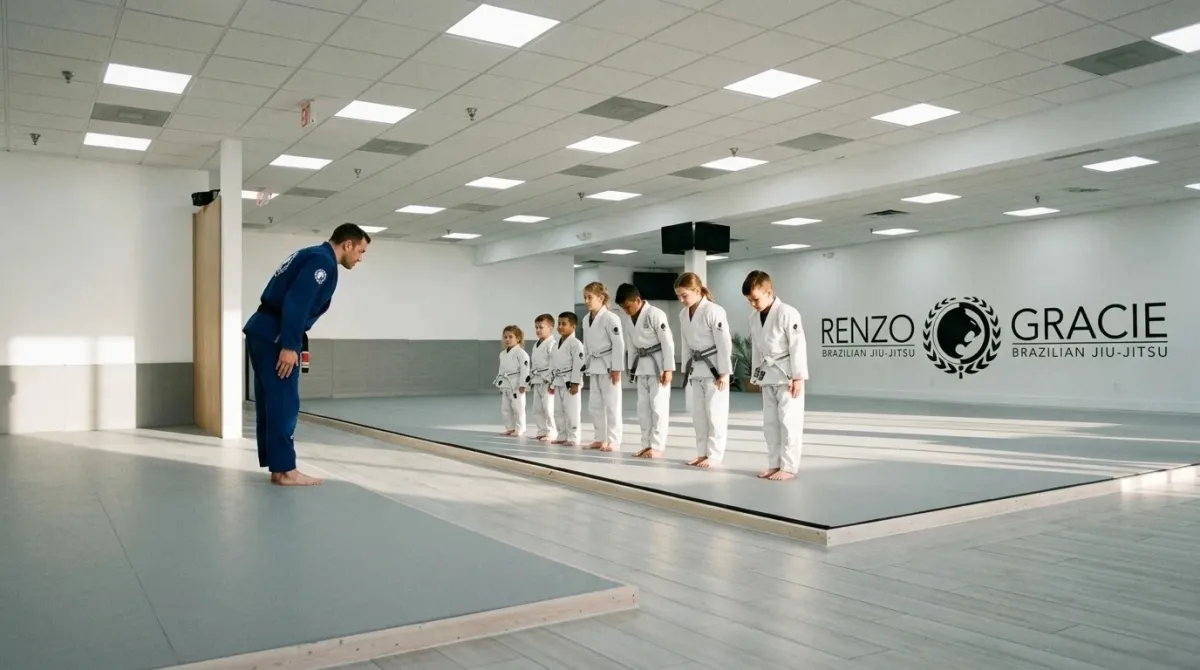
Every parent in Boca Raton eventually asks the same question: is my child too young, or already too late? After years of watching children walk onto the mat, our honest answer is that there is no single perfect age. There is a good age for your child, and this guide will help you spot it.
Is there a perfect age to start kids jiu-jitsu?
There is no single perfect age. Children can begin jiu-jitsu at many stages, from preschool through the teen years, as long as the class is designed for their development. What changes with age is the style of the lesson, not whether the child can benefit from it.
On our mat we see three kinds of beginners. Some three-year-olds walk in confident and curious. Some eight-year-olds hide behind a parent's leg for the first week. Some thirteen-year-olds arrive sure that they are too old to start, and within a month they are the ones asking for extra drilling time. None of these children is behind. They are simply arriving from different places.
If you are still weighing the options, our guide to kids jiu-jitsu benefits by age walks through what each stage tends to gain from the mat.
How do you know if your child is ready?
Your child is ready when they can separate from you for a short class, follow simple directions from an adult and tolerate a little friendly physical contact with other children. You do not need all three on day one, but you should see the beginnings of each.
Here are practical signs we look for when families visit:
- Your child watches other kids with curiosity rather than alarm.
- They can stay with a group activity for a few minutes without wandering off.
- They understand simple rules such as taking turns and waiting for a signal.
- They want to try it, even if they say so quietly.
None of these signs is a test. A child who is not quite there today may be ready in a few months, and a parent who watches one class from the side will usually know within ten minutes.
What does training look like for 3 and 4 year olds?
For the youngest children, jiu-jitsu looks like structured play. Classes use short activities, simple movements such as rolling and crawling, and games that teach listening and balance. The aim is to build body awareness and a love of coming to class, not to teach advanced technique.
Our Baby Jitsu program is made for this stage. Expect movement that feels like a game, instructors who get down to the child's level and a lot of encouragement. Parents often tell us that the biggest early win is the child learning to wait their turn in a line.
If your child is in this age group, there is no pressure to see results. Showing up, smiling and bowing at the beginning of class is already a success.
What about children in the school-age years?
School-age children are often in a sweet spot for jiu-jitsu. They can follow longer explanations, work with partners and start to understand that practice leads to improvement. They are also developing social skills that the mat supports naturally.
Programs like Little Champions and Juniors organize students by age so the pace matches the group. Check each page for the age ranges and format, because those details are best confirmed directly with the academy.
At this stage you may notice a child who is shy at school feeling confident in a gi, or a high-energy child learning to wait and listen. Those shifts rarely happen overnight. They build through steady attendance over months.
Is it too late to start as a teenager?
It is not too late. Many teenagers start jiu-jitsu with no experience and enjoy it, because the sport rewards patience and problem-solving as much as athleticism. A thirteen-year-old beginner is only a few months behind a peer who started earlier, not years.
Teens benefit from classes made for them. Our Teens program gives older students a place to train with people their own age, which matters a lot at that stage. If your teenager is nervous about being the new one, remind them that most of the room remembers their own first day.
We also encourage parents to read about how jiu-jitsu builds confidence, since teens often care about that most.
Does starting earlier mean being better later?
Starting earlier can give a child more years on the mat, but it does not guarantee a better experience. A child who starts at four and hates class will often do worse than a child who starts at nine and loves it. Enjoyment is what keeps a student training long enough to improve.
If your goal is a lifelong, healthy relationship with movement, the best plan is to protect the child's enjoyment. Let them take breaks when needed, celebrate effort and avoid comparing them to other children.
If competition ever interests your child, that is a separate path with its own timing, and the coaches can talk through it with you when the moment comes.
What mistakes do parents make about timing?
The most common mistake is rushing a child who is not ready because a friend's child started early. A reluctant three-year-old pushed into a class too soon may associate the mat with stress, and that first impression can be hard to undo. Patience costs nothing, and the mat will still be here in six months.
The opposite mistake is waiting for perfect confidence. Many children will never announce that they are ready. They show it by lingering at the window of the academy, copying movements at home or asking what the kids are doing. If you see those signs, a free trial is a low-risk way to find out.
A third mistake is treating the start date like a race. Jiu-jitsu is a long game, and the children who benefit most are usually the ones who stay for years because they enjoy it. Aim for a happy first season, not an early start for its own sake.
How do class expectations change from age to age?
Expectations rise gently with age. For preschoolers, success is smiling, moving and following a simple game. For young school-age children it becomes listening to a short explanation and practicing with a partner. For older children and teens it can include longer drilling, more precise technique and a growing understanding of strategy.
Instructors adapt their voice, pace and activities to each stage. That is why we group students by age instead of putting everyone together. A seven-year-old and a fifteen-year-old need different things, and a good program respects that.
If your family has children of different ages, you may find them in different classes on different days. Our parents page explains how families can plan around that without chaos.
What do instructors wish parents knew about starting?
Instructors wish parents knew that the first weeks are about belonging. A child who feels welcomed will learn almost anything, and a child who feels watched and judged will freeze. If you can, let the instructor and the other children do the welcoming, and keep your own comments positive and brief.
They also wish parents knew that attendance beats talent. We have seen children who looked uncoordinated in month one become some of the smoothest movers a year later, simply because they kept coming. Talent shows up fast and fades, but habits build slowly and stay.
Finally, instructors appreciate honest information. Tell us if your child had a rough morning, struggles with loud noises or is nervous around new adults. A few sentences before class help us give your child the right kind of welcome.
How do you try a class before committing?
The easiest way is to book a free trial class and watch how your child responds. Pay attention to how they enter the room, how they react to the instructor and whether they smile at the end. Those small moments say more than any age chart.
Wear comfortable athletic clothes, bring water and let the team know your child's age and any concerns. Browse the class schedule for the right session, then reserve through the free trial page. We would love to meet your family.
Perguntas frequentes
Can a 2-year-old do jiu-jitsu?
Most programs start with preschool-aged children, and a toddler may simply not be ready for group instruction yet. If your child is very young, contact the academy to ask what is available, and consider watching a class together to see how they respond.
Should I wait until my child asks to start?
You do not have to wait, but interest helps. Many children say yes after watching a class, even if they were unsure at first. A free trial lets your child decide with real experience instead of imagination.
Will my child be behind if others started earlier?
Classes are organized by age and level, so a beginner trains with other beginners. Children progress at different speeds, and every student has a first day. Steady attendance matters far more than the starting age.
What if my child tries it and does not like it?
That is okay. Some children need a few classes to warm up, and some find another activity fits better. Give it a fair try, listen to your child and decide together without pressure.

 Portuguese