
Drilling vs Rolling in Jiu-Jitsu: How to Balance Both
Drilling is repeating a technique with a cooperative partner to build the movement. Rolling is live sparring where both people resist. You need both: drilling builds skill, rolling tests it. A balanced beginner spends more time drilling and rolls at a relaxed pace.
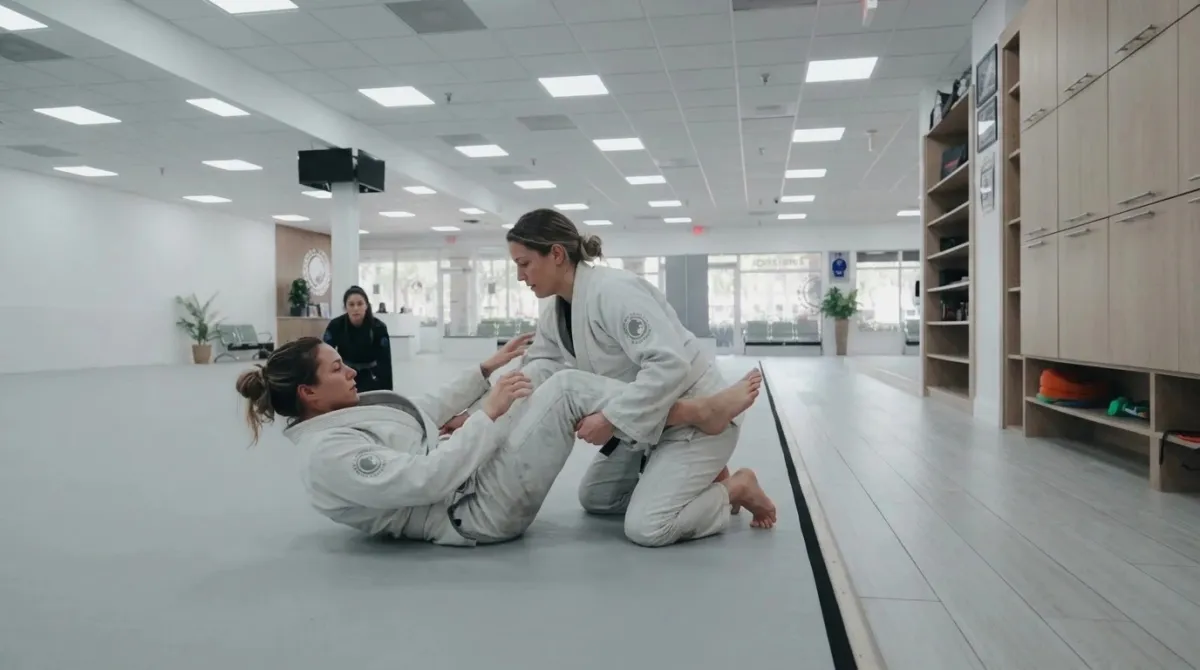
Open any jiu-jitsu class and you will see two main types of practice: drilling and rolling. New students often wonder which one matters more, and whether they should spend all their time sparring. The honest answer is that both are essential, and the right balance helps you learn faster and stay healthier.
What is the difference between drilling and rolling?
Drilling is practicing a technique with a cooperative partner, again and again, to build the movement. Rolling is live sparring, where both people try to apply and defend techniques at the same time. Drilling teaches the pieces; rolling tests how well those pieces work when someone resists.
Think of learning a language. Drilling is like practicing vocabulary and sentences. Rolling is like having a real conversation, where the other person can say anything. You need the vocabulary before the conversation, but you also need conversations to find out what you really know.
Why is drilling so valuable?
Drilling builds the muscle memory and understanding that you rely on when things get fast. By repeating a movement many times, you smooth out the details, such as where your foot goes or how your hips turn. This makes the technique available to you under pressure.
Drilling also lowers the risk of injury because you control the speed. When both partners cooperate, you can slow down, ask questions and fix small mistakes. For example, if you are learning the hip bump sweep, a calm round of drilling lets you feel the timing before anyone resists.
Good drilling is not mindless repetition. Each rep should have a purpose: perhaps you focus on your grip this round and your hip angle the next. Short, focused sets beat a long, sloppy one.
Why is rolling important too?
Rolling shows you whether a technique works when your partner reacts. Real resistance teaches timing, balance and decision-making in ways that drilling cannot. It also builds the calm that comes from being uncomfortable and staying relaxed.
Rolling is where you discover which positions you like, which ones worry you and what to ask your coach next. It also builds conditioning and the confidence that grows from solving problems under pressure. If you want to build stamina for it, our conditioning guide offers useful ideas.
Rolling is not a fight. The purpose is mutual learning, and the best partners help each other improve. Tap early, communicate and keep the mood friendly. For manners and expectations, see jiu-jitsu etiquette.
How should a beginner balance drilling and rolling?
A beginner should drill more than roll, and keep rolling relaxed. In the first months you are building your vocabulary, so repetition with a cooperative partner brings the most benefit per minute. Add light, controlled rolling as you get comfortable, and never feel pressured to go hard.
A simple approach for new students:
- Pay full attention during the technique demonstration.
- Drill the move with a patient partner until you can do it smoothly.
- When rolling begins, try to use only one or two ideas from that day.
- Rest when you need to and tell your partner if you are tired.
- After class, think about one thing that worked and one thing to fix.
Most students benefit from reducing intensity when they are tired. If you are unsure how much to do each week, read our guide on how often beginners should train.
What is positional sparring, and where does it fit?
Positional sparring sits between drilling and full rolling. You start from a chosen position, such as bottom of side control or closed guard, and work only that situation with resistance. It lets you practice a specific problem again and again without the chaos of a full round.
This format is useful because the stakes are narrow. For example, you can start in mount and practice the mount escape while your partner tries to keep you pinned. Both people know the goal, so the resistance is meaningful but controlled.
Many coaches use positional rounds to bridge the gap between the demonstration and free rolling. They give you real-world practice with a safety net.
How can you make drilling more effective?
You make drilling effective by adding small layers of resistance gradually. Begin with a cooperative partner, then ask for a little resistance, then more. This staircase keeps the learning curve smooth.
Try these simple ideas:
- Count your repetitions and aim for quality, not speed.
- Switch sides so both your right and left sides develop.
- Change roles after each set, because the partner position teaches you as well.
- Ask a question when something feels unclear, instead of repeating a mistake.
- Warm up your drilling partner with a calm pace before adding intensity.
Our mobility routine can also help your body feel ready for repeated movements, especially hips and shoulders.
How can you make rolling safer and more useful?
Rolling is safer and more useful when you agree on the intensity before you start. A short conversation such as "light and technical?" sets the tone and prevents surprises. Choose partners who match your level in the beginning, and increase the challenge slowly.
Some good habits are:
- Tap early and often. There is no prize for waiting.
- Control your speed and avoid explosive movements, especially with newer partners.
- Keep your nails trimmed and your gear clean.
- Stop and tell the instructor if something hurts.
- Treat every round as a lesson, whether you win or lose positions.
For more ideas about staying healthy on the mat, read how to avoid injuries in jiu-jitsu.
What mistakes do beginners make with drilling and rolling?
Common mistakes include rolling too hard too soon, skipping drilling, and trying to use everything they have ever seen in a single round. Some students also let strength replace technique, which slows learning because the movement never gets cleaned up.
In our classes we often see new students try to win every round of rolling. The students who improve fastest tend to do the opposite: they treat rolling as a lab. They pick one position, test one idea and accept that they will be tapped while learning. That patient mindset pays off over many months.
Another mistake is avoiding rolling out of fear. If you feel nervous, tell your coach. They can pair you with a calm partner and set a gentle pace. Learning to be relaxed under resistance is a skill like any other, and it develops with kind, steady exposure.
How do you know when to do more of each?
Use your own experience as a guide. If your techniques fall apart whenever a partner resists, spend more time drilling and positional sparring. If you can do every move in drills but freeze in live rounds, add more rolling at a relaxed pace. Ask your instructor to watch you and suggest an adjustment.
If you are preparing for a tournament, you will probably add more live rounds closer to the event. Our guide on preparing for your first BJJ tournament explains how to structure that period.
How can you try both at Renzo Gracie West Boca Raton?
The easiest way to feel the difference is to attend a class. Our instructors teach the technique, guide the drilling and explain how rolling works at your level. You never have to spar on your first day, and you will always have a partner who is patient with beginners.
Take a look at the adults program and the class schedule, then book your free trial class at our Boca Raton academy. Bring water, wear comfortable clothes and ask as many questions as you like.
Frequently asked questions
Should beginners roll in their first month?
Rolling is optional at first. Many beginners watch, drill the techniques and add a short, light round when they feel ready. Tell your coach how you feel and they will set the pace.
How much of class should be drilling?
There is no fixed ratio, because each class is planned by the instructor. As a general idea, beginners benefit from more repetition than sparring while they learn the basics.
Is positional sparring the same as rolling?
No. Positional sparring starts from a set position and focuses on a specific problem, while rolling is open and continues wherever the action goes. It is a helpful step between the two.
What if I get tapped constantly while rolling?
That is normal for newer students and for experienced ones with stronger partners. Treat each tap as information, ask what you missed and keep the pace relaxed.

 English