
Jiu-Jitsu for Kids: Benefits by Age Group
Esta página aún no está traducida; mostrando la versión en inglés.
Jiu-jitsu for kids teaches movement, focus, respect and resilience in a structured, fun way, and the benefits change with age. Preschoolers build coordination and listening skills, school-age children develop discipline and social habits, and teens gain confidence and healthy stress outlets. The right class matches your child's age and personality.
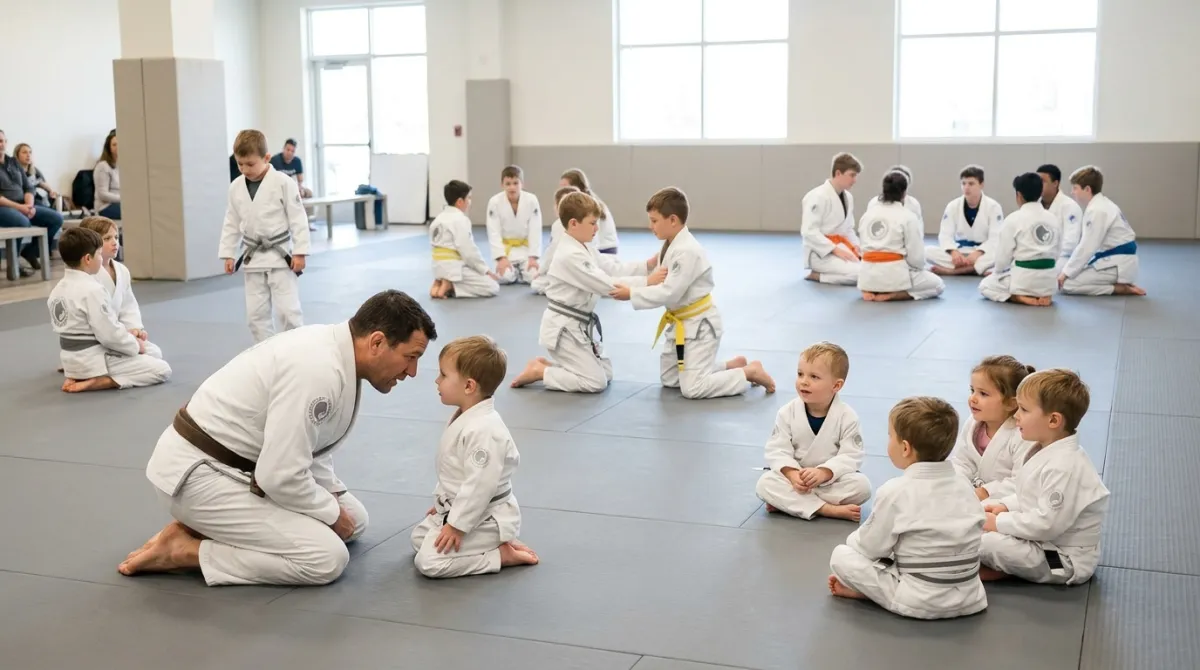
Parents often ask us the same question: what will my child actually get out of this? Jiu-jitsu for kids is more than a sport. It is a mix of movement, problem solving and character building. Yet what children gain depends on how old they are, so this guide walks through each stage.
Why is jiu-jitsu for kids so popular with families?
Jiu-jitsu for kids is popular because it combines physical activity, structure and personal growth in one class. Children learn to move safely, follow instructions, handle small challenges and work with partners. The belt system gives them clear goals, while the community teaches respect for teachers and classmates.
Unlike many team sports, jiu-jitsu does not require a child to be the fastest or the strongest. Every student progresses at their own pace, and a quiet child can thrive alongside an energetic one. In our classes we often see shy children become more comfortable simply by being included.
It is also a sport that rewards patience. Kids learn that improvement comes from repetition, listening and trying again after a mistake. Those lessons carry into school, friendships and family life.
What does jiu-jitsu offer preschoolers?
For preschoolers, jiu-jitsu is mostly structured play that builds coordination, listening and body awareness. Classes use games, animal movements and simple drills to teach balance, rolling and basic positions. The goal is to enjoy moving on the mat, follow directions and begin to understand taking turns.
At this stage, attention spans are short, so good instructors use short activities and lots of encouragement. Children learn to line up, wait for their turn, bow and listen. These small routines help prepare them for kindergarten and group learning.
Parents of the youngest children can explore the Baby Jitsu program to see how early classes are designed. Check the program page for the age range, class length and what to bring.
What are the benefits for early elementary children?
Early elementary children gain coordination, focus and social skills from jiu-jitsu. At this age they can follow multi-step instructions, so classes introduce simple techniques, positions and the basics of tapping and respect. The structure helps children practice patience while they enjoy moving and learning with friends.
Many children in this stage are eager to show what they know. Instructors channel that energy into clear goals, like earning a stripe or learning a new move. Small successes build pride, and pride builds the desire to keep learning.
Our Little Champions program is built for young students at this level. It balances fun and discipline so that kids look forward to class while still learning real jiu-jitsu foundations.
How does jiu-jitsu help older elementary and middle school kids?
For older elementary and middle school children, jiu-jitsu builds discipline, resilience and problem-solving. They begin to understand why techniques work, practice drilling with a partner and handle the small frustrations of learning something difficult. This is also when friendships form and the academy becomes a second community.
This age group is often dealing with changing social dynamics at school. A positive training environment gives them role models, healthy competition and a place where effort is valued. Children learn that they can handle discomfort, ask for help and keep going.
The Juniors program serves this stage, with more technical lessons and consistent expectations. Parents should look for classes where respect, safety and kindness are enforced as strongly as skill.
What can teenagers gain from jiu-jitsu?
Teenagers gain confidence, a healthy outlet for stress and a supportive peer group from jiu-jitsu. The sport challenges both body and mind, and it teaches teens to stay calm under pressure, accept feedback and take responsibility for their progress. Many teens also enjoy the sense of belonging that a good academy provides.
Adolescence can be a period of self-doubt. Jiu-jitsu gives teens a way to measure growth that is not tied to grades or social media. A new stripe or a successful technique feels real and earned. Teens also learn that setbacks are normal and that persistence works.
Take a look at the Teens program to see how classes combine fundamentals, sparring practice and mentoring. If your teen is curious about tournaments, the instructors can explain the options, and entering is never required.
What character skills does jiu-jitsu teach at every age?
Across all ages, jiu-jitsu teaches respect, humility, perseverance and self-control. Students bow to the instructor, thank partners, tap when needed and learn to accept both wins and losses. These habits form the heart of the art, and they apply well outside the academy walls.
- Respect: Greeting the instructor and treating partners kindly.
- Discipline: Showing up, listening and following the rules.
- Perseverance: Trying again after a difficult round.
- Humility: Learning from every partner, including smaller or newer students.
- Self-control: Using strength carefully and staying calm.
We teach that technique should be used responsibly. Children are reminded that jiu-jitsu is for training and safety, not for showing off or hurting others.
How do you choose the right class for your child?
To choose the right jiu-jitsu class for your child, match the program to their age, look for qualified and kind instructors, and watch a session if possible. Check class size, supervision, safety rules and how the academy handles behavior, since a good fit makes children eager to return.
Here are questions worth asking any academy:
- How are classes divided by age and experience?
- How many instructors or assistants supervise the room?
- How do you handle a child who is nervous or overexcited?
- What are your rules on respect, safety and hygiene?
- Can we watch a class before signing up?
The parents page explains how our youth programs work and what families can expect. It is a good first stop before you visit.
What if my child is shy or nervous?
Shy or nervous children can do very well in jiu-jitsu when they are given time and kind guidance. Many begin by watching, then join in a little at a time. A good instructor makes a point of welcoming new students, pairing them with friendly partners and celebrating small steps.
It helps if parents prepare their child by talking through what will happen: a warm-up, a game, a technique and a bow. Familiar routines reduce worry. Avoid pushing too hard, since a child who feels safe will often surprise you within a few weeks.
If your child has a medical condition, a learning difference or special needs, tell the academy before the first class. Our inclusive program page explains options for students with different needs. Always talk with your pediatrician if you have health questions about physical activity.
How should parents support a child who trains jiu-jitsu?
Parents support a child in jiu-jitsu by being consistent, encouraging effort over results and trusting the instructor. Bring your child on time, pack a water bottle, and ask how the class felt instead of whether they won. Calm, positive support helps children enjoy learning and keep going through tough days.
Avoid coaching from the sidelines, because mixed messages confuse kids. Let the instructor lead, and save your feedback for the car ride home, where you can celebrate small wins like a new technique or a kind act toward a partner.
- Praise effort, focus and kindness.
- Let your child tell you what they learned.
- Keep a regular routine for sleep, food and class time.
- Talk to the instructor if something worries you.
Patience matters too. Progress in jiu-jitsu is gradual, and the best results come when families treat it as a long-term activity, not a quick fix.
What safety rules matter most in kids jiu-jitsu?
The safety rules that matter most in kids jiu-jitsu are tapping early, controlled movement, no striking or rough play, clean uniforms and listening to the instructor. A good academy explains these rules in the first class and repeats them often. Safety is a shared habit, not a single lesson.
Instructors also watch for size and skill differences, pairing children with suitable partners. Mats should be clean and in good condition, and the room should be supervised at all times. Parents are welcome to ask about these details before enrolling.
No physical activity is entirely free of risk. If your child feels pain beyond normal tiredness, tell the instructor and speak with your pediatrician.
Is jiu-jitsu right for every child?
Jiu-jitsu suits many children, but not every child enjoys it right away. Some prefer other activities, and that is fine. The best way to find out is to try a class, watch how your child reacts, and talk afterward about what they liked and what felt hard.
Give a new activity a fair trial of several weeks before deciding. Kids often need time to learn the routine, make friends and feel at ease. If it still does not feel right, listen to your child and explore other options.
Whatever you decide, remember that the goal is to support your child's growth and happiness. Our team respects that every family has a different journey.
How can your family try a class in Boca Raton?
Families in Boca Raton and nearby South Florida communities can try jiu-jitsu for kids at Renzo Gracie West Boca Raton with a free trial class. It is a relaxed way for your child to meet the instructors, see the mat and join in without any commitment.
Start by reading the program that fits your child's age, then book a free trial class. Check the class schedule to choose a convenient time. We look forward to welcoming your family.
Preguntas frecuentes
What is the best age to start jiu-jitsu for kids?
Children can begin jiu-jitsu as soon as they are old enough to follow simple directions in a group, which often happens in the preschool years. There is no single perfect age. Choose a program built for your child's stage and watch how they respond to the class.
Is jiu-jitsu safe for children?
Kids jiu-jitsu can be a safe activity when classes are supervised by a qualified instructor and structured by age. Good programs teach children to tap early, move with control and respect partners. Ask any school about class size, supervision and rules before you enroll your child.
Will jiu-jitsu make my child aggressive?
In a well-run program, the opposite tends to happen. Children learn self-control, patience and respect, and classes emphasize rules, safety and kindness. If you have concerns, watch a class first and talk with the instructor about how behavior and discipline are handled.
What should my child wear to a first class?
For a first class, comfortable athletic clothes are usually fine. Ask the academy whether a uniform is needed on day one. Remove jewelry, tie back long hair, and bring a water bottle so your child feels prepared and comfortable.

 Spanish