
A Parents' Guide to Kids Belts and Stripes
Esta página aún no está traducida; mostrando la versión en inglés.
In kids jiu-jitsu, belts and stripes mark progress. A child usually earns stripes on a belt over time, then moves to the next color when the instructors decide they are ready. Promotions depend on skill, understanding, attendance and attitude. For parents, the best response is patience and praise for effort.
Few things make a child prouder than a new stripe, and few things confuse parents more than the belt system. Which color comes next? How long does it take? Why did my child's friend move up first? This guide offers a calm, clear overview of how belts and stripes work for children and how to talk about them at home.
What is the belt system for kids?
The belt system is a series of colored belts that show a student's level. Children start with a white belt and move through other colors as they gain experience. Kids' belts are often different from adult belts, with extra colors to mark smaller steps.
Exact colors and requirements differ between academies, so ask your instructors how the system works at your school. For a general explanation, read our belt system guide.
The system is meant to be motivating, but not to define a child. A belt is a milestone along a path, not a label.
What are stripes?
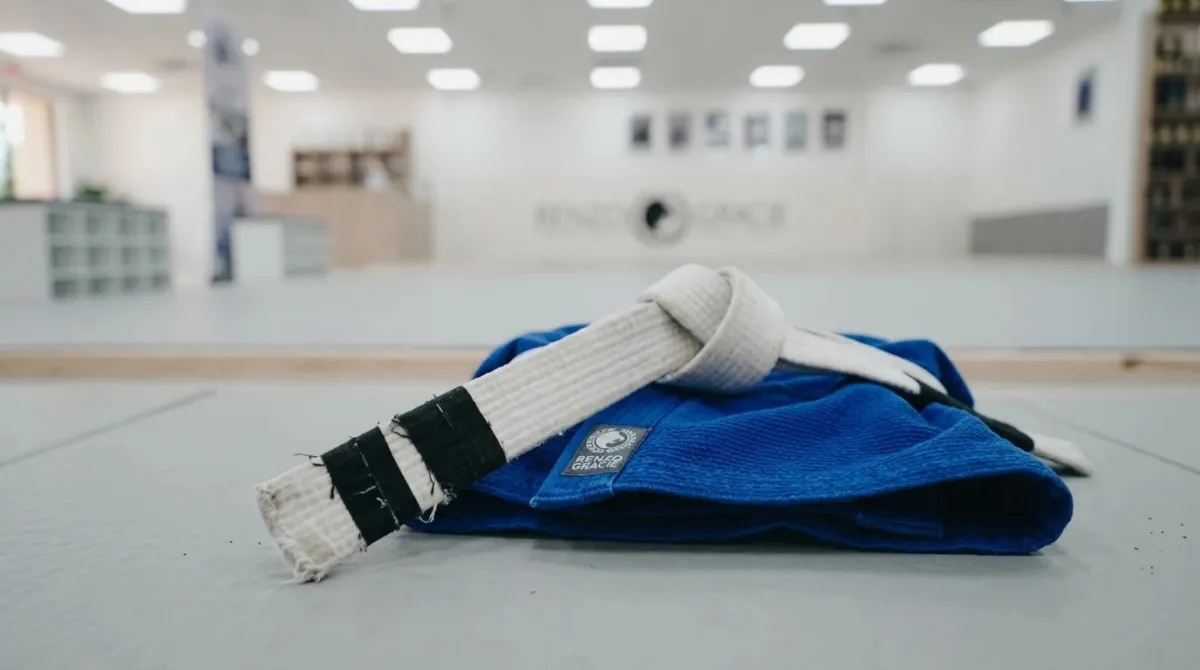
Stripes are small marks, often made of tape, added to the end of a belt to show progress within a color. A child may earn several stripes before moving to the next belt. They provide frequent, small rewards that keep children motivated.
Stripes are usually awarded by the instructor, sometimes at the end of a class or after a period of consistent training. They recognize effort, behavior and learning, not only technical skill.
For a child, a stripe is a visible sign that their work matters. Celebrate it, but keep perspective.
How long does it take to earn a belt?
There is no universal timeline. Some children progress faster, and others need more time. Age, attendance, maturity and individual development all play a role. Comparing children is rarely helpful.
Instructors consider many things: technique, understanding, discipline, respect and effort. Regular attendance matters a great deal. A child who comes weekly for a year will usually progress more than one who comes in bursts.
We prefer not to publish fixed times. Ask your instructors about your child's progress, and they will give an honest and kind answer.
Who decides when a child is promoted?
Instructors decide, based on their observation of the child over time. They watch how a student trains, how they treat others and how they handle challenges. Promotions are not for sale, and they are not based on a single test.
Some academies hold ceremonies, where the child receives a belt in front of friends and family. These can be memorable moments, and they teach children to accept recognition with humility.
If you have questions about why your child has not been promoted yet, ask privately and respectfully. Instructors welcome the conversation.
How can you support a child who is waiting?
Waiting is hard for children, especially when friends advance. Remind your child that every journey is different and that progress is not a race. Focus on what they have learned and enjoyed.
Helpful ideas:
- Talk about skills improved, not just the next belt.
- Set small, personal goals, like learning a new movement.
- Praise attendance and attitude.
- Avoid promising a date for promotion.
- Celebrate other achievements, such as helping a new student.
If your child is discouraged, tell the instructor. They can offer encouragement and clearer feedback.
Why do stripes and belts move slowly?
Jiu-jitsu is a deep art, and the system reflects that. Slower progress encourages mastery, not rushing. Children learn that real skill takes time, and that effort matters.
A slower pace also protects children. Moving up too fast could place them in situations beyond their level, and instructors take that seriously. The goal is a child who is confident and capable at each step.
If your child likes quick rewards, mention it to the instructor, who can recognize small wins in other ways.
What do belts mean outside the academy?
Outside the academy, a belt is mostly a personal symbol. Teach your child that it does not give them permission to boast or to use jiu-jitsu except for training and safety. Humility is a core value of the mat.
A belt can also be a conversation starter. Children might proudly explain what they learned or show a classmate a movement. Encourage them to share with kindness.
Our etiquette guide describes the values that go with the belt.
How should you care for the belt and uniform?
Wash the uniform after every class, and keep the belt clean and tied properly. Teaching a child to care for their gear builds responsibility. A belt should not be thrown on the floor or used as a toy.
Tying the belt is a skill in itself. Practice together at home, and ask the instructor to show you the right knot. If laundry is a challenge for your busy family, ask about our wash and dry service.
These small routines reinforce respect for the art and for themselves.
What are common parent mistakes about belts?
The most common mistake is treating the next belt as the point of training. Children who train for the belt may lose interest after receiving it, while children who train for the joy of learning keep going. Keep the conversation focused on what your child enjoys and discovers.
Another mistake is comparing siblings or friends. Children develop at different speeds, and a faster promotion does not mean a better student. A third mistake is pressuring instructors for early promotion. Instructors see the whole picture, and trusting them protects your child's long-term growth.
How can belts help teach goal-setting?
Belts and stripes are a gentle introduction to goal-setting. A child sees a clear target, understands that it takes time and learns to work in small steps. Parents can reinforce this by helping children set mini-goals, like attending every class in a month or learning one new technique.
When a goal is reached, celebrate. When it is missed, talk about what was learned. This pattern, repeated through childhood, builds resilience and self-belief. Our article on how jiu-jitsu builds confidence explores the same idea in more depth.
What if your child changes academies or takes a break?
Life happens. A child may take a break for school, injury or other interests. When they return, the instructors will assess where they are and welcome them back. A break does not erase what they learned.
If you move to another academy, talk to the instructors about how belts are recognized. Different schools have different systems, and a respectful conversation helps everyone. Above all, remind your child that their effort and experience belong to them wherever they train.
How can you talk about belts with your child at home?
Keep the conversation curious. Ask what they are working on, what feels easy now that felt hard before and what they would like to learn next. These questions shift attention from the belt to the learning itself, which is where lasting motivation lives.
You can also turn belt moments into family traditions. A favorite dinner, a photo for the fridge or a handwritten note can make a promotion feel special without becoming a big expensive event. Small, warm gestures teach children that effort is worth celebrating.
Where can your child start?
Every belt journey begins with a first class. Choose the right program for your child's age: Little Champions, Juniors or Teens. Check the schedule and book a trial through the free trial page. Your child's white belt story is waiting.
Preguntas frecuentes
What belt does a child start with?
Children typically start with a white belt. Ask your academy about its specific system and any belts used between white and the next adult color.
Can my child lose a stripe or belt?
Stripes and belts are recognitions of progress. Good academies do not take them away as punishment. Ask about the school's approach.
Do all academies use the same system?
Systems share a general structure but details vary. Ask your academy to explain its requirements.
Is a belt test required?
Practices differ. Some academies promote through observation and others hold events. Ask the team how it works.

 Spanish