
Kids Competition Team: What It Takes
Esta página aún no está traducida; mostrando la versión en inglés.
A kids jiu-jitsu competition team asks for steady attendance, a willingness to be coached and a healthy attitude toward winning and losing. It is not required for anyone, and it is not right for every child. The best young competitors are ready, curious and supported by parents who value effort over medals.
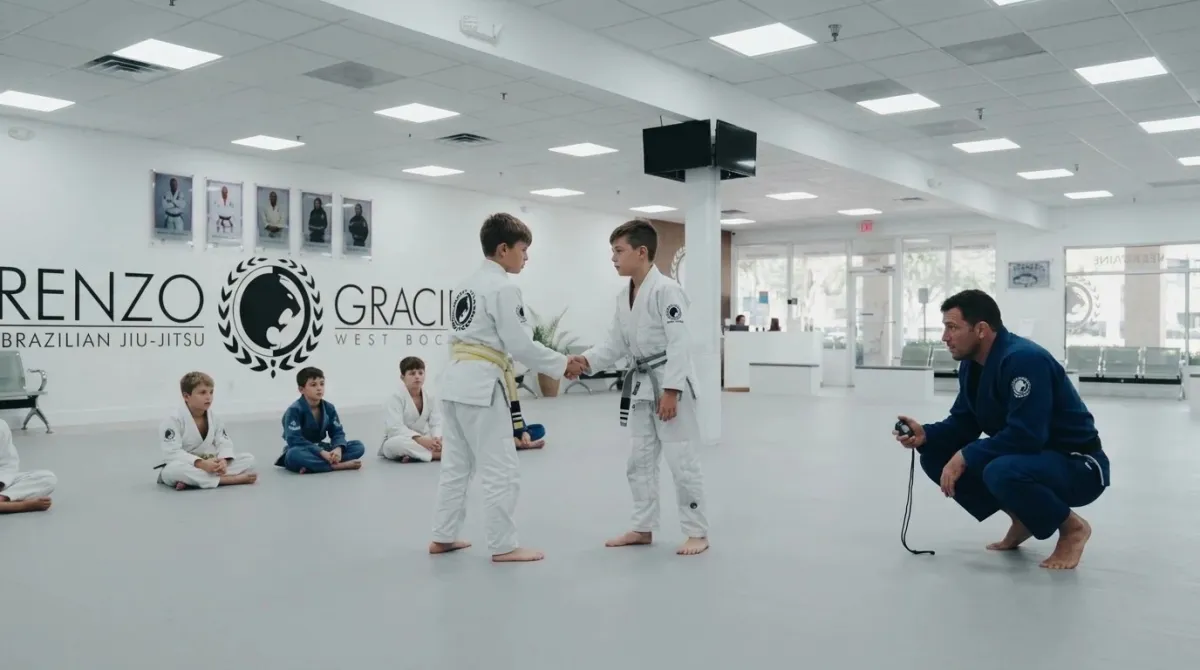
Every year a few of our young students come to us and say they want to try a tournament. Their parents often look both proud and nervous. Competition can be a wonderful experience for a child, and it can also be a source of stress when handled poorly. This guide explains what a competition team involves and how to decide whether it is right for your child.
What is a kids competition team?
A kids competition team is a group of students who train with the goal of taking part in tournaments. They attend regular classes and may also join additional sessions that focus on strategy, conditioning and match practice. The team shares coaching, travel plans and support.
At our academy, competition is always optional. Many students never compete and enjoy training just as much. Those who show interest and readiness can join the Competition Team, where coaches guide them step by step.
Details about schedules and requirements can change, so check the program page and ask the team for current information.
Is your child ready to compete?
A child is ready to compete when they want to, understand the rules and can handle both winning and losing with reasonable composure. Readiness is about maturity and motivation, not just skill. A child who loves training but dislikes pressure may prefer to wait.
Questions to consider include:
- Does your child ask about tournaments on their own?
- Can they listen to coaching under stress?
- How do they react when they lose a drill or a game?
- Do they enjoy classes without needing medals?
- Are they healthy and training consistently?
If most answers are positive, a conversation with the coach is a good next step.
What commitment does a competition team require?
A team asks for more consistency than recreational training. That usually means regular attendance, punctuality, listening to the coach and preparing mentally and physically before events. Families also commit time on tournament days, which can be long.
Families should think about schedule, travel and cost. Tournaments have entry fees and may require travel, and those details vary from event to event. We prefer not to list numbers here, since they change, but the coaches can explain the typical commitments and help you plan.
Remember that the team commitment should never overwhelm school, family or health. Balance matters.
How do children train for tournaments?
Training for tournaments builds on regular classes. Children practice techniques, drill situations they are likely to face and have supervised rounds to test their skills. Coaches teach them how to follow the rules, manage time and stay calm.
Conditioning is also part of the plan, but it is age-appropriate. We focus on fun, general fitness and not on extreme routines. Young bodies are still growing, and overtraining is a risk that coaches take seriously.
Our tournament preparation guide explains the general steps of getting ready for a first event, which apply to young competitors as well.
How do you teach sportsmanship?
Sportsmanship is as important as technique. Children learn to shake hands, thank opponents and congratulate winners, whatever the outcome. Coaches model it, praise it and expect it. A child who competes with grace is a winner in the most meaningful way.
Handling losses is part of the lesson. Coaches help children see a defeat as information: what worked, what to improve and what they learned about themselves. A calm talk after the match, with a hug and a snack, is more useful than a long analysis.
Tournaments can be emotional. Allow children to feel disappointed, then help them move forward.
How can parents support a young competitor?
Parents support best by staying calm and positive. Cheer for effort, avoid shouting instructions from the stands and let the coach coach. A child who hears a dozen voices in the crowd feels pressure rather than help.
Some practical ideas:
- Make sure your child eats, drinks and rests well before the event.
- Pack their bag together and check the rules.
- Celebrate courage, not only results.
- Ask what they learned and what they enjoyed.
- Give them space if they need a quiet moment.
If you are unsure about the right level of involvement, talk to the coach. We are happy to guide families.
Is competition safe for children?
Competition carries the same basic risks as training, with added excitement and stress. Tournaments use age and weight divisions, referees and rules designed to protect young athletes. Coaches teach students to tap and to respect the referee.
Parents should decide with their pediatrician if there are health concerns. Our article on avoiding injuries covers the habits that keep students safe in practice and events.
If your child is not enjoying competition, there is no shame in stepping back. The mat is a long road, and a break does not close any doors.
What if your child is not ready yet?
Many children are not ready for competition, and that is perfectly fine. They can still enjoy classes, earn belts and grow in confidence. Wait until the interest is genuine, and let the coach help you judge the timing.
You can explore the Juniors program or the Teens program to see how regular classes build a foundation. Competition, if it comes, will be easier on a child who has trained with joy.
Think of the team as one possible path, not a requirement.
What are the different ways a child can experience competition?
Competition is not a single thing. Some children start with in-house events or friendly practice rounds at the academy, where the setting is familiar. Others try a small local tournament. A few eventually travel for bigger events. Each step is a choice, and nobody has to take every step.
Starting small is often wise. A familiar setting with familiar faces lets a child learn what a match feels like without the noise of a large venue. Coaches can help your family choose a first experience that matches your child's confidence.
How do you balance competition with school and family life?
Balance is the secret ingredient. School comes first, family time matters and a child still needs unstructured play and sleep. A competition schedule that crowds out all of these is not healthy, however enthusiastic the child may be.
Talk openly with your child and the coach about the load. If grades slip, energy drops or moods sour, scale back. A child who competes happily for years will gain far more than one who burns out in a season. Check the schedule and be realistic about what your family can sustain.
What does a tournament day feel like for a child?
A tournament day is long, loud and exciting. Children wait a lot, watch other matches and warm up in a crowded space. Snacks, water and a quiet corner help them stay steady. Bring a book or a small game for the waiting, and keep screens limited so your child stays rested and focused.
When the match comes, it is usually short. Then comes more waiting, which many children find harder than the match itself. Talk through the day beforehand so nothing feels like a surprise, and plan a relaxed treat afterward whatever the result. A child who ends the day feeling loved and proud will want to try again.
How can you learn more in Boca Raton?
Start with a free trial class so your child can experience the academy and meet the coaches. Then ask about the Competition Team and what steps are needed. Reserve through the free trial page, and tell us about your child's goals.
If you have questions, the contact page is the easiest way to reach us. We are glad to help families decide with clear information.
Preguntas frecuentes
At what age can kids start competing?
Tournaments have divisions for many ages, but readiness varies. Talk to the coach about your child's maturity, interest and experience.
Does my child have to compete to train here?
No. Competition is optional. Many students train for fun, fitness and friends.
How do I know what tournaments cost?
Fees and travel needs vary by event. The coaches can explain what to expect, and the event organizers publish current details.
What if my child loses?
Losing is a normal part of competition and a chance to learn. Coaches and parents can help children turn disappointment into motivation.

 Spanish