
Jiu-Jitsu Self-Defense for Women in Boca Raton
Jiu-jitsu self-defense for women centers on leverage, positioning and calm decisions rather than size or strength. Women learn to escape holds, create space and get to safety, practicing with partners in a respectful setting. Technique is only part of safety, so awareness and avoidance matter just as much.
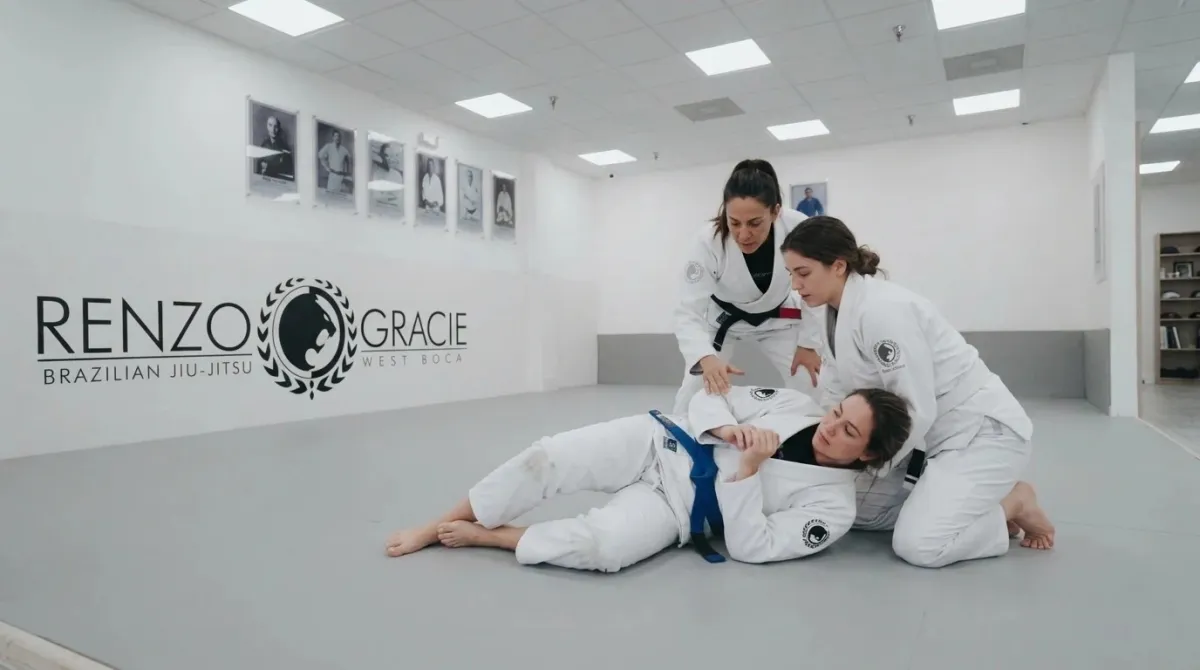
Many women who walk into our academy tell us they came because they wanted to feel more prepared in everyday life. That is a good reason, and also a serious one. In this article we explain what jiu-jitsu can realistically offer, how a women's class works and how to start in a way that feels comfortable.
Why do women choose jiu-jitsu for self-defense?
Women choose jiu-jitsu because it is designed around leverage, not brute strength. A smaller person can learn to control a larger one by using angles, timing and body position. That principle is empowering, especially for people who have never trained before.
The art also works at close range, which is where many unwanted encounters happen. Students practice staying calm when held, creating space with the hips and legs and standing up safely. Repeated practice builds familiarity, and familiarity reduces panic.
For a broader introduction, see our guide to BJJ for women and the self-defense fundamentals guide.
What does a women's class look like?
In our women's program, women train with women in a supportive setting. Classes follow a clear structure: warm-up, technique, partner drilling and optional live practice. Instructors explain each step slowly, and beginners are welcome at every level.
Many students tell us that the atmosphere is what keeps them coming back. Partners encourage each other, share tips and celebrate progress. A new student does not need to feel she is being compared with anyone.
You can find class times in the schedule and read about the program on the Women page.
What skills do you actually learn?
Early skills focus on movement and escape. Students learn to bridge, shrimp and roll, which create space on the ground. They practice breaking common grips, getting back to their feet and controlling distance. These basics are repeated until they feel natural.
A few core ideas appear again and again:
- Protect your head and neck first.
- Create space, then move away.
- Use your hips and legs, which are stronger than your arms.
- Stay calm and breathe through pressure.
- Get to safety and call for help when possible.
As you advance, you add more control positions and ways to deal with a bigger partner, always practicing with consent and care.
Does it work against someone bigger and stronger?
Technique can help level a size difference, but nothing is guaranteed. A trained person may have more options than an untrained person, especially in close contact. At the same time, real situations are unpredictable, and we never promise any outcome.
What we promise is honest training. We teach students to build skills step by step, to practice with resisting partners over time and to understand their own strengths. Many women find that simply knowing what a chokehold or a pin feels like removes some of the fear.
The best defense remains avoidance. Trust your instincts, leave uncomfortable situations and ask for help.
How important is awareness and prevention?
Awareness and prevention are the first layers of self-protection and matter more than any technique. Pay attention to your surroundings, keep your phone and keys accessible, tell someone where you are going and trust your gut when something feels off.
Jiu-jitsu also trains a mental habit: staying present and calm. Students become more aware of posture, distance and body language, which makes them more observant in daily life.
If you want to focus on safety skills, you can mention it to the instructors. They can point you to the parts of the curriculum that match your goals.
How should a beginner start?
A beginner should start with a free trial class, wear comfortable athletic clothes and tell the instructor it is her first day. No fitness level is required. Warm-ups and drills are scaled, and you can rest whenever you need to.
Ask questions and set your boundaries. Consent and comfort are part of the culture, and you can say stop at any time. Read our first class guide for a step-by-step look at what to expect.
If you are weighing the idea against an alternative, such as a short self-defense workshop, remember that regular training builds skills far more deeply than a single event.
What about women who are busy or have injuries?
Many women balance work, family and other responsibilities, and training time is limited. A steady rhythm of a couple of classes per week can still bring progress. Our training frequency guide offers realistic ideas.
If you have an injury or health condition, share it with the instructor before class and consult your doctor. Techniques can be adapted, and partners can adjust their pace. Honest communication keeps everyone safe.
For more individual attention, private lessons can be a useful addition.
What are common myths about women's self-defense?
One myth is that self-defense means fighting back with strength. In reality, most of the work is about leverage, space and getting away. Another myth is that a single course makes you safe for life. Skills fade without practice, and real safety comes from ongoing training and good habits.
A third myth is that women are too delicate for contact training. Women of many ages and builds train jiu-jitsu, and they often become some of the most dedicated students. Contact is built up slowly, with consent, and students always have the right to pause.
A fourth myth is that self-defense is only about physical technique. Confidence, boundaries and the ability to speak up are part of it too. Our article on BJJ myths debunked covers other common misunderstandings.
How does regular training change the way you carry yourself?
Many women report that after a few months of training, they notice small changes in how they move through the world. They stand a little straighter, make eye contact more easily and feel less startled by close contact. These shifts do not make anyone invincible, but they can make daily life feel a bit more grounded.
The mat also provides something rare: a place to practice being uncomfortable safely. Students learn to breathe under pressure, think clearly and ask for help. Over time, those experiences accumulate into a quiet confidence that does not need to be loud.
We want to be realistic. Jiu-jitsu is not a cure for fear, and it does not guarantee safety. It is a skill-building practice that many women find valuable, and we welcome you to try it for yourself.
What should you expect emotionally?
Training in self-defense can bring up strong feelings, especially for students who have had frightening experiences. That is normal, and it is okay to go slowly. You can sit out, take a break or talk to the instructor at any time. Nobody will ask you to explain.
If past experiences make training difficult, consider speaking with a counselor or trusted professional as well. The mat can be a supportive part of your life, but it is not a replacement for care. Many students find that moving at their own pace, in a respectful room full of other women, makes the process feel safe and empowering.
Where can you try it in Boca Raton?
You can try a class at Renzo Gracie West Boca Raton through a free trial. Meet the instructors, see the room and train at your own pace. There is no pressure to join anything after the trial.
Reserve your place on the free trial page, and tell us about your goals. We will help you feel ready.
Frequently asked questions
Do I need to be fit to learn jiu-jitsu self-defense?
No. Fitness comes with training. Classes are scaled, and you can rest when needed. Tell the instructor about any limits and train at your pace.
Will I train with men?
In our women's program, women train with women. Ask the team about the current class formats when you book.
Is one class enough to learn self-defense?
One class is a good introduction, but skill comes from repetition over time. Regular practice builds the habits that matter.
What if I am afraid of being grabbed or held?
That is a common worry, and it is okay. Contact is introduced slowly with consent, and you can stop at any time. Many students find that practicing in a safe setting reduces fear.

 English