
Skin Hygiene and Mat Safety in Jiu-Jitsu: A Practical Guide
Skin infections such as ringworm and staph can spread in close-contact sports, but simple habits reduce the risk: shower soon after class, wash your gear every time, cover cuts, keep nails short and tell your instructor about suspicious skin. See a doctor for rashes or sores that do not look right. This guide is educational, not medical advice.
Jiu-jitsu is a close-contact sport, and that closeness is part of why we love it. It also means that skin conditions can pass from person to person if everyone is not careful. The good news is that a few simple habits reduce the risk. This article gives a plain-language overview of mat hygiene and safety. It is educational only and does not replace advice from a doctor.
Why does skin hygiene matter on the mat?
Skin hygiene matters because training involves constant contact with partners, mats and shared surfaces. Bacteria, fungi and viruses that live on skin can spread through sweat, small cuts and shared gear. Most skin issues in sports are minor and treatable when noticed early, but ignoring them can cause problems for you and others.
Good hygiene is also a matter of respect. When every student takes responsibility for their own cleanliness, the whole academy becomes safer and more pleasant. Our guide on jiu-jitsu etiquette lists the manners that support this culture.
What skin problems are common in grappling sports?
Several types of skin conditions are known to appear in contact sports, including fungal infections like ringworm, bacterial infections such as staph or impetigo, and viral infections like herpes simplex or molluscum. Their appearance varies, and many look similar to simple irritation at first.
Common warning signs include:
- Circular, scaly or itchy patches on the skin.
- Red, painful bumps or boils, sometimes with pus.
- Blisters or crusted sores.
- Small, raised, flesh-colored bumps.
- Any rash that appears suddenly or spreads.
We are not able to diagnose anything. If you notice a suspicious spot, see a doctor or a dermatologist. Do not guess, and do not train until a professional says it is safe.
What should you do before class?
Arrive clean and with a clean uniform. Take a quick shower if you came straight from work or the gym, and put on freshly washed training clothes. Keep your fingernails and toenails short, since long nails scratch and can trap bacteria.
Other simple steps:
- Cover cuts and scrapes with a proper dressing and, if needed, tape or a bandage that stays on.
- Tie back long hair so it stays off partners' faces.
- Remove jewelry that could scratch skin.
- Wear sandals or slides when walking off the mat, including in the bathroom.
- Do not wear street shoes on the mat.
If you have an open wound that cannot be fully covered, skip rolling and talk to your instructor.
What should you do after class?
Shower with soap soon after training and change into clean clothes. Washing within a short time helps remove sweat and surface bacteria, and it keeps your skin from sitting in damp gear. Dry yourself well, especially between the toes and in skin folds, because fungus likes moisture.
Then take your gear out of the bag and wash it, as described in our guide on how to wash and care for your gi. Do not leave a damp gi, towel or rash guard in a closed bag overnight. If you would like help, our front desk offers a Wash and Dry service.
How should you clean your gear?
Wash your uniform, rash guard and towel after every class, using a detergent suitable for the fabric and the temperature suggested on the care label. Dry them fully. Do not share belts, towels or uniforms with other students.
Also clean your bag and water bottle from time to time. A bag that stays damp can grow mildew and bring odor and bacteria into your next session. Keeping spare clothes in a separate bag can help.
Who is responsible for cleaning the mats?
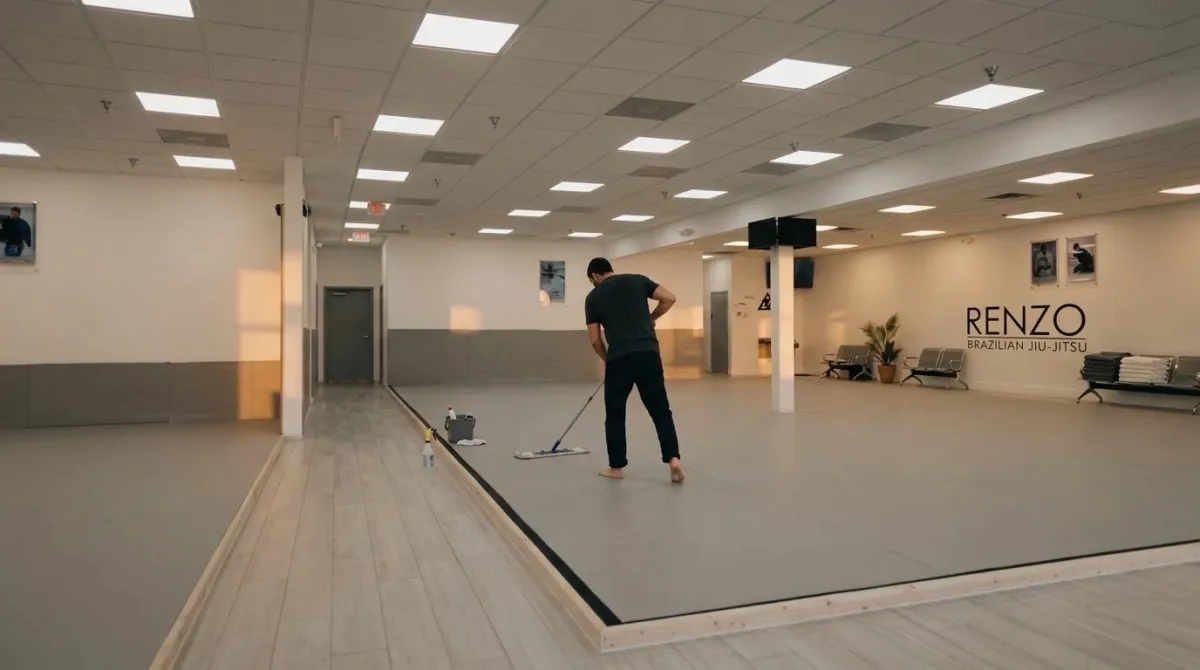
Every academy should clean its mats regularly, and students should also keep them clean. Mats are wiped with products meant for training surfaces, and students are expected to keep street shoes off the mat, avoid bare feet in bathrooms and take care of their own hygiene. If you are curious about an academy's cleaning routine, ask the staff, since good schools are happy to explain what they do.
A clean mat depends on shared habits. Step on the mat only with clean feet or in clean mat footwear, and let the team know if you see a spill or a problem.
What should you do if you suspect an infection?
Stop training and see a doctor as soon as possible. Tell your instructor so that they can help protect others, and avoid contact with partners until you have medical clearance. Most skin conditions are treatable, and early care shortens recovery.
Also let the team know if you are returning after treatment. Your doctor will say when it is safe to train again. Hiding a skin problem can pass it to teammates, which nobody wants. A culture where students speak up early protects everyone.
What if a training partner has a suspicious spot?
Be kind and discreet. You can quietly tell the partner or the instructor and suggest seeing a doctor. Avoid shaming or guessing about what it is. Most of the time, people are glad to know.
If you are worried about a partner, ask the instructor to pair you with someone else for that session. Your health and comfort matter, and coaches understand.
Are children at higher risk?
Children can get the same conditions as adults, and parents should check for rashes, especially after class. Teach kids to shower after training, wear clean uniforms and tell an adult about itchy or sore spots. Our juniors program and parents page offer more information for families.
If your child has a rash, talk to your pediatrician before returning to the mat.
How does hygiene tie into overall safety?
Skin health is one part of staying safe. The other parts include warming up, tapping early, communicating with partners and resting well. Read how to avoid injuries in jiu-jitsu for more, and our article on recovery and sleep to keep your immune system supported by good habits.
Clean habits do not make you immune to every issue, but they dramatically reduce risks. The most effective step is to make hygiene automatic.
What should you tell your instructor?
Tell your instructor about any skin condition, cut, rash or recent infection before you train, even if it seems minor. Coaches are not there to judge; they want everyone to train safely. They can suggest a partner, a lighter drill or a day off, and they can remind the class of hygiene rules when needed.
It is also fine to ask questions about hygiene at any time. If you are unsure whether a scrape needs a bandage or whether a mark is worth a doctor visit, ask. Early honesty protects your teammates and helps you recover sooner.
A simple checklist
Use this list to build a routine you will remember:
- Short nails, clean uniform, covered cuts.
- Sandals off the mat.
- Shower with soap soon after class.
- Wash gear every time and dry it fully.
- Report anything suspicious and see a doctor.
How can you train safely in Boca Raton?
Come to class, ask any hygiene questions and see how our team approaches mat etiquette and safety. The coaches will happily explain what to bring and what to avoid.
Look at the adults program, check the schedule and book your free trial class at Renzo Gracie West Boca Raton. Arrive with short nails, clean gear and sandals, and you will be ready.
Frequently asked questions
What skin infections can happen in jiu-jitsu?
Contact sports can see fungal infections such as ringworm, bacterial infections like staph or impetigo and viral infections. We cannot diagnose; see a doctor for any suspicious rash or sore.
Should I train if I have a rash?
No. Stop training and see a doctor, and tell your instructor. Return only when a medical professional says it is safe.
How soon should I shower after class?
As soon as practical. Washing with soap and changing into clean clothes helps remove sweat and surface bacteria, and keeping your skin dry helps prevent fungal problems.
Is it okay to share a towel or belt?
It is better not to. Sharing personal items can spread skin conditions. Bring your own towel and keep your own gear clean.

 English