
Anti-Bullying Jiu-Jitsu: Helping Kids Stand Tall
Esta página aún no está traducida; mostrando la versión en inglés.
Anti-bullying jiu-jitsu helps children build confidence, set boundaries and stay calm, but it works best alongside adult support. Classes teach respect, self-control and clear communication, and children learn that skill is for safety, never for hurting others. Parents and schools still play the key role in stopping bullying.
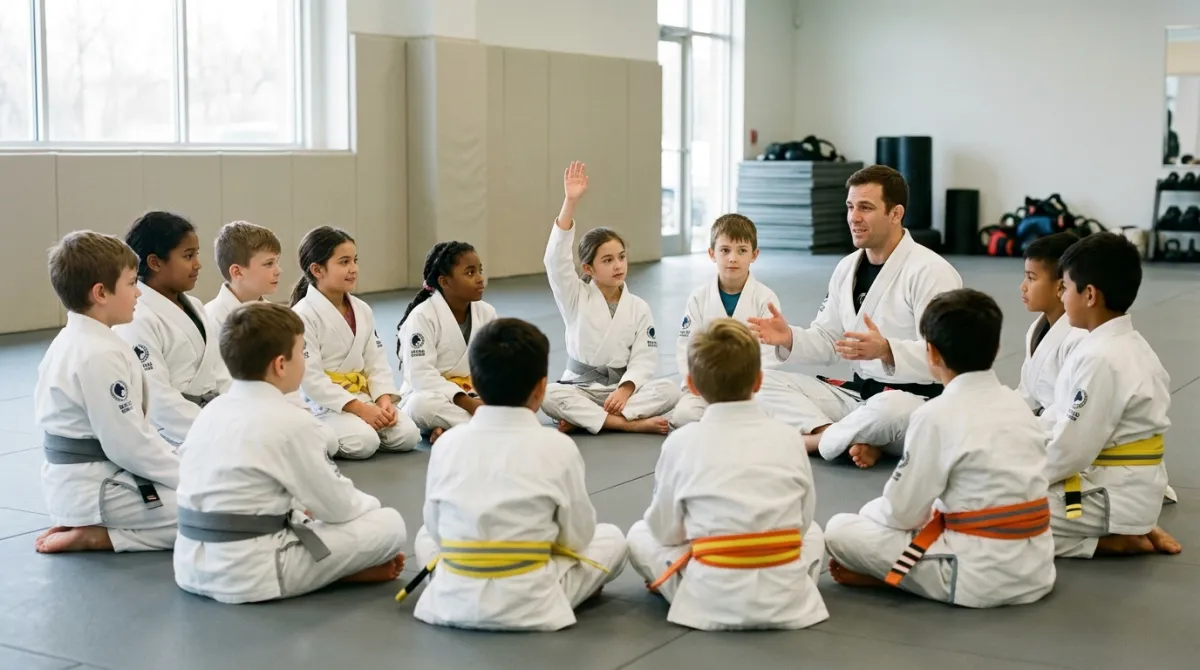
Few things worry a parent more than a child who dreads school because of how other kids treat them. Many families ask whether anti-bullying jiu-jitsu can help. The honest answer is that it can be a useful piece of the puzzle, but it is only one piece.
Can jiu-jitsu help with bullying?
Jiu-jitsu can help children who face bullying by building confidence, calm and clear communication. A child who feels capable tends to stand, speak and move differently, and that body language matters. Still, bullying needs adult involvement, so training should always sit alongside support from parents and schools.
In our classes we are careful not to promise miracles. We cannot predict how any child will respond to a specific situation. What we can say is that students gain skills that help them feel steadier: breathing under pressure, using a firm voice and understanding personal space.
The most important rule we teach is simple. Jiu-jitsu is never a tool for hurting others, and it is never a way to bully back.
What skills do children actually learn?
Children in jiu-jitsu learn self-control, respect, body awareness and how to ask for help. They practice staying calm when a partner puts pressure on them, setting limits by tapping and communicating clearly. These are life skills, and they apply well beyond the academy.
- Calm breathing: Staying relaxed when things feel uncomfortable.
- Boundaries: Saying "stop" and tapping when needed.
- Posture: Standing tall with confident body language.
- Respect: Treating partners kindly, even during practice rounds.
- Asking for help: Telling the instructor when something feels wrong.
These habits do not turn a child into a fighter. They help a child feel more secure, which often changes how they handle social situations.
Why does the first response matter so much?
The first response to bullying matters because it shapes what happens next. Experts and schools generally advise children to stay calm, walk away when they can, say a firm "stop" and tell a trusted adult. Fighting back can lead to injury and discipline, so it is rarely the best first choice.
Jiu-jitsu practice helps children rehearse these responses. They learn to keep their voice steady and their body relaxed, even when someone is pushing them. A child who has practiced staying calm may find it easier to do the same in a hallway.
Check your child's school policies so that you know how to report a problem. Rules differ, and local authorities and school staff are the right people to guide you.
What role should parents play?
Parents play the leading role in responding to bullying: listening, documenting what happened, contacting the school and supporting their child emotionally. Training can build skills, but a child needs to know that adults will act. Let your child see that you take the problem seriously.
- Listen without interrupting, and thank your child for telling you.
- Write down dates, places and what was said or done.
- Contact the school and follow its reporting process.
- Check in regularly and celebrate small improvements.
- Consider extra support from a counselor if your child is struggling.
The parents page explains how our youth classes work and how families can work with instructors to support their child.
How does a good academy handle respect?
A good academy handles respect by making it part of every class. Children bow, thank partners and follow rules about safe contact. Instructors correct unkind words and rough behavior immediately and explain why it matters. The culture of the room teaches as much as the techniques.
Students of different ages train near each other and learn from each other. Older students are expected to help younger ones, and everyone is reminded that rank brings responsibility. That mix creates a community where kindness is normal.
If you are looking for a program, ask how the instructors deal with conflict, teasing and discipline. A clear, calm answer is a good sign.
Which programs fit different ages?
Programs fit different ages by adjusting activities and expectations. Younger children focus on games, listening and kindness, while older students work on technique, confidence and leadership. Matching the class to the child keeps lessons safe and engaging.
Families can explore the Little Champions program for younger students, the Juniors program for older children and the Teens program for adolescents. Each page lists who the class is for and what to expect.
If your child is nervous, start with a free trial class and watch how they react. A gentle introduction often works best for sensitive children.
How can you practice at home?
You can practice at home by role-playing calm, confident responses with your child. Rehearse standing tall, using a firm voice and walking away to find a trusted adult. Keep it light and brief, and praise effort. Practice helps words come more easily when a real moment arrives.
Simple phrases are best, such as "Stop, I do not like that" or "I am going to get a teacher." Show your child that it is okay to leave and to ask for help. Remind them that telling an adult is brave, not tattling.
Pair these talks with open questions about their day. Children often share more during relaxed moments, like car rides or bedtime. Listening without judgment builds trust and keeps the door open.
What should you avoid?
Avoid promising your child that jiu-jitsu will solve everything, encouraging them to start fights or expecting instant changes. Do not use a class as a replacement for talking with the school or seeking support. Training is a helpful tool, but it is not a shield.
It is also wise to avoid pressure. A child who already feels anxious may be overwhelmed by high expectations. Let them set the pace, celebrate effort and keep the class enjoyable.
If you notice signs of serious distress, such as changes in sleep, appetite or mood, speak with your pediatrician or a counselor. Physical skills are valuable, but emotional support matters most.
How can you try a class with your child?
You can try a class with your child by booking a free trial class at Renzo Gracie West Boca Raton. Meet the instructors, see how kids interact and ask any questions you have about safety, behavior and respect. Take your time and decide what feels right for your family.
Reserve a spot on the free trial class page. Whether you live in Boca Raton or elsewhere in South Florida, we would be happy to welcome your child and help them grow in confidence and kindness.
Preguntas frecuentes
Can jiu-jitsu stop bullying?
Jiu-jitsu cannot stop bullying on its own, because bullying is a social problem that needs adult attention. It can help children feel more confident, speak up clearly and stay calm. The best approach combines training with open conversations at home and action by schools.
Should my child fight back against a bully?
Most schools and experts advise children to avoid fighting, walk away when possible and tell a trusted adult. Physical self-defense is a last resort when someone is in real danger. Your child's school can explain its own policies, and we encourage families to follow them.
Will jiu-jitsu make my child more aggressive?
Good programs teach the opposite. Children practice self-control, respect and kindness, and they learn that technique is for training and safety. Instructors correct any rough or disrespectful behavior right away, so the class culture stays positive.
What should I do if my child is being bullied?
Listen calmly, record what happened, contact the school and follow its reporting process. Reassure your child that it is not their fault. If there are safety concerns, contact school leaders or local authorities, and consider support from a counselor.

 Spanish