
Teen Jiu-Jitsu Benefits: Why Teenagers Thrive on the Mat
Esta página ainda não foi traduzida; mostrando a versão em inglês.
Teen jiu-jitsu benefits include steady fitness, confidence that comes from earned skill, a healthy outlet for stress and a circle of friends who value effort. Teenagers train with people their own age, learn real techniques and discover that progress comes from patience. It is a physical activity with a mind attached.
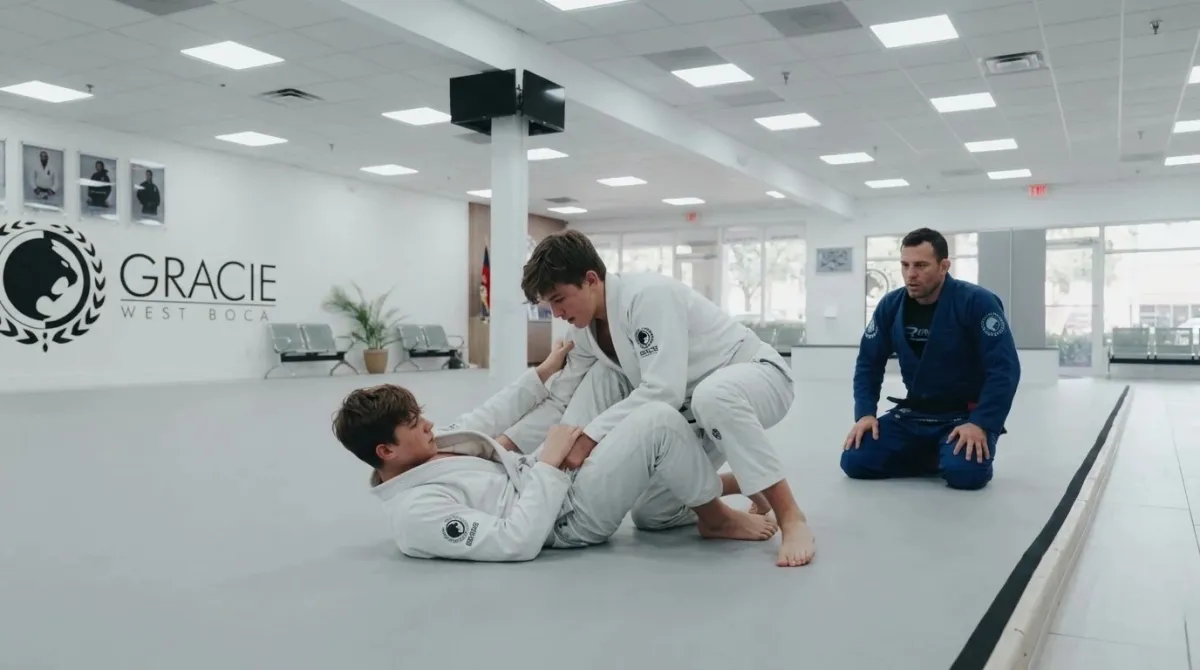
Adolescence is a busy, sometimes bumpy stretch. Schedules fill up, friendships shift and a teenager can feel pulled in every direction. In our academy in Boca Raton, we see jiu-jitsu become a steady anchor for many teens. Here is what that looks like in practice, and what parents should know before taking the first step.
Why does jiu-jitsu appeal to teenagers?
Jiu-jitsu appeals to teenagers because it is challenging, practical and social at the same time. It does not depend on being the tallest or fastest. It rewards technique, timing and persistence, so a quiet student can shine alongside a naturally athletic one.
Teenagers also like that the progress is real and visible. A move that felt impossible in week one begins to work in week eight, and the student knows exactly why. That clear link between effort and result is rare in a teenager's day, and it can be very motivating.
Our Teens program is designed for this age group, so older students are not placed with small children or with adults far beyond their experience.
What fitness benefits can teens expect?
Teens can expect improvements in strength, flexibility, balance and cardiovascular fitness, built gradually through regular classes. Jiu-jitsu uses the whole body, so students develop their legs, core, back and grip without needing a separate workout plan.
Unlike repetitive gym routines, the work feels like problem-solving. A teen who might avoid conditioning drills will happily spend an hour moving, wrestling with a puzzle and sweating without noticing. That makes it easier to build a long-term habit.
As always, check with your pediatrician if your teen has a health condition or an injury. If your teen is also active in another sport, jiu-jitsu can complement it, and our conditioning guide explains how the training builds fitness.
How can jiu-jitsu build confidence in teens?
Confidence in teens grows when they master something difficult on their own terms. Jiu-jitsu offers a ladder of small achievements: learning a technique, surviving a hard round, earning a stripe, helping a newer student. Each step proves that effort pays off.
The mat also teaches teens to be comfortable being uncomfortable. They learn to stay calm when pinned, to ask for help and to try again after a mistake. Those skills show up in exams, auditions and conversations.
If you would like a deeper look at this theme, our post on how jiu-jitsu builds confidence shares how it develops over time. Confidence is a result of consistent practice, not a gift from the coach.
Can it help with stress and screen time?
Many teens find that physical training is a healthy way to release the pressure of school and social life. An hour on the mat requires full attention, which leaves little room for scrolling or worrying. Students often leave tired in a good way and more relaxed than when they arrived.
We do not describe jiu-jitsu as a treatment for anxiety or any other condition. If your teenager is struggling with their mental health, please involve a qualified professional. What we can say is that regular exercise, a supportive group and a place without phones can be a positive part of a teen's week.
Our article on jiu-jitsu as an alternative to screen time explores the balance in more detail.
What kind of friendships do teens make on the mat?
Teens often make friendships based on respect and shared effort. When two students work through a hard drill together, they build trust fast. They see each other tired, frustrated and proud, which tends to create real bonds.
A good academy also keeps the culture healthy. We expect students to be kind to newcomers, to avoid showing off and to leave arguments outside the door. Older students set an example for the younger ones, and teens quickly learn that humility is admired.
Parents often tell us that they like knowing where their teen is and with whom. Visiting the academy, meeting the instructors and watching a class are good ways to feel confident about the environment.
Is teen jiu-jitsu safe?
Teen jiu-jitsu can be safe when it is supervised, well organized and taught with clear rules. Students are matched with suitable partners, taught to tap early and reminded to control their strength. Instructors watch the room and step in when a round gets too intense.
Any contact activity carries some risk of bumps, strains or sore muscles. Good habits reduce the risk: warming up, resting when tired, telling the instructor about pain and respecting partners. Our guide on how to avoid injuries in jiu-jitsu goes through the basics.
Teens should also learn to say no to rounds that feel too fast. A confident student knows that adjusting the pace is a skill, not a weakness.
What should teens wear and bring?
For a first visit, teens should wear comfortable athletic clothes, remove jewelry and bring a water bottle. Fingernails should be trimmed, and hair should be tied back if it is long. If the academy offers a uniform, ask about it before buying one.
Teens should also bring a good attitude and a willingness to ask questions. The most successful beginners are the ones who treat every class like a chance to learn from someone else. Remind your teenager that being new is temporary and that everyone in the room started there.
Our etiquette guide is a helpful read for teens before the first class.
How can parents support a teenager who trains?
Parents support a training teenager best by being steady and interested without hovering. Make sure there is a ride, a clean uniform and a decent meal around class time. Ask about what they learned instead of whether they won, and let them explain it in their own words. Teenagers open up when they feel like experts, and the mat gives them a subject they can teach.
Be flexible about schedules, too. Homework, exams and school activities will compete with class, and a good rhythm sometimes needs adjusting. Talk with your teen and the instructors, and agree on a plan that protects both school and training. A teen who feels trusted to manage the balance usually manages it better.
Finally, celebrate effort publicly. A stripe, a first successful technique or a kind act toward a new student deserves a moment of recognition at the dinner table. Teens will not always show that it matters to them, but it does.
How does teen jiu-jitsu connect with life after the mat?
The habits that teens build in class tend to travel. Showing up on time, listening to feedback, handling a hard round without a meltdown and helping a newer student all show up later in classrooms, jobs and friendships. We have seen teenagers carry the calm they practiced on the mat into tests, interviews and difficult conversations.
Some teens go on to compete, and our competition team exists for those who are curious and ready. Many others simply keep training for the pure enjoyment of it. Both paths are healthy, and neither is better than the other. Our tournament preparation guide is a good place to start for families who want to learn more.
What stays constant is the lesson that skill is built, not given. A teenager who learns this on the mat has a tool for almost anything else they choose to pursue.
How can you try a teen class in Boca Raton?
The simplest way is to reserve a free trial class at Renzo Gracie West Boca Raton. Your teenager can meet the instructors, try a session with students their own age and decide if it feels right. You can look at the schedule for the Teens classes and review the pricing page if you want to plan ahead.
When you are ready, book through the free trial page. Tell us your teenager's experience level and any injuries, and we will help them feel welcome.
Perguntas frequentes
What age range counts as a teen class?
Age ranges are set by the academy and can change, so check the Teens program page or ask the team for the current range. If your child is near the edge between two groups, the instructors can suggest the best fit.
Can my teen train if they have never done a sport?
Yes. Many teens begin with no athletic background. Classes are scaled to beginners, and students progress at their own pace with help from instructors and partners.
Do teens have to compete?
No. Competition is optional, and many teens train only for fitness, friends and personal growth. If your teen shows interest, the coaches can explain the options.
Will my teen train with adults?
Teen classes are designed for teens. If an older teen later moves to an adult class, the instructors will discuss it with the family first.

 Portuguese