
Homeschool Jiu-Jitsu: Active Learning for Home-Educated Kids
Esta página ainda não foi traduzida; mostrando a versão em inglês.
Homeschool jiu-jitsu gives home-educated children regular movement, social time and structure during the day. Classes teach coordination, focus and respect while letting students train with peers. Families can use the program as part of a flexible weekly routine, and a free trial class shows how it fits.
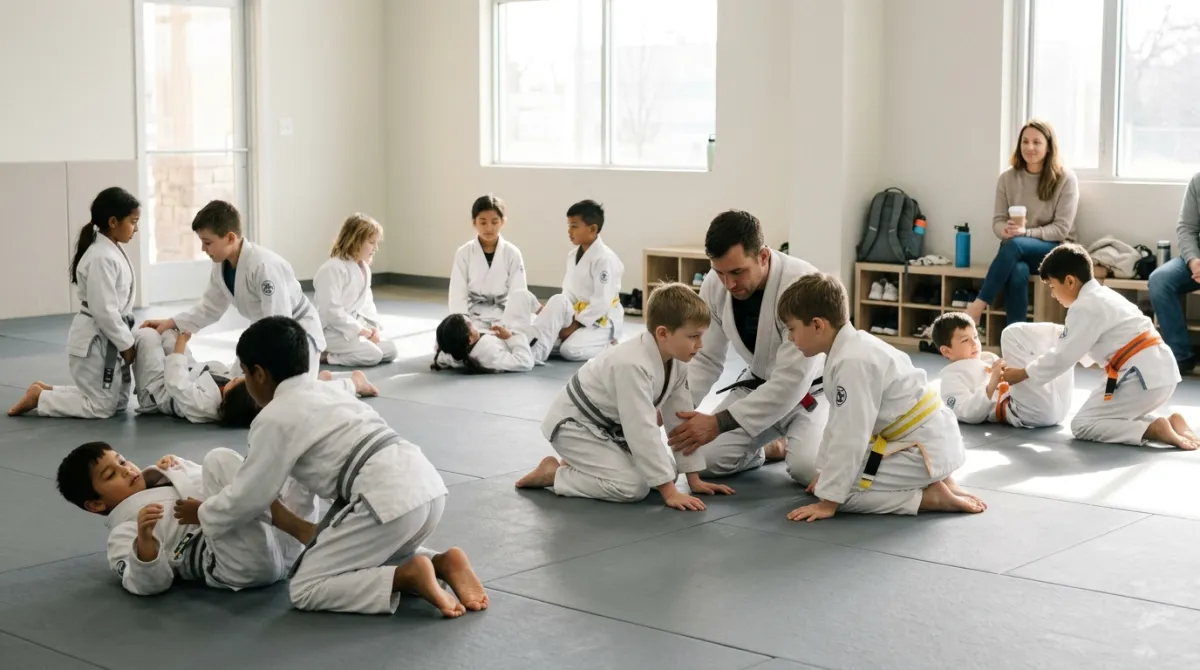
Home education gives families freedom to shape the day, but it also asks parents to find regular movement, friendships and structure outside the house. Homeschool jiu-jitsu answers all three. It is active, social and goal-oriented, and it fits nicely into a flexible week.
Why do homeschool families choose jiu-jitsu?
Homeschool families choose jiu-jitsu because it combines exercise, friendship and character building in one class. Students get regular movement, learn clear rules and spend time with peers who share a common goal. The belt system also gives children visible progress outside of academic subjects.
Many parents appreciate that jiu-jitsu does not depend on a team schedule or a school calendar. Children can join at a level that suits them and progress at their own pace. That flexibility matches the spirit of home education.
In our classes we welcome students from many backgrounds. Children quickly discover that the mat is a place where everyone learns together, no matter how they spend the rest of their week.
What is the homeschool program?
The homeschool program is a martial arts class designed for home-educated students, with scheduling and structure that suit their weekly routine. Children learn jiu-jitsu fundamentals, practice movement and develop good habits. Families can read the homeschool program page for current details.
The page explains who the program is for, what the classes cover and how to join. If you have questions about ages, times or what to bring, the team is happy to help.
Because details can change, we recommend checking the program page and the class schedule before you plan your week. That way you always have up-to-date information.
How can jiu-jitsu support a physical education plan?
Jiu-jitsu can support a physical education plan by providing regular, structured movement that develops coordination, balance and strength. Students warm up, practice technique, play games and cool down in every class. Many families use martial arts as part of a broader activity routine.
Rules for homeschool physical education vary by state and district. Check your local requirements or ask your support group or umbrella program. We cannot give legal advice, but we are glad to share attendance information when families need it for their records.
Beyond paperwork, the real value is in the habits. Children who move regularly tend to sleep, focus and play better. A weekly class can be the anchor that keeps the whole week active.
What social benefits do children gain?
Children in homeschool jiu-jitsu gain social benefits from training with peers, taking turns with partners and following group routines. They learn to greet others, ask for help and work as part of a team. These experiences build confidence in group settings.
- Friendship: Classmates become familiar faces each week.
- Communication: Children practice speaking up politely.
- Cooperation: Partners rely on each other to practice safely.
- Mentors: Older students and instructors serve as role models.
Social growth happens gently on the mat. Because everyone is focused on the activity, shy children can join without the pressure of constant conversation. Over time, the friendships follow.
What does a typical homeschool class look like?
A typical homeschool class begins with a greeting and warm-up, moves into a technique lesson, includes partner practice or games and ends with a cool-down. Classes are organized by age and experience, and instructors keep the pace friendly and structured so that each child feels capable.
Younger children spend more time on movement games and basic positions. Older students add technique, drilling and light practice rounds under supervision. Everyone learns the same core values: respect, safety and effort.
We recommend arriving a few minutes early so children can settle in. Bring water, wear comfortable clothes and ask the team about uniforms for the first visit.
How do you build jiu-jitsu into a flexible week?
To build jiu-jitsu into a flexible homeschool week, choose one or two class days and treat them as fixed anchors. Plan lessons, errands and rest days around them. A predictable class gives children something to look forward to and helps parents structure the rest of the schedule.
Start modestly. A single weekly class is enough for many children to learn and enjoy. If your child loves it, you can add another session later. Younger students can start in the Little Champions program, and older students can explore the Juniors program.
Keep the experience positive. Praise effort and curiosity, and let your child talk about what they learned. The conversation is part of the education.
How do you keep a homeschool child motivated?
To keep a homeschool child motivated in jiu-jitsu, set small goals, celebrate progress and let them help choose class days. Visible milestones like a new stripe or a mastered movement give children a sense of achievement. Interest grows when kids feel ownership of their schedule.
Talk with your child about what they enjoy most, whether it is games, learning moves or training with friends. Share this with the instructors, who can adapt activities to keep lessons fresh. Avoid comparing your child with others, since every student learns at a different speed.
Patience is the most helpful tool. Some weeks will feel easy and others will feel hard. Showing up consistently, with a smile, teaches a lesson no textbook can match.
Is it safe and appropriate for every child?
Jiu-jitsu can be safe and appropriate for many children when taught by qualified instructors in age-appropriate groups. Safety depends on supervision, clear rules and a culture of tapping early. If your child has medical concerns, talk to your pediatrician and tell the instructors before class.
No sport is without risk, and not every child will love every activity. The best approach is to try a class, observe how your child responds and adjust. Parents know their children best, and we respect that.
The parents page explains how families can support their child and what to expect from our youth programs.
How can your family try a class?
Your family can try homeschool jiu-jitsu by booking a free trial class at Renzo Gracie West Boca Raton. Your child will meet the instructors, try a short lesson and see how it feels. Parents can ask questions and learn how the program fits into their week.
Visit the free trial class page to reserve a spot. Whether you live in Boca Raton or elsewhere in South Florida, we would be happy to welcome your family.
Perguntas frequentes
What is a homeschool jiu-jitsu program?
A homeschool jiu-jitsu program offers martial arts classes at times that suit home-educated students, often during the day. Children train with peers, learn technique and practice discipline. The homeschool program page explains the current format, ages and how families can join.
Can jiu-jitsu count as physical education?
Many homeschool families use regular sports and martial arts as part of their physical education plan, but requirements vary by state and district. Check your local homeschool rules or ask your umbrella program. We cannot give legal advice, but we can provide attendance information if you need it.
Will my child make friends?
Group classes naturally create friendships. Children practice together, cheer each other on and share a common goal. Shy students often warm up gradually, and instructors encourage kindness and inclusion so every child feels welcome.
How often should a homeschool child train?
Many families start with one or two classes per week and adjust based on energy, interest and schedule. Consistency matters more than quantity. Check the program page for available days and talk with the instructors about what suits your child.

 Portuguese