
Baby Jitsu: Jiu-Jitsu for 3 and 4 Year Olds
Esta página aún no está traducida; mostrando la versión en inglés.
Jiu-jitsu for 3 and 4 year olds is structured play. Instead of technique drills, preschoolers learn through games, rolling, crawling, balance challenges and simple rules like waiting for a turn. Baby Jitsu is built for this age group, and the goal is joy, coordination and early listening habits.
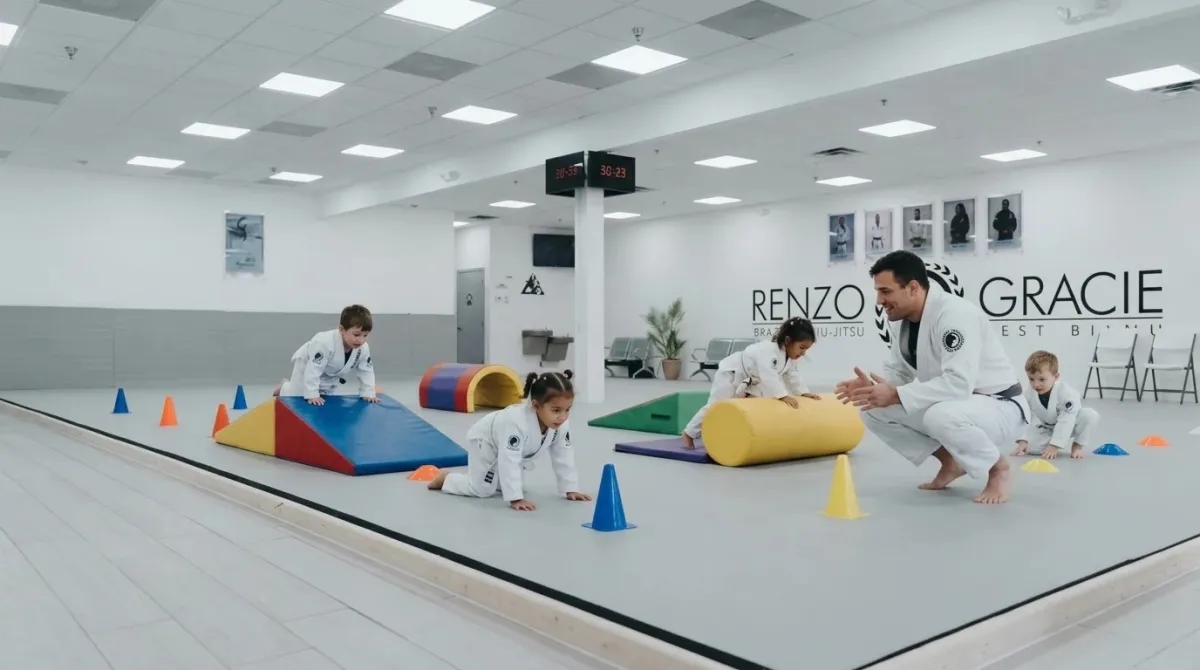
A three-year-old on a jiu-jitsu mat is not a miniature adult. They are a small person who loves to move, to copy, to laugh and to be praised. Teaching them well means meeting them exactly there. This article explains how Baby Jitsu works, what preschoolers actually do and how to know if your little one is ready.
What is Baby Jitsu?
Baby Jitsu is our program for the youngest students, ages three and four. Classes are short in spirit, playful in format and led by instructors who are comfortable getting down on the floor with small children. The curriculum rests on movement skills and good habits rather than on formal technique.
A typical class might include running and hopping games, bear crawls, rolls on soft mats and simple balance work. Between the games, children practice standing in a line, bowing and listening for a signal. These small routines are the seeds of the discipline that will grow later.
You can read the program details on the Baby Jitsu page, which is the best source for current ages and class formats.
Is a 3 or 4 year old ready for martial arts?
A preschooler is ready when they can enjoy a group activity for a short time, with an adult nearby, and respond to simple directions. They do not need to be quiet or still. Preschoolers wiggle, and a good class is designed around that.
Some children march in on day one. Others hide behind a leg for a week. Both are normal. If your child is hesitant, let them sit and watch for a few minutes, and invite them to join without pressure. Our post on jiu-jitsu for shy kids offers more ideas.
If your child is not ready, that is fine. Try again in a few months. Readiness grows quickly at this age.
What do preschoolers actually learn?
Preschoolers learn body awareness, balance, coordination and basic self-control. They also learn social skills such as sharing space, taking turns and being kind to a friend. These foundations matter more than any specific move.
Typical skills include:
- Rolling forward and sideways without fear.
- Crawling and balancing on hands and feet.
- Standing up from the ground safely.
- Listening for a signal and stopping on cue.
- Bowing and greeting the instructor.
Instructors may introduce a very simple jiu-jitsu idea through a game, such as a hip bridge or a shrimp, but the focus stays on fun.
How do instructors keep it safe for little ones?
Safety with small children comes from small groups, close supervision and an environment built for them. Soft mats, clear boundaries and constant eye contact keep the room under control. Games are chosen to match the children's strength and coordination.
There is no hard partner work at this age. If children interact, it is gentle and guided, and instructors step in at once if anyone gets overexcited. Children also learn the idea of stopping when someone says stop.
If your child has a medical condition or a sensory sensitivity, tell the team ahead of time. Our inclusive program page explains how we welcome different learners.
What should your preschooler wear and bring?
Comfortable clothes that allow free movement are all your preschooler needs for a trial. Avoid zippers, hooks and loose jewelry. Bring a water bottle, a spare shirt if your child sweats a lot and sandals for walking off the mat.
Make sure your child has used the bathroom before class and has eaten a light snack. Hungry or tired children find it harder to enjoy the activity.
A favorite stuffed animal can wait in the bag or with you. Some children like to keep it nearby for comfort, and that is fine if the instructor agrees.
What can parents do to help?
Parents help most by staying calm, smiling and letting the instructor lead. Cheer for effort, wave when your child looks, and save the coaching for later. If your child wants to leave the mat for a minute, let them.
At home, you can practice the habits at a gentle level: lining up shoes, taking turns, bowing to say hello. Preschoolers love to copy their parents, so show them how it feels to try something new.
Our parents page has more information on how families can support children across all programs.
What comes after Baby Jitsu?
As children grow, they can move into programs such as Little Champions, where classes become a little more structured. The move is based on age and readiness, and the instructors help families decide when it makes sense.
The habits built in Baby Jitsu, such as listening, bowing and taking turns, make that transition smooth. Children who start early often feel at home on the mat by the time they are school age.
To understand how benefits develop across the years, see our guide to kids jiu-jitsu benefits by age.
What does a typical Baby Jitsu session feel like?
A typical session feels like an organized adventure. Children walk in, find their spots and greet the instructor with a bow. The group might begin with a game such as copying animal walks, then move to rolls on the mat, then practice a very simple movement in a story or a challenge. The pace changes often, because preschoolers do best with variety.
Between activities, the instructor reinforces simple rules in a friendly voice. Eyes on the teacher, hands to yourself, wait for your turn. Children hear these reminders again and again, and in a few weeks the rules start to sound like their own. Praise is frequent and specific, which helps little ones know exactly what they did well.
The class ends with another bow, and many instructors add a small moment of recognition, such as a high-five. Children leave tired, proud and often a little sweaty, which is exactly the right feeling for a young athlete.
How do you know if Baby Jitsu is a good fit for your family?
Baby Jitsu is a good fit if you want your preschooler to move, make friends and begin learning about listening and respect in a relaxed setting. It is also a good fit if your child has a lot of energy and you are looking for a constructive place to use it.
It is a less natural fit for children who are strongly resistant to group settings or who are not yet comfortable separating from a parent. In that case, give it time, visit together and try again in a few months. There is no race, and a later start can be a happier one.
If you are comparing activities, remember that the most important factor is how your child feels about class. Look for the smiles on the way in and the chatter on the way out. Those signs matter more than any list of benefits.
What do parents of preschoolers often ask first?
Parents of preschoolers tend to ask the same few questions: Will they cry? Will they get hurt? Will they understand? The honest answer is that preschoolers cry sometimes, bump themselves sometimes and understand much more than we expect. A calm adult and a playful class solve most worries.
They also ask about potty breaks, snacks and nap schedules. Plan class around your child's rhythm. A class right after a nap or a snack tends to go better than one at the end of a long day. Share these details with the instructor, who will happily adapt.
How can you try Baby Jitsu in Boca Raton?
The best step is a free trial class. Come a few minutes early, let your child look around and tell the instructor your child's name and any worries. Look at the schedule for the Baby Jitsu times and reserve a spot through the free trial page.
Expect smiles, movement and a few giggles. That is exactly what we hope to see.
Preguntas frecuentes
Can a 2-year-old join Baby Jitsu?
The program is designed for ages three and four. If your child is younger, contact the academy to ask what is possible and whether a visit to watch a class would help.
Will my 3-year-old really learn jiu-jitsu?
Preschoolers learn the building blocks: balance, coordination, listening and respect. Formal technique comes later. The main goal at this age is to enjoy movement and feel comfortable on the mat.
Can I stay in the room?
Ask the team about the current viewing policy when you book. Many parents watch from the side, and some children feel braver knowing a parent is nearby.
What if my child cries during class?
Crying happens, especially in the first weeks. The instructors will comfort your child, and you can step in if needed. Many children settle after a few visits as the routine becomes familiar.

 Spanish