
Homeschool Socialization Through Jiu-Jitsu
Homeschool socialization works best when children meet the same peers regularly in a structured, friendly setting. Jiu-jitsu provides that: shared routines, partner work, respectful rules and consistent faces week after week. For homeschoolers, it can also double as active physical education in a daytime schedule.
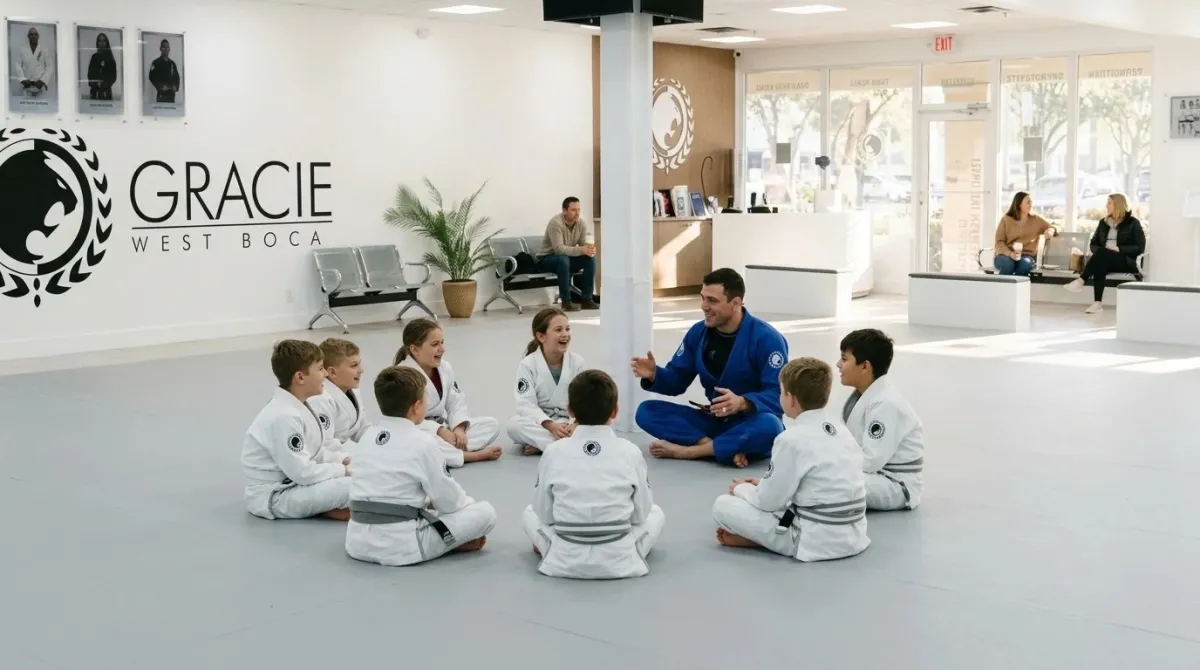
Homeschooling families often hear the same question from relatives: what about socialization? The best answer is not defensive. It is practical. Children need regular, meaningful contact with peers and trusted adults, and parents can design that on purpose. Here is how a jiu-jitsu academy can be one reliable piece of that plan.
What does good socialization look like for homeschoolers?
Good socialization means regular contact with a stable group of peers, chances to practice cooperation and conflict, and relationships with caring adults beyond the family. It is less about the number of social events and more about repeated, meaningful interaction.
Children benefit when they see the same faces weekly. Trust builds, shared jokes appear and friendships form. A single big event once a month rarely does this. A weekly class does.
Our post on homeschool jiu-jitsu and physical education looks at the movement side of this question.
Why does jiu-jitsu work well for social development?
Jiu-jitsu is a partner activity by nature. Children cannot practice alone for long, so they learn to approach someone, ask to work together and adjust to another body. That is real social practice, and it happens in a safe, structured environment.
The mat also teaches respect in action. Students bow, thank partners, wait for turns and tap when asked. These rituals give children a clear script for good behavior, which helps especially when a child is unsure how to act.
Conflict is handled gently. If a disagreement arises, the instructor steps in and models calm communication, which gives children a pattern to follow elsewhere.
What is the Homeschool program?
Our Homeschool program is designed for children whose school day is flexible. Classes are held at times that suit families who are not tied to a regular school schedule. Check the Homeschool page and the schedule for current details.
The program combines physical education with the social benefits of a consistent group. Children learn jiu-jitsu skills while building friendships with peers who share their rhythm.
Because programs and times can change, we encourage you to confirm details with the team before planning your week.
How can parents build a social week around it?
A homeschool week benefits from anchors, such as a weekly class, a library hour and a group project. Jiu-jitsu can be the physical anchor. Because the class meets regularly, it creates natural opportunities to chat with other parents and children before and after.
Some practical tips:
- Arrive early so children can chat before class.
- Invite a classmate for a park meetup after training.
- Join the parent conversation on the sideline.
- Keep a consistent day and time to build routine.
Parents often find their own community through the academy as well, which is a lovely bonus.
Will my child feel out of place?
Many homeschooled children worry that school kids know unwritten rules they do not. On the mat, the rules are written and explained. Everyone starts as a beginner, and the instructors guide the room. That clarity helps children relax.
If your child is shy, take it slowly. Visit once to watch, meet the instructor and let your child decide when to join. Our post on jiu-jitsu for shy kids has gentle ideas.
Children often discover that they have more in common with their classmates than they expected. A shared love of movement is a quick path to friendship.
How does it compare with other activities?
Many homeschool families combine activities: music, art, sports and community groups. Jiu-jitsu adds a unique blend of physical challenge, discipline and teamwork. It is an individual skill practiced in a group, which suits a wide range of personalities.
Compared with team sports, it has no bench and no pressure to be the star. Every child gets mat time in every class. Compared with solo activities, it adds social contact and shared goals.
The best choice depends on your child's interests. Ask your child what they enjoy and combine activities in a way that feels balanced.
What about safety and supervision?
Safety comes from age-appropriate grouping, clear rules and attentive instructors. Children learn to tap, to move with control and to respect their partners. The academy sets expectations from the first day and repeats them often.
Parents are welcome to ask about supervision, class sizes and how the team handles concerns. A confident academy will answer directly. If your child has special needs, talk to us in advance. Our inclusive program page explains how we welcome different learners.
As with any physical activity, check with your pediatrician if you have health questions.
How do you handle common concerns about socialization?
Parents sometimes feel pressure to prove that their homeschooled children are well socialized. The best answer is simply to give them rich, regular experiences with peers and adults. Children who feel secure at home, and who have a few reliable activities outside it, usually develop healthy social skills.
Notice what your child needs. Some children thrive on many activities, while others prefer one or two close friendships. There is no single right level of social contact, and a quieter child is not necessarily lacking. Watch for signs of loneliness or frustration and adjust.
Remember that you know your child best. A weekly class can be a useful piece, but it is only one piece of a rich life.
What life skills does the mat reinforce for homeschoolers?
Beyond friendships, the mat reinforces skills that matter in any setting: arriving on time, following instructions from a teacher who is not a parent, working with others and handling disappointment. These experiences prepare children for future classes, jobs and communities.
Children also practice speaking up. They ask questions, tell a partner when something hurts and thank a teammate for their help. These small acts of communication build confidence in dealing with the wider world.
Our post on how jiu-jitsu builds confidence explores how those moments add up over time.
How can teens in a homeschool setting benefit?
Homeschooled teens can feel isolated when friendships shift and social circles tighten. A regular class with peers their own age gives them a place to belong and a reason to leave the house. Our Teens program is built for this stage.
Teens also appreciate the independence of a class led by a coach who is not a parent. They can build a relationship with a mentor, make friends and take responsibility for showing up. Parents often notice a boost in maturity.
As always, respect your teenager's pace. Let them watch, try and decide, and be there to listen after class.
What should you look for in a daytime class group?
Look for a group with a stable core of children, not a revolving door. Consistent faces make friendships possible. Also look for an age range that suits your child and an instructor who greets everyone by name.
Ask about class size. A small group lets quieter children be noticed, while a larger group offers more partners and energy. Neither is wrong, and the best choice depends on your child. A free trial class is the easiest way to feel the difference.
How can you try a homeschool class in Boca Raton?
Book a free trial class and see how your child responds. Choose a time on the schedule that fits your week, and tell us that you are a homeschool family so we can help with timing. You can reserve through the free trial page.
If you want to talk first, reach out via the contact page. We would love to meet your family.
Frequently asked questions
Does jiu-jitsu count as physical education for homeschoolers?
Many families use it as part of their physical education plan. Check your state's requirements and keep your own records, since rules vary by family and situation.
What time are homeschool classes?
Times can change, so please check the schedule or ask the team for current options.
Will my child train with kids from regular schools?
Children from many backgrounds attend classes, grouped by age and level. This mix can be a nice way to meet a variety of peers.
Is it only for older homeschoolers?
Programs exist for different ages. Ask the team which class suits your child.

 English