
After School Jiu-Jitsu: A Smart Choice for Busy Families
After school jiu-jitsu gives children a structured, active way to spend the afternoon. Students move, learn new skills, make friends and practice respect and focus in a supervised setting. Families gain a routine that fits the school day, and children get a place to feel proud of their progress.
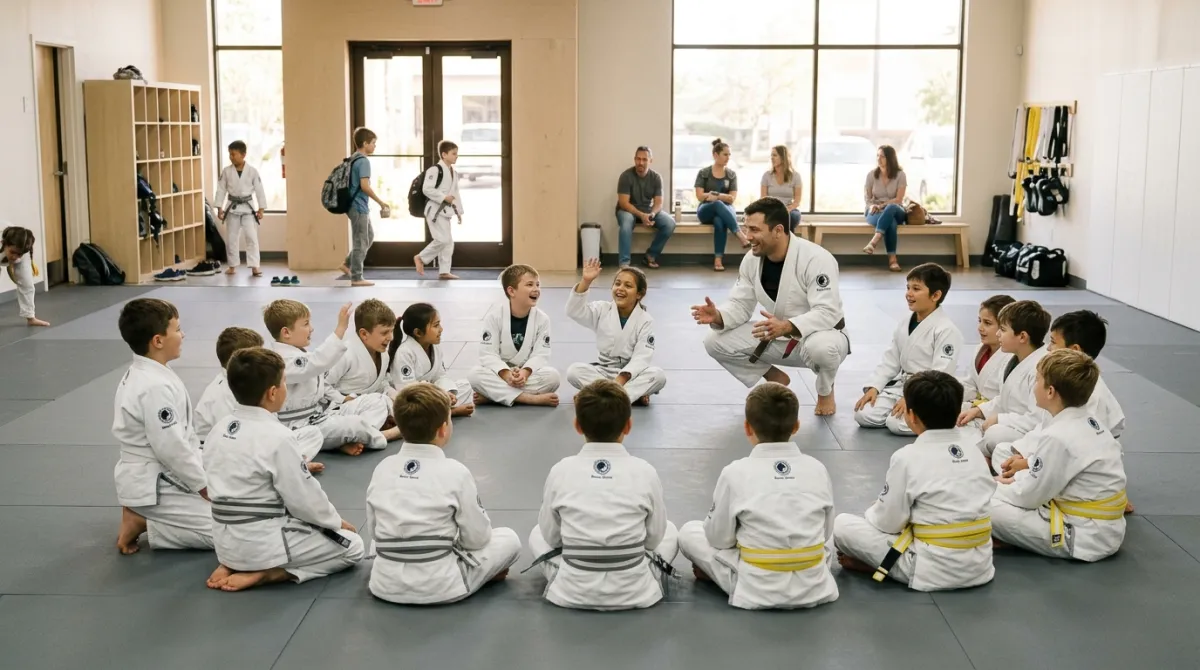
The hours between the final school bell and dinner can be the hardest part of a family's day. Children have energy to burn, parents are still working, and homework waits. After school jiu-jitsu turns that stretch into something productive, social and fun.
Why does the after school window matter?
The after school window matters because children often have plenty of energy and need a safe, positive place to use it. A structured activity offers physical movement, supervision and social connection. Instead of drifting into screens or boredom, children practice skills, make friends and feel proud of what they accomplish.
For parents, the benefit is peace of mind. Knowing that your child is on a mat with caring instructors, learning respect and teamwork, makes the workday easier. The routine also helps children transition from school mode to home mode.
In our classes we often see tired students arrive after a long day and leave smiling. Movement and friendship are a powerful reset.
What is an after school jiu-jitsu program?
An after school jiu-jitsu program combines martial arts classes with a supervised afternoon routine for school-age students. Children train in age-appropriate groups, learn techniques, play games and practice good behavior. The exact format, ages and logistics are listed on the program page for families to review.
Learn more on the after school program page before you decide. It explains who the program is for and how it works, so you can plan your week with confidence.
Programs like this work best when they are consistent. Children thrive on predictable routines, and instructors get to know each student well, which helps with encouragement and safety.
How does jiu-jitsu fit a school-day routine?
Jiu-jitsu fits a school-day routine by giving children a clear activity between school and evening tasks. A regular class time helps families plan meals, homework and sleep around a consistent anchor. Children know what to expect, and parents can build a calm weekly rhythm.
- Pack the gi or athletic clothes and a water bottle in the morning.
- Bring a healthy snack if the program allows.
- Arrive on time so your child can warm up with the group.
- Plan homework and dinner for after class.
Check the class schedule to find days that match your week. Starting with one or two days is usually enough while your child adjusts.
What will children learn besides technique?
Besides technique, children learn focus, patience, respect and how to work with others. They practice listening to instructions, waiting for a turn and treating partners kindly. These habits help in the classroom, at home and in friendships.
- Respect: Greeting the instructor and thanking partners.
- Self-control: Moving carefully and following rules.
- Resilience: Trying again when something is hard.
- Friendship: Building bonds with classmates of different ages.
Progress shows up slowly. A child who once hesitated to speak in a group may begin to ask questions. Another who struggled to wait may learn to take turns. Parents often notice these changes before the children do.
Is it safe for school-age children?
This kind of program can be safe for school-age children when instructors supervise closely, groups are matched by age and rules are clear. Students learn to tap early, move with control and respect their partners. Ask any academy about supervision, class size and safety policies before enrolling.
No physical activity is entirely free of risk, and children may get the occasional bump. If your child has a medical concern, check with your pediatrician and share the information with the instructors.
We teach children to speak up if something hurts or feels wrong, and we remind parents to do the same. Clear communication keeps everyone safe and comfortable.
How can parents prepare for the first week?
To prepare for the first week of class, talk with your child about what will happen, pack the essentials and arrive a little early. Explain that the class includes games, learning and meeting new friends. A calm start sets a positive tone for the weeks ahead.
Read the parents page to understand how our youth programs work. Ask about uniforms, drop-off, communication and what to do if your child feels nervous.
Give your child time. Some children join in immediately, while others need a few classes to feel at ease. Encourage effort, celebrate small wins and avoid pressure. The goal is a lasting love for learning.
How do you balance jiu-jitsu with homework?
Balancing jiu-jitsu with homework works best with a simple routine: a snack after school, class time, then dinner and homework. Some families finish part of the work before class, and others do it afterward. The right order depends on your child's energy and your schedule.
Many parents find that children focus better on homework after a class, since they have used up some restless energy. Others prefer a short break first. Try both for a couple of weeks and notice what helps your child most.
Keep communication open with teachers and with the academy. If a big project or exam is coming, it is fine to miss a class. A flexible attitude teaches children that priorities can change without losing a healthy habit.
Can siblings and friends train together?
Siblings and friends can often train in the same academy, which makes scheduling easier and adds to the fun. Classes are organized by age and skill, so children may not always be in the same group. Ask the team how classes are arranged for brothers, sisters and friends.
Many families find that training together creates a shared interest. Children cheer each other on, and parents meet other families. For older students, the Juniors program provides a natural next step as they grow.
How do you get started?
To get started with after school jiu-jitsu at Renzo Gracie West Boca Raton, book a free trial class. Your child will meet the instructors, try a lesson and see the academy. You can ask about the after school format and how it fits into your family's week.
Reserve a spot on the free trial class page. Whether you live in Boca Raton or nearby, we would be happy to meet your family and help your child find a positive, active routine.
Frequently asked questions
What is an after school jiu-jitsu program?
An after school jiu-jitsu program offers children structured martial arts classes in the afternoon, after the school day ends. Students move, practice technique, learn respect and spend time with friends under adult supervision. The program page explains the format, ages and how families can take part.
Does jiu-jitsu help with homework and routine?
A predictable class schedule helps many families build a steady afternoon rhythm. Children who burn off energy and feel accomplished often find it easier to settle down later. Every child is different, so pair the class with a consistent plan for meals, homework and sleep.
What does my child need to bring?
Children usually bring comfortable athletic clothes or a gi, a water bottle and a healthy snack if recommended. Ask the team what is needed for the first visit, and check the program page for details about uniforms, arrival and pickup.
Can my child try one class first?
Yes. A free trial class lets your child meet the instructors, see the room and decide whether it feels right. Parents can ask questions, and the team can explain how the after school option fits your schedule.

 English