
Inclusive Jiu-Jitsu for Kids With Different Needs
Esta página ainda não foi traduzida; mostrando a versão em inglês.
Inclusive jiu-jitsu for kids means welcoming children who learn, move or experience the world differently, with patient instruction, clear routines and open communication with families. It is a physical activity and a place to belong, not a treatment. The best starting point is a conversation with the instructors about your child.
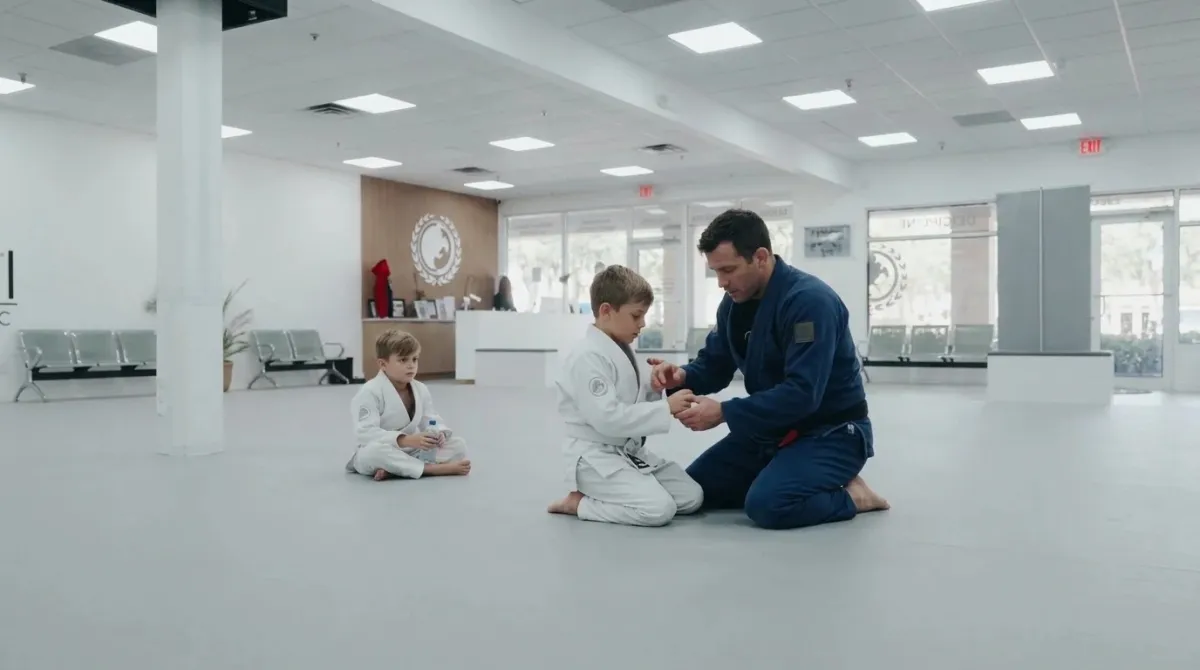
Every child deserves a place to move, learn and belong. Families of children with different needs often tell us they have been turned away or have felt like an inconvenience. We want the opposite. This article explains, with respect and without promises of clinical results, how our inclusive approach works and how to start.
What does inclusive mean on the mat?
Inclusive means that the program is designed to welcome children with a range of abilities, learning styles and sensitivities. Instructors adapt their teaching, adjust expectations and work with families to find what helps each child participate.
It does not mean lowering standards or treating children as fragile. It means finding the right entry point and building from there. A child who needs more time, a quieter space or a different way of explaining can still enjoy jiu-jitsu.
You can read about this approach on the Inclusive program page, which is the best source for current details.
Is jiu-jitsu a therapy?
No. Jiu-jitsu is a sport and a skills-based activity. We do not offer medical or therapeutic treatment, and we do not make promises about any condition. Families should follow the guidance of their child's doctors and therapists.
What we can offer is a welcoming environment with caring instructors, structure and friendly peers. Many families value the routine, the movement and the sense of belonging.
If your child has a care team, you are welcome to share helpful information with us. It helps us teach well, and it stays between us and your family.
How do instructors adapt their teaching?
Adaptation is practical and personal. An instructor might use shorter instructions, show a movement instead of explaining it, break a technique into smaller steps or allow a child to watch before joining. They might adjust the volume of the room or offer a quiet corner for breaks.
Examples of helpful adjustments include:
- Clear, calm instructions with visual demonstrations.
- A predictable class structure.
- Extra time for transitions.
- Gentle partners who understand the pace.
- Breaks whenever needed.
These adjustments often help every child in the room, not only those who need them most.
What should you tell the team before the first class?
Tell the team what helps your child feel comfortable and what might be challenging. Mention sensitivities to noise, touch or crowds, communication preferences, triggers and routines that matter. Share what has worked in other settings.
You do not need to share anything private. Share what helps us support your child. A short conversation before the first class, or a note when you book, makes a big difference.
We recommend booking a free trial class and visiting the academy beforehand if possible, so your child can see the space without pressure.
How do you prepare your child?
Preparation reduces surprises. Show your child photos or videos of the academy, explain what will happen in simple words and practice small parts, such as bowing or lining up. Visit at a quiet time to meet the instructor.
On the day, bring familiar comfort items such as a water bottle or a favorite snack for afterward. Arrive early, so there is time to settle. Plan something enjoyable afterward to link the experience with positive feelings.
If your child becomes overwhelmed, leave the mat for a few minutes. Stepping out is a skill, not a failure.
How is safety managed?
Safety comes from clear rules, close supervision and sensible partner matching. Children learn to tap, to stop when asked and to respect personal space. Instructors watch closely and step in early.
Contact is introduced gradually. If a child is uncomfortable with touch, the instructor can start with solo movement and build up. Consent and comfort remain central.
Parents should feel free to ask any question about supervision and rules. Our article on jiu-jitsu and bullying explains the respectful culture we aim for.
What can children gain?
Children can gain coordination, confidence, friendships and a sense of accomplishment. For some, earning a belt stripe is a proud milestone that stays with them. For others, simply walking in with a smile is a victory.
We celebrate each step without comparison. Progress may look different for every child, and that is fine. The most important result is a child who feels welcome and wants to come back.
You can read how benefits unfold by age in our guide on kids jiu-jitsu benefits.
How can private lessons help?
Some children benefit from a few one-on-one sessions before joining a group. A private lesson gives them time to meet the instructor, learn the basics and feel safe. When they join a class, they already know a friendly face.
Ask about private lessons if you think this could help. It is not required, and many children begin in group classes right away.
How do parents stay involved and informed?
Parents are partners. We encourage regular, friendly check-ins with the instructors about what is going well and what could be adjusted. A quick conversation after class, or a message through the contact page, helps us fine-tune our approach.
Share your own observations, too. If your child comes home excited about a particular movement, or upset about a noisy moment, let us know. Small details help us build a classroom where your child can succeed, and they help us learn for the benefit of other families.
What attitudes make the biggest difference?
Attitude matters more than any technique. Patience, curiosity and respect help a child feel safe. Instructors who ask what works, rather than assuming, create trust. Peers who learn to include everyone make the room kinder.
We teach all children that everyone learns differently and that helping a partner is part of the art. When a class embraces that, a child with different needs is not an exception to be managed. They are simply a member of the group, learning alongside friends.
How do you measure success?
Success is personal. For one child it may be entering the room without tears. For another it may be earning a first stripe or making a friend. We celebrate these milestones without comparing children, because every journey has its own scale.
If your child leaves class smiling, wants to return and feels proud of something they did, that is a success worth honoring. Over time, those moments add up to confidence, skill and a place to belong.
What can other families do to help?
Other families shape the culture of a class. Teaching your own children to greet newcomers, to be patient with different paces and to include everyone makes the whole room kinder. Children follow the example of the adults around them.
If you notice a child struggling, a simple smile or a kind word helps. Avoid comparing or whispering. A community that treats each child with dignity is the best environment for every child to grow, including yours.
Can siblings and parents be part of the journey?
Siblings often become a child's best supporters. A brother or sister who trains in the same academy can cheer from the bench, share a ride and celebrate stripes. Parents can also join an adult class to share the experience, which often strengthens the family bond.
If a sibling feels overlooked, include them in the celebration. Every child in the family deserves attention, and a calm, steady routine around training helps everyone feel secure.
How can you start?
Contact us through the contact page or book a free trial class on the free trial page. Tell us about your child, and we will help you find the best fit. We look forward to getting to know your family.
Perguntas frequentes
Do you accept children with special needs?
We welcome children with different needs and work with families to find the right fit. Please talk to the team about your child so we can plan well.
Can my child take a break during class?
Yes. Breaks are part of learning. Instructors will help your child step out and return when ready.
Will my child be in a class with other children?
Most children join group classes, sometimes after a trial or private lessons. We will discuss what suits your child.
Is jiu-jitsu a treatment for any condition?
No. It is a sport and a physical activity. Follow your child's doctors and therapists for medical or therapeutic needs.

 Portuguese