
How to Avoid Injuries in Jiu-Jitsu: A Smart Training Guide
Esta página aún no está traducida; mostrando la versión en inglés.
To avoid injuries in jiu-jitsu, warm up properly, tap early, choose controlled training partners, leave your ego at the door and respect rest days. No contact sport carries zero risk, but smart habits and good communication keep training enjoyable for years. See a doctor for any pain that does not go away.
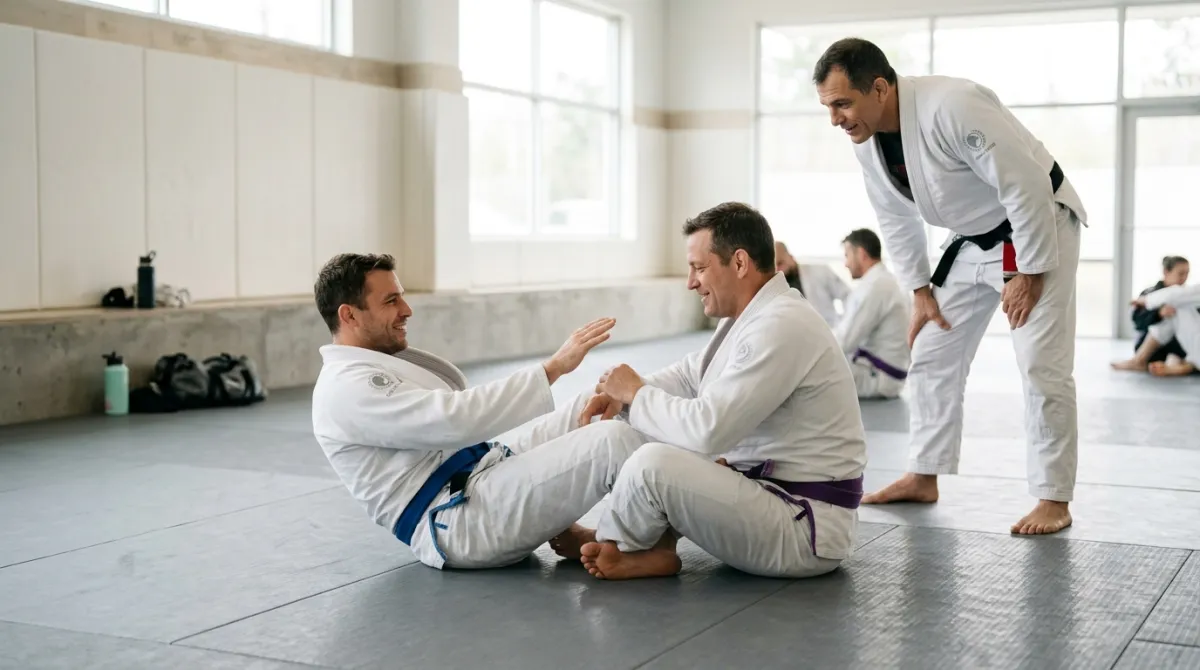
Every student wants the same thing: to train for years, not weeks. The best way to get there is to treat safety as a skill. If you want to avoid injuries in jiu-jitsu, the solution is not fear. It is knowledge, good habits and the right environment.
Why do injuries happen in jiu-jitsu?
Injuries in jiu-jitsu usually happen when someone ignores a tap, trains too hard when tired, rushes a technique or practices with a careless partner. The sport involves joints and leverage, so control matters. Most problems can be avoided with awareness, communication and a culture that values safety.
Beginners are especially vulnerable to overuse and strain because their bodies are not yet used to the movements. Soreness is normal, but sharp or lasting pain is a signal to stop.
In our classes we tell students that nobody wins by getting hurt. A good training partner is one you can trust to be careful, and a good student is one who knows when to quit a round.
How does tapping keep you safe?
Tapping keeps you safe because it stops a technique before damage occurs. When you tap your partner or the mat, or say "tap," your partner must release immediately. Tapping early is the most important safety habit in jiu-jitsu, and every experienced student relies on it.
- Tap when you feel pressure you are unsure about.
- Tap clearly, with a firm motion or a clear word.
- Release at once when your partner taps.
- Never hold a submission after a tap, even for a moment.
Some beginners worry that tapping early looks weak. The opposite is true. Students who tap early stay healthy and keep learning, while those who resist often miss months of training.
Why is the warm-up so important?
The warm-up is important because it prepares your muscles, joints and mind for training. Light cardio, mobility drills and movement practice raise your body temperature and loosen stiff areas. Skipping it increases the chance of strain, especially in the neck, shoulders, hips and knees.
Arrive a few minutes early to move on your own. Gentle hip circles, shoulder rolls and neck movements help. Then join the group warm-up with focus instead of rushing through it.
If you are returning from a break or feel stiff, take extra time. A calm, thorough warm-up is a small investment that pays off in every round.
How do you choose safe training partners?
To choose safe training partners, look for people who are calm, controlled and communicative. Good partners adjust their intensity to your level, release holds promptly and speak up if something feels wrong. Avoid partners who are rough, reckless or unwilling to listen to taps.
You can say, "I am new, let us go light," or, "My knee is sore, let us avoid that." Good partners will respect your request. If someone ignores your limits, tell your instructor. A healthy academy takes these concerns seriously.
As you gain experience, you will also learn to be that kind of partner for others. Control, respect and communication are skills you can practice every class.
What role does ego play?
Ego plays a large role in jiu-jitsu injuries because the urge to win or avoid tapping can override good judgment. Leaving ego at the door means accepting that you will lose practice rounds, tapping without drama and treating training as learning. It protects both you and your partner.
New students often resist too hard because they do not yet recognize danger. Experienced students may rush because they feel confident. Both mistakes come from forgetting that practice is cooperative.
A simple mental rule helps: the goal of every round is to improve, not to win. If you can smile after a tap, you are on the right track.
When should you rest or skip training?
You should rest or skip training when you are sick, very tired, in sharp pain or recovering from an injury. Rest days and sleep let your body adapt, and training through warning signs often turns small issues into longer breaks. Skipping one class is better than missing months.
- Sharp, sudden or worsening pain.
- Lingering joint swelling or limited movement.
- Fever, illness or skin irritation.
- Extreme fatigue or poor sleep over several days.
When in doubt, ask your instructor and see a doctor. We teach jiu-jitsu, and medical decisions belong to medical professionals.
How do hygiene and care help?
Hygiene and care help by reducing skin problems and keeping the mat clean. Shower before class, wear a freshly washed gi, keep nails trimmed, cover cuts and avoid training with visible skin irritation. Report anything unusual to your instructor and see a doctor if needed.
Clean gear is also a courtesy to your partners. Wash your gi after every session and let it dry fully. Wear sandals off the mat, and wipe down your belongings.
These habits may seem small, but in a contact sport they protect the entire community.
What should you do if you get hurt?
If you get hurt in jiu-jitsu, stop training right away, tell your instructor and step off the mat. Do not try to finish the round or hide the problem. Apply basic first aid if appropriate, and see a doctor for pain, swelling or limited movement that does not improve.
When you return, ease back in. Tell your partners about the area that was hurt, start with light drilling and skip live rounds until you feel confident. Rushing back is a common reason injuries come back.
Your instructor can adjust drills to avoid the injured area, so you can keep learning while you recover. Many students find that this is a good time to study technique and watch classes closely.
How can an instructor help you stay safe?
A qualified instructor helps you stay safe by teaching technique correctly, pairing partners thoughtfully, stopping unsafe rounds and adjusting drills to your needs. Share your injuries, goals and worries honestly. The more your instructor knows, the better they can guide you, and the more comfortable your training becomes.
Do not be shy about asking for a different drill or a lighter partner. Instructors would much rather answer a question than watch a student get hurt. Safety is a shared responsibility, and the best academies make it easy to speak up.
Which small habits make a big difference?
Small habits that make a big difference include arriving early to warm up, drinking water, trimming your nails, wearing clean gear and checking in with your partner before each round. None of these takes much effort, but together they create a safer training day for everyone.
- Ask your partner about injuries before you start.
- Keep your own movements smooth, not jerky.
- Do not crank joints or use sudden force.
- Stop the round if a position feels unsafe.
- Thank your partner when you finish.
These habits become second nature quickly. In our classes we like to see students look out for each other, since a caring partner is the best safety tool on the mat.
What about kids and teens?
For kids and teens, the same principles apply with extra supervision. Classes should be age-appropriate, with clear rules, attentive instructors and partners matched by size and experience. Children should be taught to tap early, speak up and respect others from their first class.
Parents can read the Teens program page and the parents page to understand how our youth classes handle safety. If your child complains of pain, talk to the instructor and your pediatrician.
How can you train safely long-term?
To train safely long-term, build good habits early: warm up, tap early, choose partners wisely, rest and communicate. Adjust your schedule as life changes, and listen to your body. Adults who want a gentler pace can explore the Tatame 40+ program.
The best protection is a supportive academy. At Renzo Gracie West Boca Raton, you can try a class with a free trial and ask the instructors how they handle safety. Adults can also read about the adult program before the visit. We look forward to welcoming you in Boca Raton.
Preguntas frecuentes
Is jiu-jitsu dangerous for beginners?
Jiu-jitsu carries risks like any physical activity, but it can be practiced safely with qualified instruction, supervised drills and a culture of tapping early. Beginners are paired with controlled partners and taught safety first. Follow your instructor's guidance and listen to your body.
What is the most important way to avoid injuries?
Tap early and respect taps immediately. Most serious problems come from holding on too long or resisting out of ego. Combine tapping with a proper warm-up, good partner selection and rest, and you give your body the best chance to stay healthy.
What should I do if something hurts during class?
Stop, tell your instructor and step off the mat if needed. Do not push through sharp or unusual pain. For anything that lingers, see a doctor before returning. Honest communication protects you and your training partners.
Can I train with an old injury?
Many people train with past injuries, but it depends on the injury and your doctor's advice. Share your history with your instructor, who can adjust drills and partners. Your doctor is the right person to decide whether and how you should train.

 Spanish