
What to Expect in Your Child's First Jiu-Jitsu Class
Esta página aún no está traducida; mostrando la versión en inglés.
In your child's first jiu-jitsu class, expect a friendly welcome, a short warm-up, simple movements taught step by step and plenty of encouragement. Children are never expected to know anything in advance. Arrive a few minutes early, wear comfortable clothes and let the instructor know it is your child's first day.
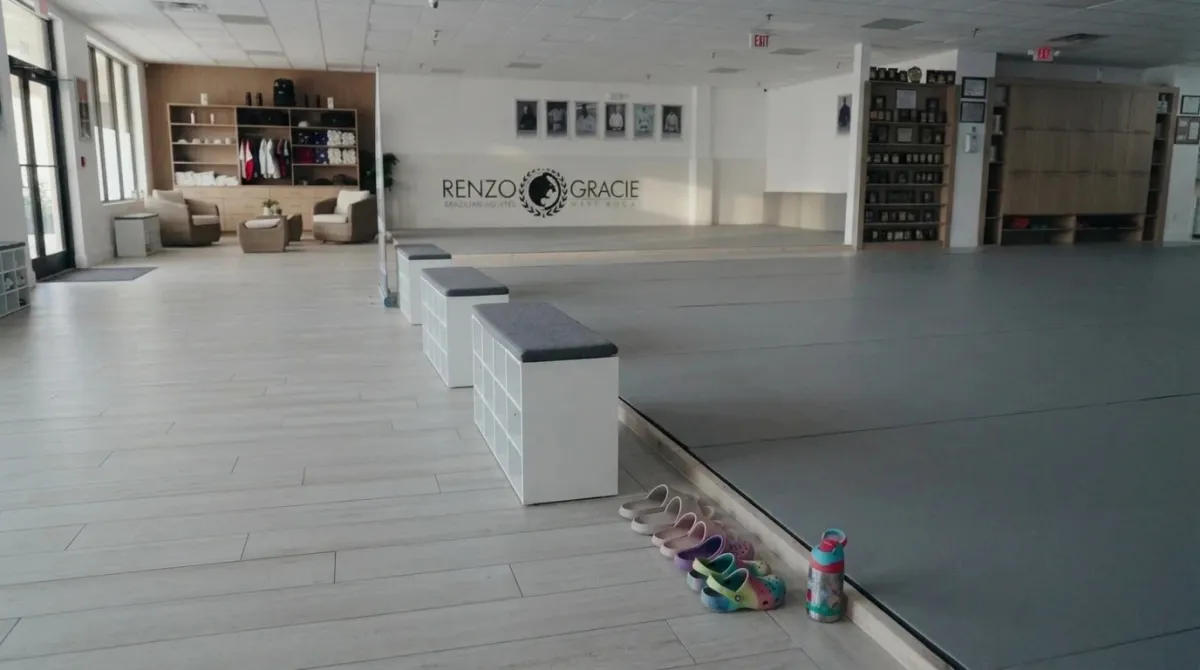
A first class is a big moment for a child, and often a nervous one for the parent too. We have welcomed many families through the door, and the best advice we can give is to keep the day small and happy. Here is a clear picture of what the hour looks like, so nothing surprises you.
What happens when you arrive?
When you arrive, an instructor or team member greets your family, shows your child where to leave shoes and explains where to wait. Arriving ten minutes early gives your child time to look around, use the restroom and watch the room before the class begins.
Take a breath at the door. Children read the mood of the adults beside them, and a calm, curious parent makes a calm, curious child. Say something simple like 'We are going to try something new and see if we like it.'
If you have not yet picked a session, browse the class schedule and choose the group that matches your child's age.
What should your child wear and bring?
For a first class, comfortable athletic clothes are enough: a snug t-shirt and stretchy shorts or leggings, with no zippers, hard buttons or jewelry. Hair should be tied back if it is long. Ask the academy whether a uniform is available to borrow or buy, rather than purchasing one in advance.
A short checklist helps:
- A full water bottle with your child's name on it.
- Slides or sandals for walking off the mat.
- Short, clean fingernails and toenails.
- A light snack beforehand, but not a heavy meal right before class.
Leave toys, tablets and phones in the bag. The mat is a screen-free place, and children usually enjoy that more than they expect.
How does the class start?
Most kids classes begin with the group lining up, bowing and greeting the instructor. This ritual teaches respect and tells children that the activity has a beginning and an end. New students are shown where to stand and are welcomed by name.
Then comes the warm-up: running, hopping, rolling and animal-style movements that are fun while getting the body ready. For many children, this is the part that makes the room feel like a playground with rules.
If your child hesitates, that is normal. Let the instructor guide them in, and resist the urge to push. Children often join after watching for a minute or two.
What will your child actually learn?
Your child will learn one or two simple movements, taught slowly with clear demonstrations. In an early class that could be a basic roll, a hip escape or how to get back to standing safely. The point is not mastery but familiarity and success.
Instructors use short explanations because children listen best in small bites. They also celebrate effort loudly. A child who tries something for the first time will usually hear applause from the room.
Terms such as 'guard' or 'mount' may come up later, but nobody expects a beginner to remember them. The first goal is simply to move, listen and smile.
Will there be contact with other children?
There will be some friendly contact, because jiu-jitsu is a partner activity. Children are paired with partners of similar size and age, and the pairs are usually the same sex in kids classes at our academy. Instructors supervise closely, and the rules are repeated often.
The most important rule is the tap. If a child taps, their partner stops at once. Children also learn to ask for space and to say 'stop' when something does not feel right. Those habits protect everyone and they matter beyond the mat.
Contact is built up slowly for beginners. In the first class, most of the time is spent on solo movement and gentle, guided partner drills.
How can parents help during the class?
Parents help most by watching quietly, smiling and staying out of the instruction. If you shout directions from the side, your child gets two coaches and may feel pressure. Let the instructor lead, and save your feedback for the car ride home.
If your child needs a break, they can step off the mat for water. Do not treat that as failure. It is a normal part of learning to manage effort. A short pause often leads to a better second half.
You can also use the time to ask questions. Many families find it useful to read our overview of kids jiu-jitsu while they wait, or to look at the parents page for more information.
What are common first-day worries and how can you ease them?
The most common worry is simple: 'What if I do it wrong?' Remind your child that nobody expects a first-time student to know anything. The instructors are there to teach, and every child in the room had a first day. Saying this out loud before class takes a lot of pressure off.
Another worry is being the only new child. In most classes there are students at different stages, and instructors often introduce newcomers by name so others can welcome them. A friendly smile from another child can change the whole mood.
Some children worry about contact. Explain that the class has rules, that they can say stop at any time and that the instructor is always watching. If your child is anxious, read our article on jiu-jitsu for shy kids for ideas on preparing them gently.
How can you set up a smooth first month?
After a good first class, aim for a steady rhythm. Choose a day and time that fits your family and keep it consistent, because routine helps children settle in. Arrive early, bring water and let the same adult handle drop-off when possible.
Expect a mixed pattern in the first weeks. Some days will feel exciting and others will feel tiring. That is normal. Celebrate showing up, learning a new word or tying the belt without help.
If you have questions, talk to the instructors after class rather than during it. They want to hear what you notice at home. You can also review the pricing page and the schedule to plan a routine your family can keep.
What does a first class feel like from the child's point of view?
From a child's point of view, the first class is a mix of excitement, noise and new faces. The mat feels soft and large, the uniforms look interesting and the instructor seems to know everyone's name. Children often remember small details, like the sound of the group bowing together or the way a friendly partner high-fived them.
They may also feel a little overwhelmed. That is why short activities and clear cues are so valuable. A child who knows exactly what to do next will feel brave, and a child who is unsure may need a calm hand on the shoulder from the instructor.
The best thing you can do is let your child tell their own story afterward. Listen without correcting, and write down what they say. It often reveals what they truly enjoyed.
What should you do after the first class?
After class, celebrate effort rather than results. Ask 'What was the most fun part?' instead of 'Did you win?' This keeps the focus on enjoyment and gives you real information about how your child feels.
Give your child a day before deciding anything. Some children are tired and quiet after a first class, then ask about it all week. Others are bubbling right away. Both reactions are healthy signs.
When you are ready to try, reserve a spot through the free trial page, and tell us your child's age and anything we should know. We will take it from there.
Preguntas frecuentes
What if my child cries or clings to me?
This happens, and it is not a sign that jiu-jitsu is wrong for your child. Let the instructor help, stay nearby, and allow your child to join when ready. Some children need a visit or two just to watch before participating.
Can I stay and watch the class?
Parents are welcome to ask about watching. Seeing the class helps you understand what your child is doing, and it can reassure a nervous child. Check the academy's current viewing rules when you book.
Does my child need a uniform for the first class?
Not necessarily. Comfortable athletic clothes are usually enough for a trial, and the team can tell you about uniforms if your child decides to continue. Ask before you buy anything.
How long should I give my child before deciding?
A few classes is a fair test for most children, since the first visit is full of new sights and sounds. If your child is still unhappy after a reasonable try, there is no shame in choosing a different activity.

 Spanish