
Guard in Jiu-Jitsu: Meaning and Main Types
Esta página aún no está traducida; mostrando la versión en inglés.
In jiu-jitsu, the guard is a position where you use your legs to control a partner while you are on your back or seated. It is a tool for defending and attacking, not a sign that you are losing.
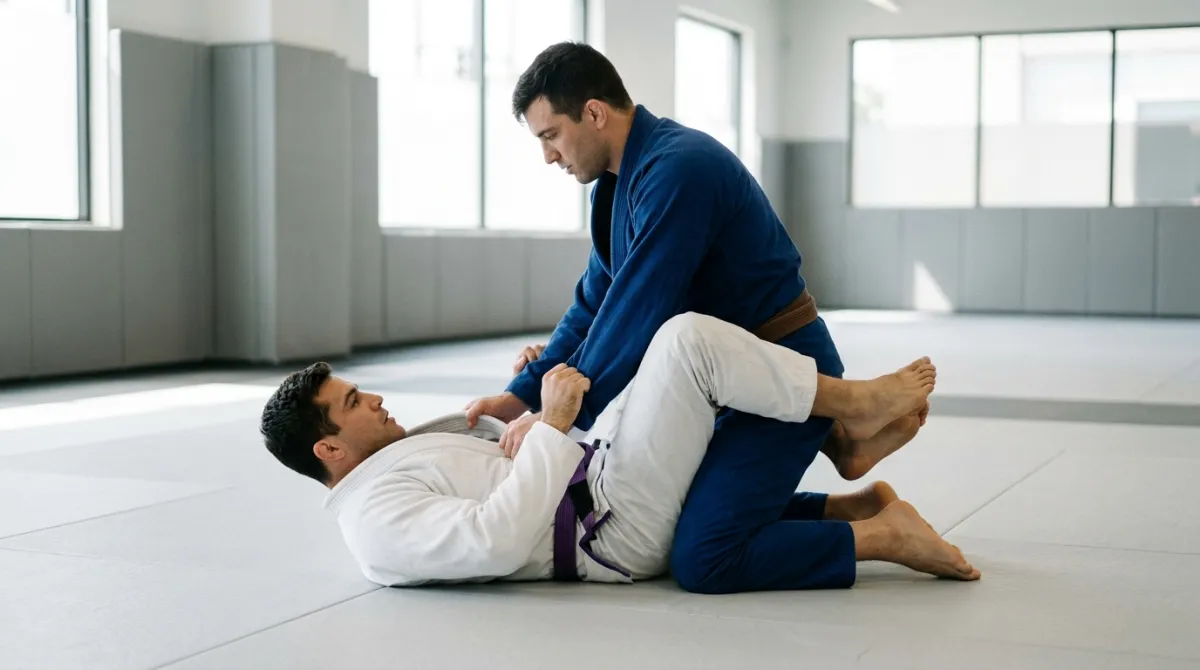
The guard in jiu-jitsu is a position in which you control your partner with your legs, hips and grips while lying on your back or sitting. The name hints at protecting yourself from being pinned. Yet the guard is also where many sweeps and submissions begin, so students learn to see it as a place of strength.
Main types of guard
Closed guard locks the legs around the partner's waist. Open guard keeps the feet free to push, hook or block. Half guard traps one of the partner's legs between yours. Butterfly guard places both feet inside the partner's thighs. Each version trades control for mobility in a different way.
Why the guard matters on the mat
A good guard keeps the partner from settling their weight. It also gives you time to break their posture, grab a grip, or sweep them over. Beginners often learn the closed guard first because it limits how far the partner can move. From there, attacks such as the armbar from closed guard are a natural next step.
A simple example
Imagine your partner kneels between your legs. You lock your ankles behind their back, pull their head down, and hold a sleeve. They cannot pass, and you can now choose a sweep or a submission. If they stand up, you switch to open guard and keep your feet active.
Safety comes first: protect your neck, keep your knees away from your partner's joints, and tap if anything hurts. Our coaches teach every guard with care in a free trial class, and you can read about the related sweep and mount in this glossary.

 Spanish